تخطي إلى محتوي
It started with a simple question: “What is this?”
Years ago, a collector in California picked up an unusual piece of Asian artwork at a local auction for just $10. He admired its intricate details but had no idea where it came from or how it was made.
Curious about its origins, he eventually reached out to SinoCultural. A few emails and a closer look at the artwork revealed unexpected clues, leading us all the way to Hangzhou, China, and the history of Chinese brocade.
What began as a $10 find turned into a shared journey through art, history, and a curiosity that crossed the Pacific.
Table of Contents
1. A $10 Find at a California Auction

Years ago, at an online auction in Hanford, California, a collector came across an unusual piece of Chinese artwork. It showed a figure surrounded by bamboo and rocks, with soft colors and remarkably fine details. Something about it caught his attention, and for just $10, he decided to buy it.
But what exactly had he bought? At first glance, it looked like a traditional Chinese painting. A closer look, however, raised more questions. Was it printed on fabric, embroidered by hand, or made using some other technique? Even the meaning behind the image was a mystery.
The artwork remained in his collection for years. He appreciated its beauty, but its origins were still unknown. Eventually, his curiosity led him to look for someone who might know more about Chinese traditional art.
And that's where our story with him began.
2. A Question That Reached SinoCultural
The email wasn't about an order or a product. It came from a collector in California who had kept an unusual piece of Chinese artwork for years. He attached a photograph and asked us a simple question: “What is this?”

We took a closer look. At first glance, it resembled a traditional Chinese painting, but something about the texture and fine details made us wonder whether the image had actually been woven. The photograph alone wasn't enough to tell.
So we wrote back, asking if he could share more pictures, especially of the back and edges of the artwork. He was happy to help, and soon we were exchanging emails and examining details together. What began as a simple inquiry was slowly becoming a shared search for answers.
And as we would soon discover, one of the most important clues had been hiding in plain sight all along.
3. The Clue Hidden Beneath the Frame
When the collector took a closer look at the artwork, he found something he hadn't noticed before. After lifting part of the black mat around the piece, he discovered ten Chinese characters along the lower edge, hidden from view for years.
He sent us photographs of the newly uncovered details. For the first time, we had something more than the image itself to work with: a name.

Reading the inscription from right to left, we identified the words for “Trademark,” accompanied by an emblem, followed by “Du Jinsheng杜锦生 Five-Color Brocade Factory.”
It was a small detail, but it changed the direction of our search. Until then, we had been trying to understand the artwork through its imagery and texture. Now, we had a specific name to investigate.
Who was Du Jinsheng杜锦生? And what could a brocade factory in Hangzhou tell us about a piece that had turned up at an auction in California?
4. Following the Trail to Hangzhou

Our search eventually brought us to the Du Jinsheng Brocade Museum in Hangzhou. But before it became a museum, there was a silk-weaving factory with a remarkable history.
Founded in 1922, the Du Jinsheng Silk Weaving Factory built on Hangzhou's traditional weaving techniques while exploring new ways to turn silk into art. Among its best-known creations were five-color brocade and woven silk landscapes. These were not simply patterned fabrics. Using carefully arranged warp and weft threads, the weavers recreated the fine details, colors, and depth of paintings, drawing inspiration from both Chinese and Western art.
The results soon attracted attention beyond Hangzhou. In 1926, the factory's brocade won a gold medal at an international exhibition in Philadelphia. By the 1930s, it had established outlets in 13 Chinese cities, with its woven artworks reaching Southeast Asia, Europe, and the United States.
In 1997, the Du Jinsheng Brocade Museum opened on the former factory site, preserving the history of a workshop whose creations had once traveled across the world.
Finding this history was especially meaningful to us. Nearly a century ago, brocade from Hangzhou was already making its way to America. Now, an artwork purchased at a small California auction had brought us back to that same weaving tradition.
And behind the factory's name was the man who started it all: Du Jinsheng都锦生.
5. Who Was Du Jinsheng?
Behind the factory's name was Du Jinsheng, a Hangzhou-born industrialist with an unusual idea: could the beauty of a Chinese painting be captured in woven silk?

A Life Dedicated to Silk Weaving
- Early Years: After studying machinery, Du became a teacher and began experimenting with photography and silk weaving. His early work included a woven landscape of Hangzhou's Nine Creeks and Eighteen Gullies.
- 1922 — A New Beginning: He founded his silk-weaving factory in Maojiabu, Hangzhou.
- 1926 — Recognition Abroad: His factory's brocade won a gold medal at an international exhibition in Philadelphia.
- 1931–1943 — Years of Resistance: Du boycotted Japanese silk and later refused to cooperate with the Japanese occupying authorities. He continued his efforts to preserve the business until his death in Shanghai in 1943.
Turning Light and Shadow into Silk
What made Du Jinsheng's work remarkable was his approach to weaving. Rather than simply repeating traditional patterns, he wanted silk to capture the softness and depth of a painting.
He developed a technique based on variations in an eight-end satin weave, using the way light catches different thread structures to create subtle shifts in tone. Historical accounts describe as many as 35 tonal gradations, allowing landscapes, figures, and delicate details to take shape through the weave itself.
Imagine looking at a painting, only to discover that every shadow, every change in color, and every fine detail has been woven from silk threads.
Understanding Du Jinsheng's work gave us a new appreciation for the collector's artwork. The inscription had led us to its weaving tradition, but there was still more to discover.
What was the figure in the artwork meant to represent? And what did the Chinese characters beside it actually say?
6. Reading the Artwork: Its Title and Meaning
The inscriptions and imagery offer two ways to understand this remarkable piece of Chinese brocade.
01 · THE INSCRIPTIONS
The Words Behind the Work


Two details from the original artwork. Select either image to view it at full size.
诸仙环祝,佛寿无量
Immortals Gather to Offer Blessings; May the Buddha's Life Be Boundless.
Written in Chinese Small Seal Script, the title expresses a wish for longevity and blessings. The central figure and surrounding imagery help bring this wish to life.
The mark along the lower edge identifies the Du Jinsheng Five-Color Brocade Factory, connecting the artwork to its weaving history.
02 · THE SYMBOLISM
A Scene of Longevity

The central figure is identified in the research notes as Amitayus, the Buddha of Infinite Life. The surrounding plants add further layers of meaning to the scene.
Bamboo traditionally represents integrity and resilience. Lingzhi, long associated with longevity in Chinese culture, reinforces the wish for a long life. Orchids add another symbol of vitality.
Together, the figure, plants and inscription turn the woven image into more than a decorative scene: it conveys a wish for longevity, peace and blessings.
A Note on the Original Design
The original design may be associated with Wang Yunxuan (1877–1960), an artist whose work included Buddhist and immortal subjects. This attribution remains tentative and has not been conclusively verified.
7. More Than a $10 Find
DISCOVER SINOCULTURAL
Brocade, Woven into Everyday Life
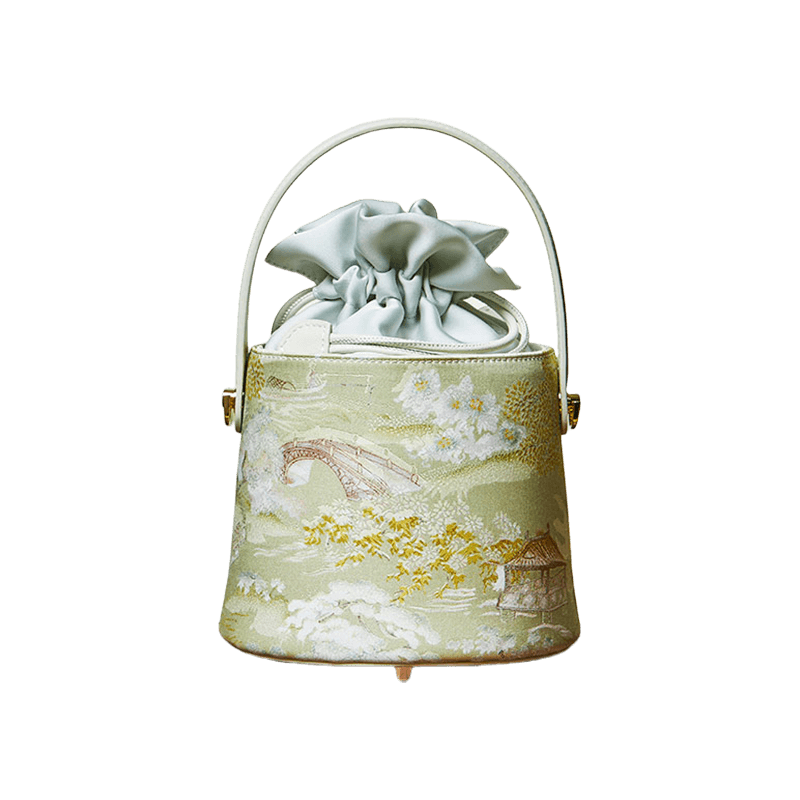
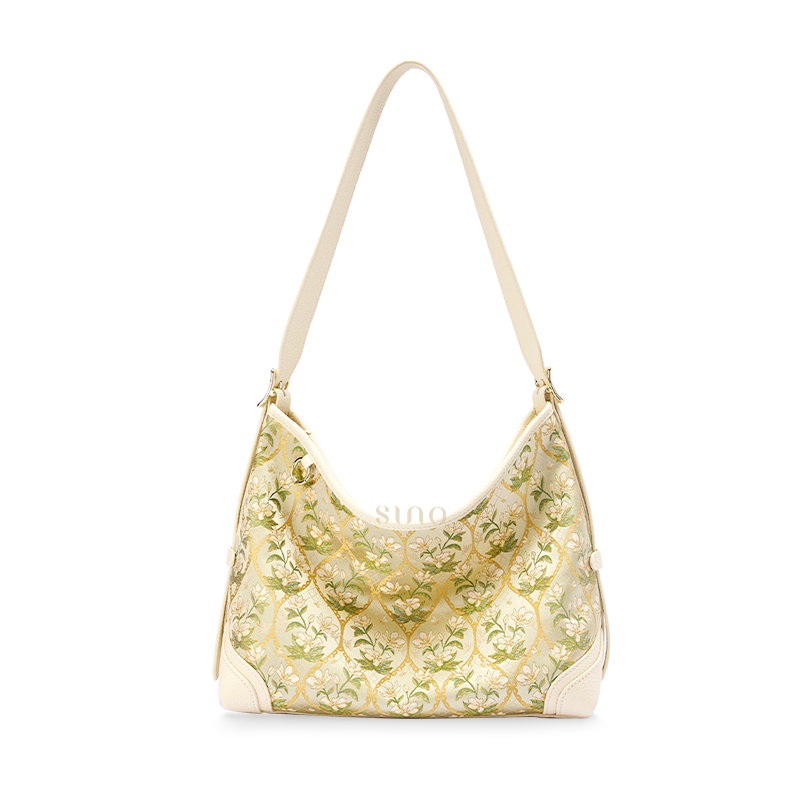
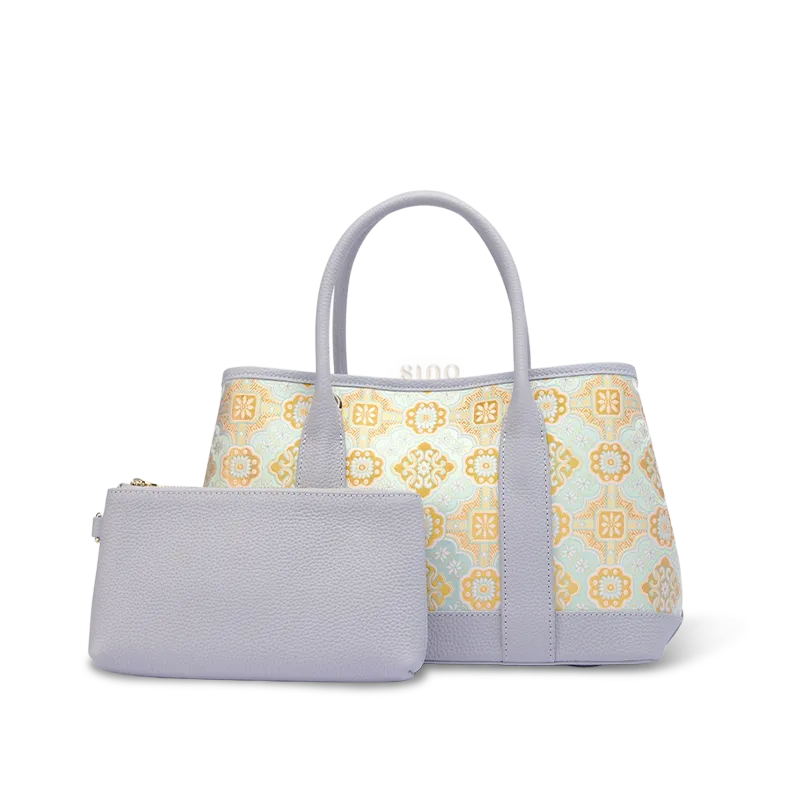
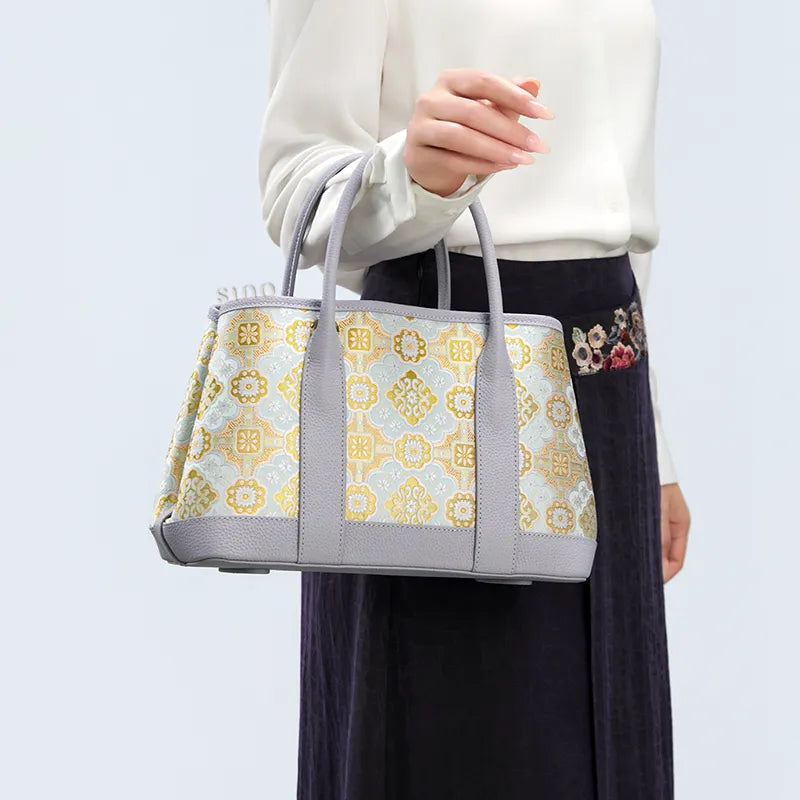
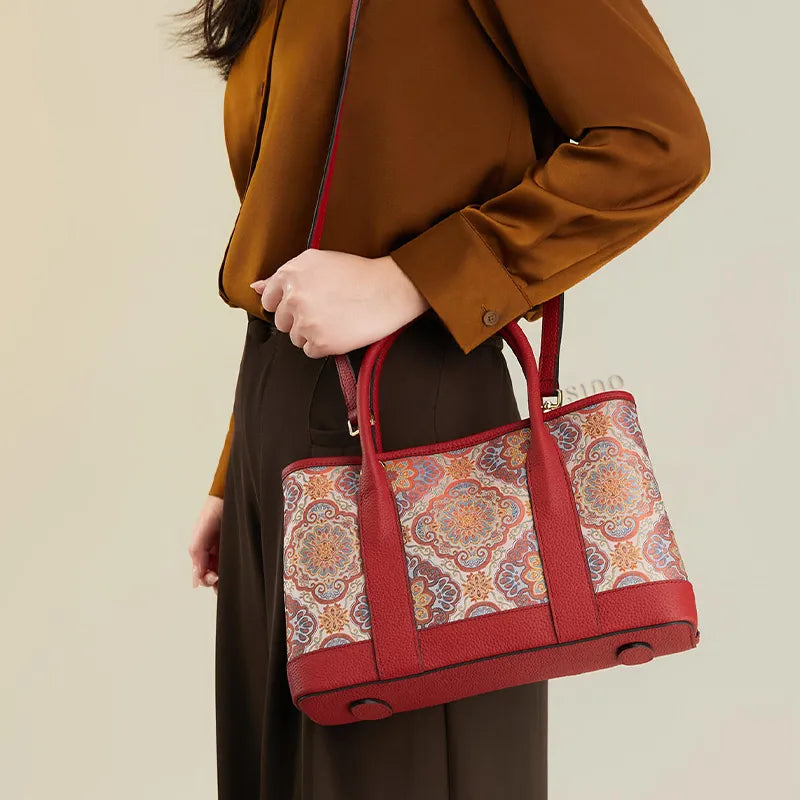
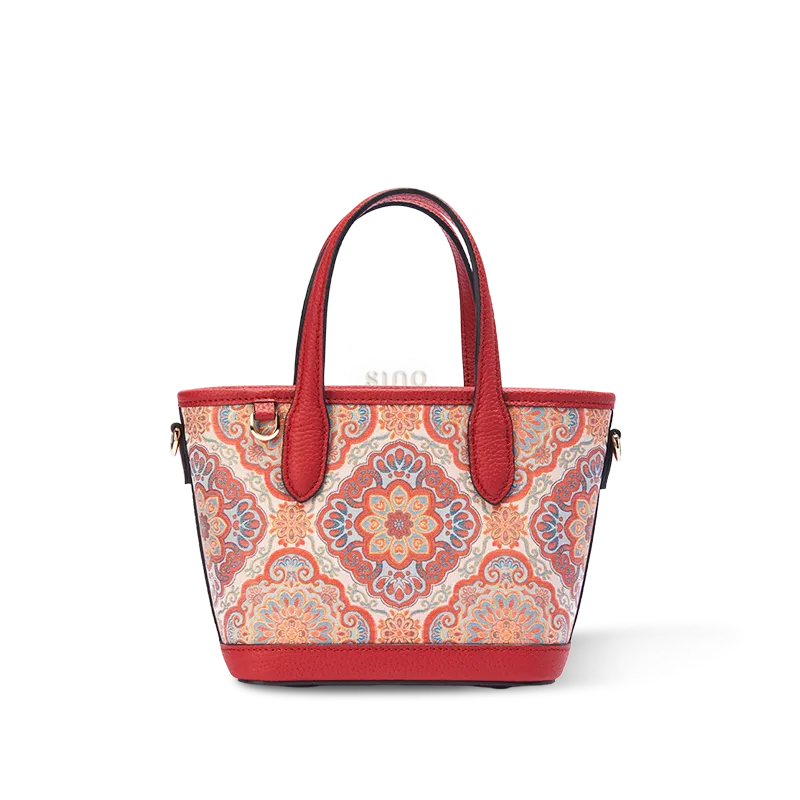
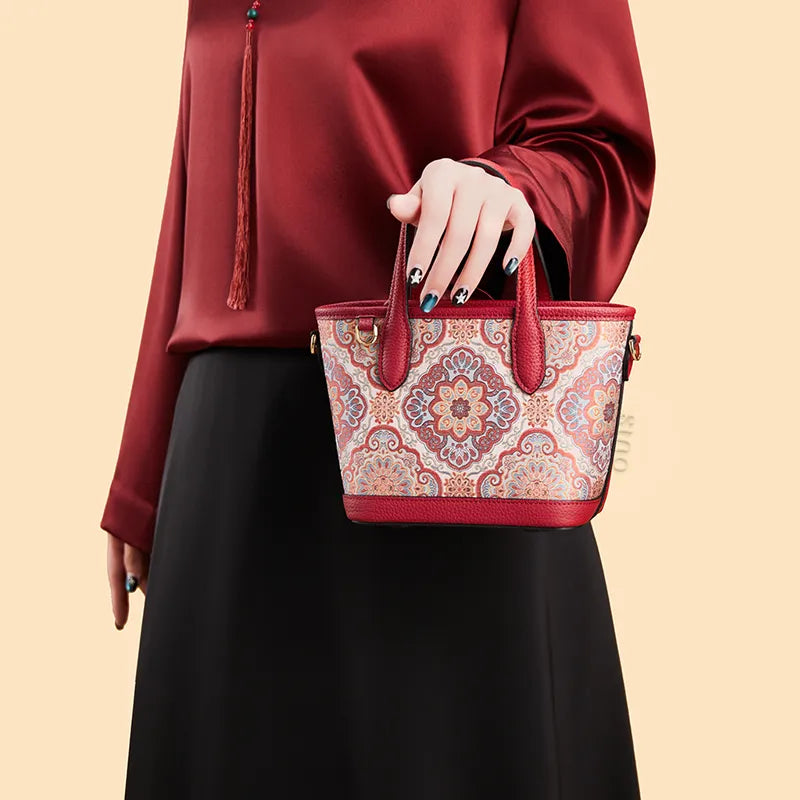
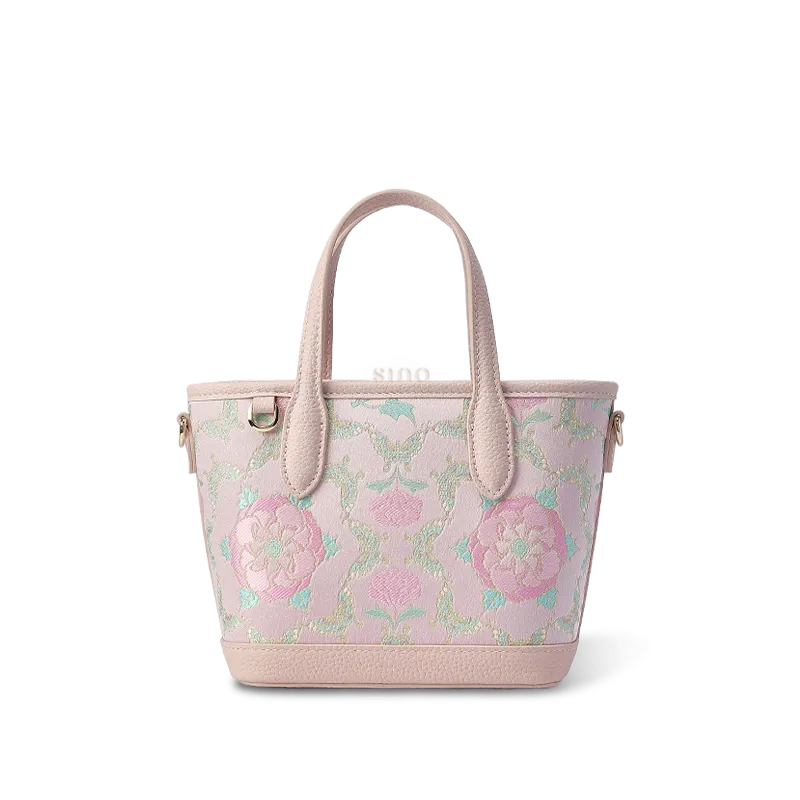
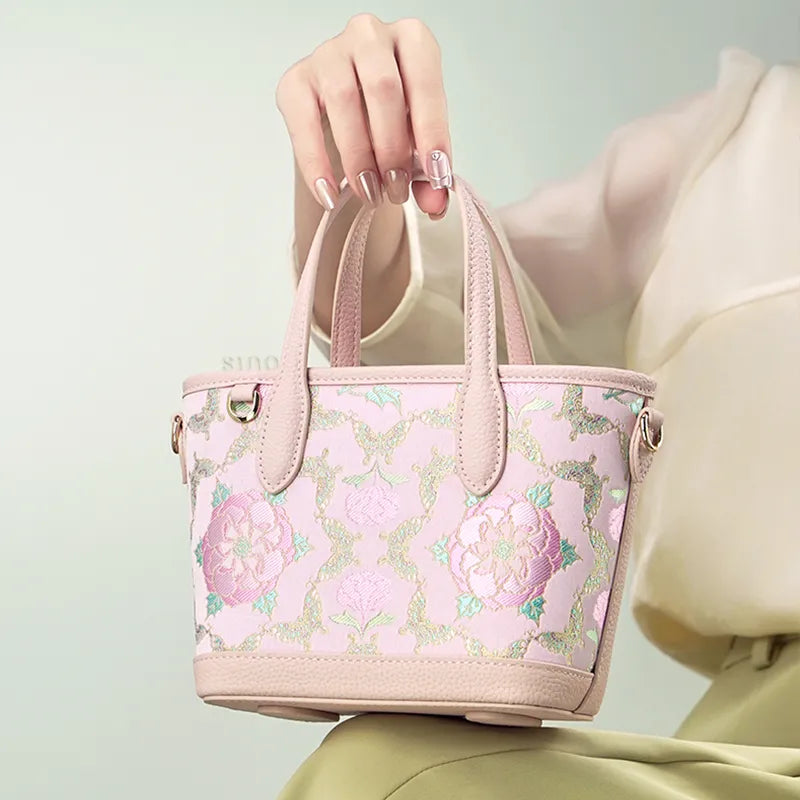
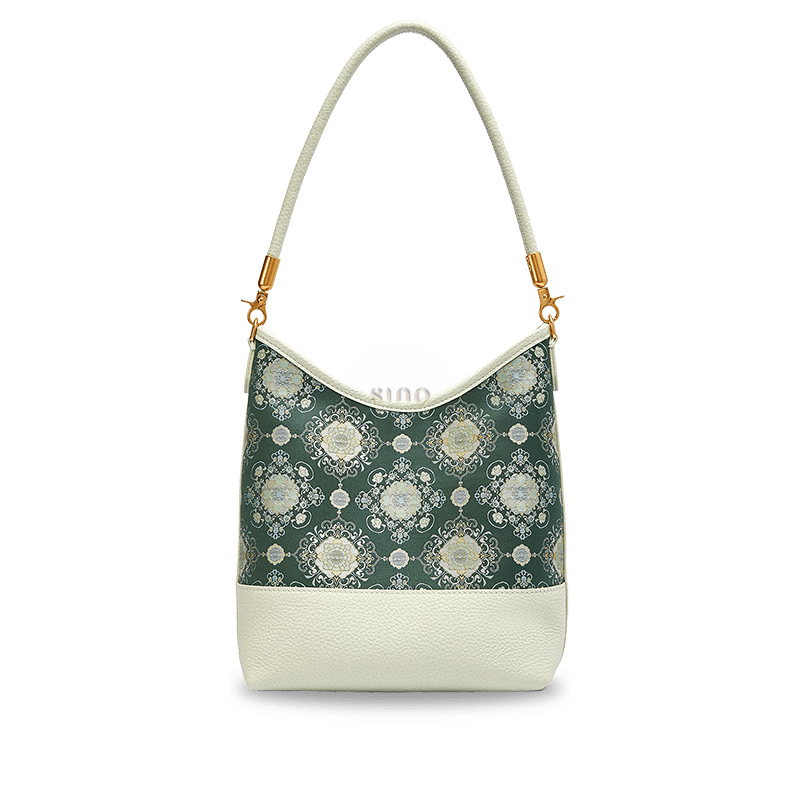
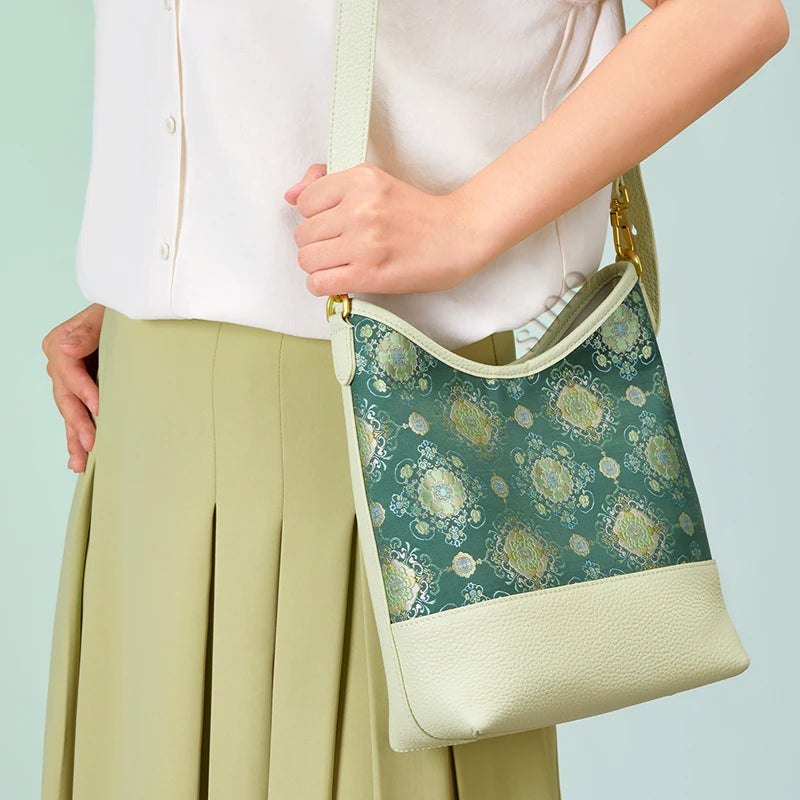
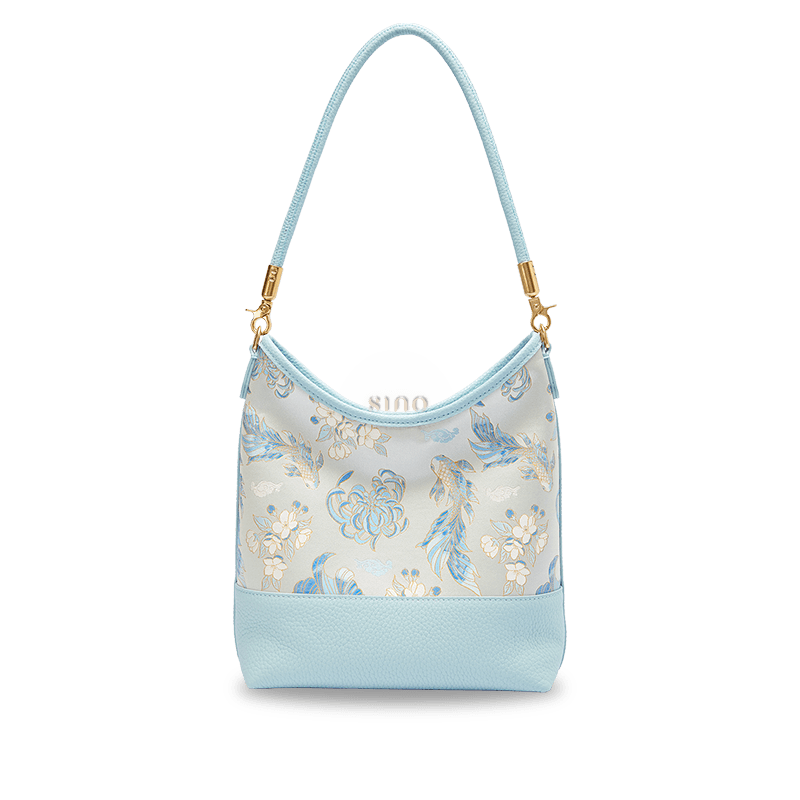
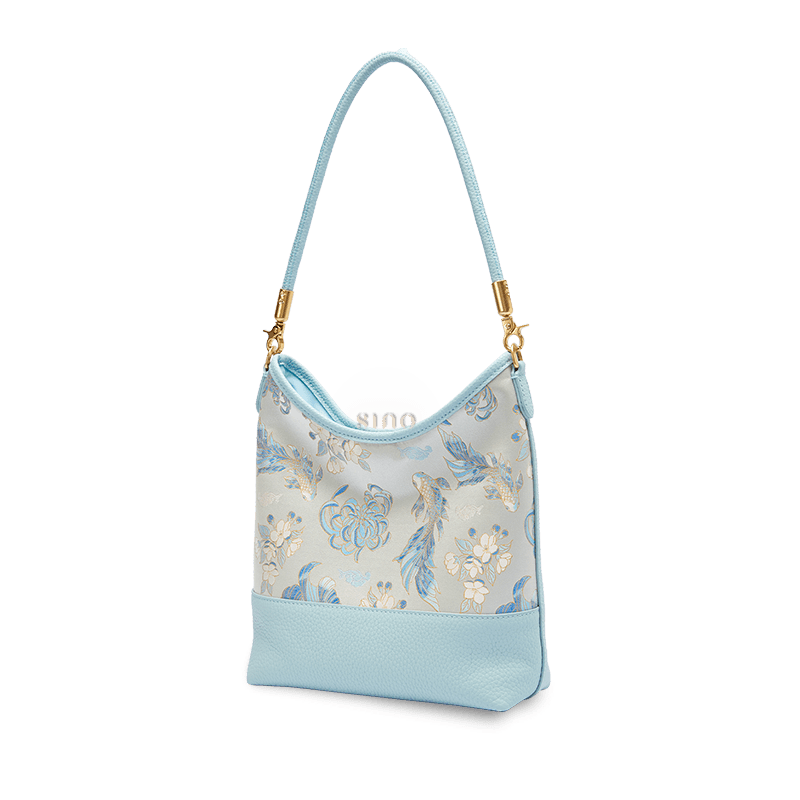
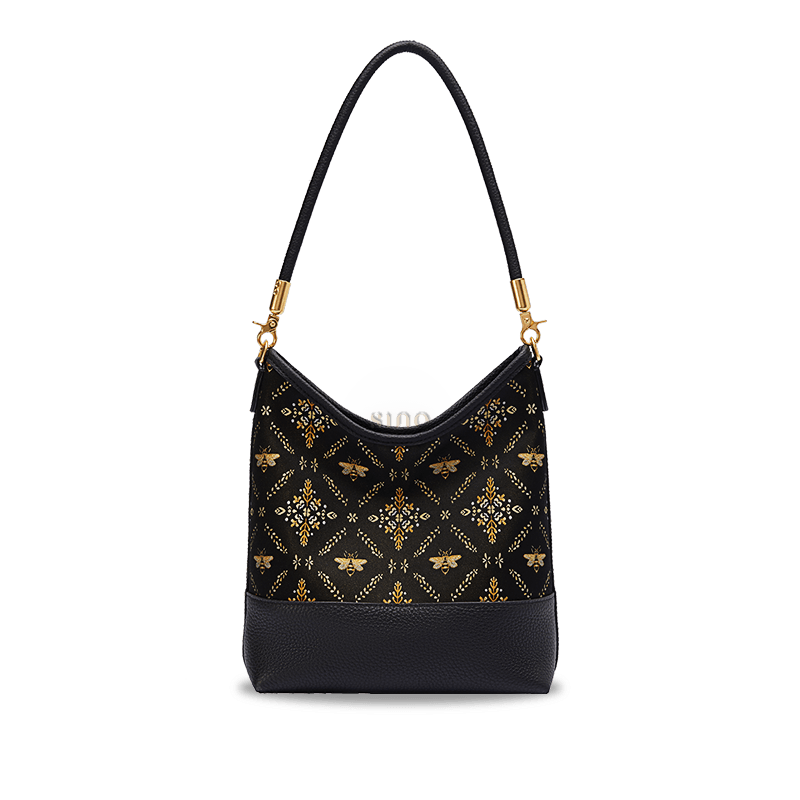
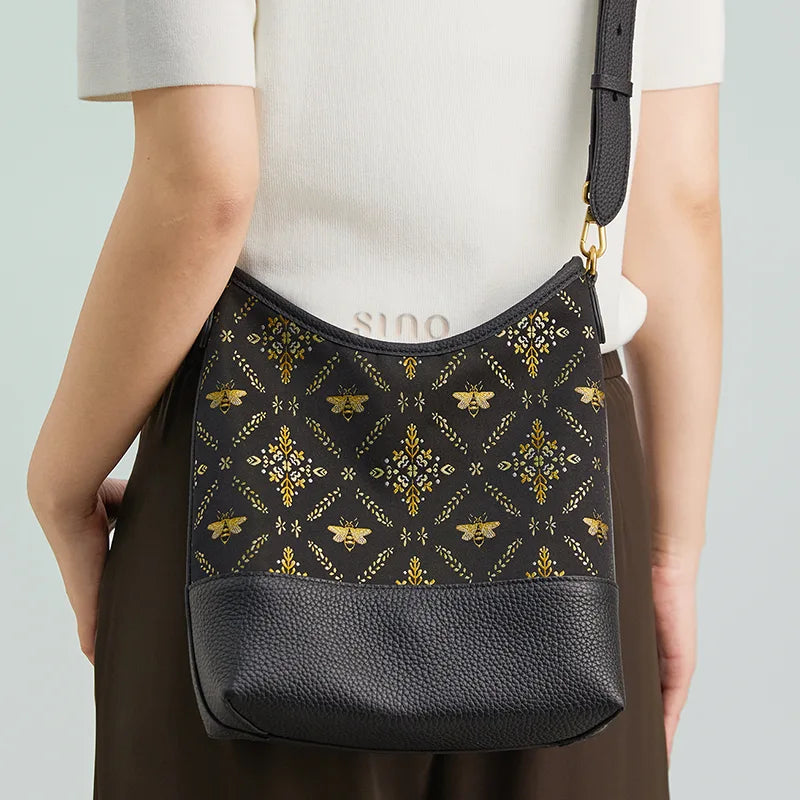
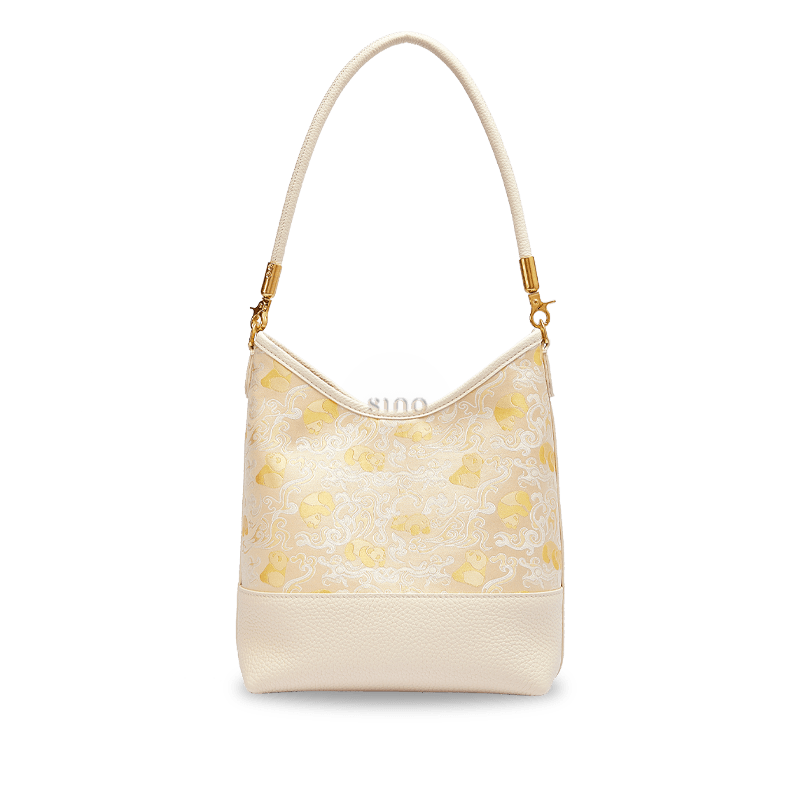
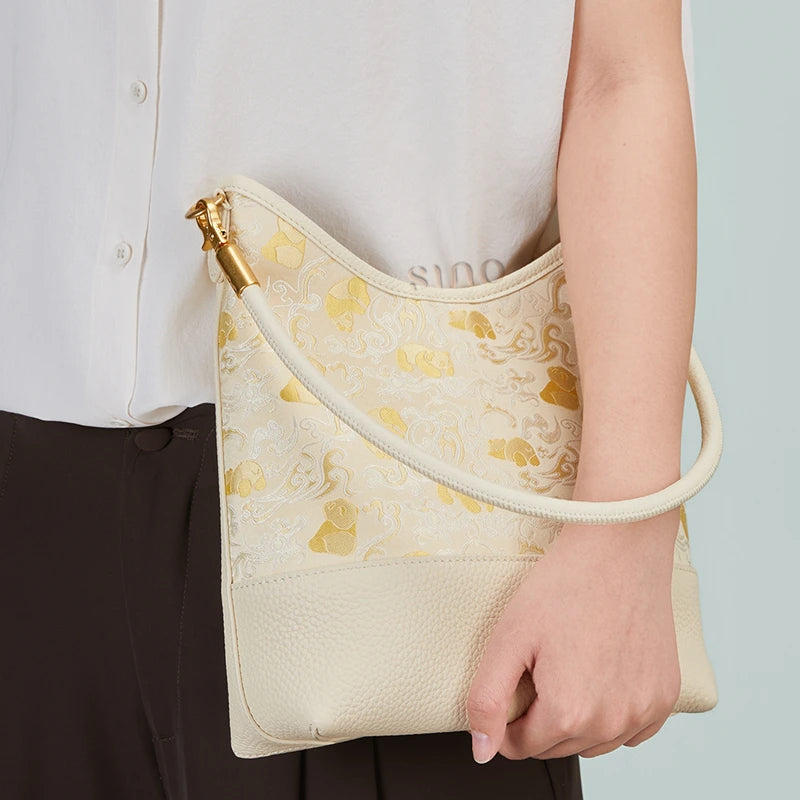
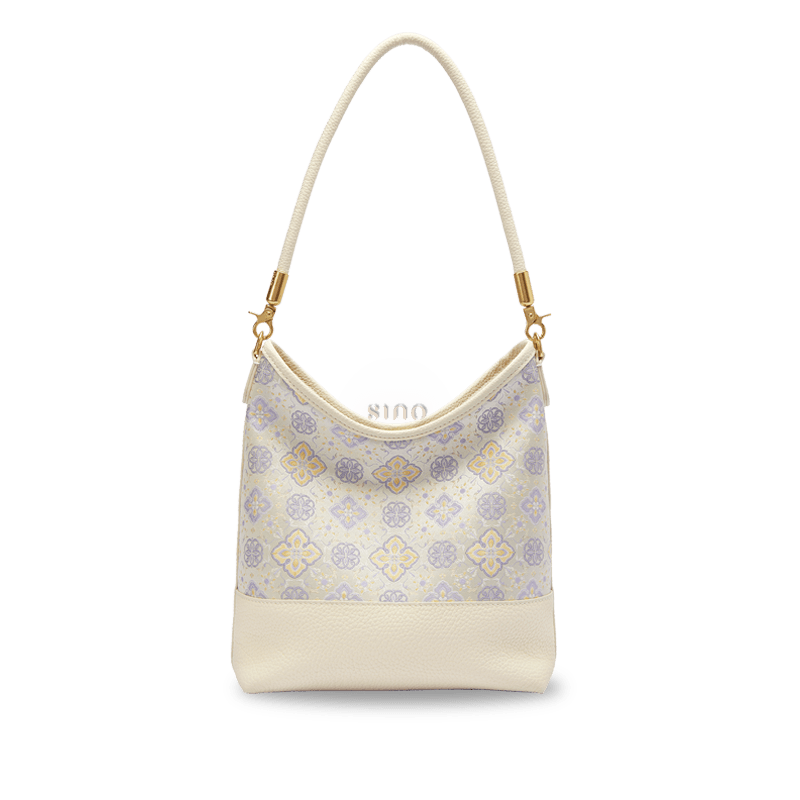
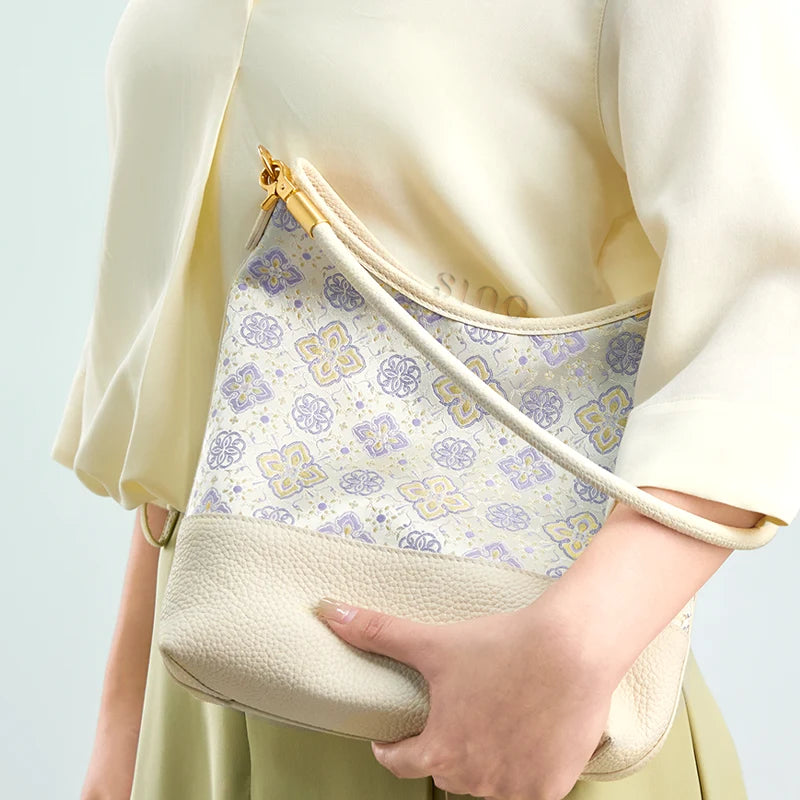
Discover how traditional Chinese brocade finds new expression in contemporary design.

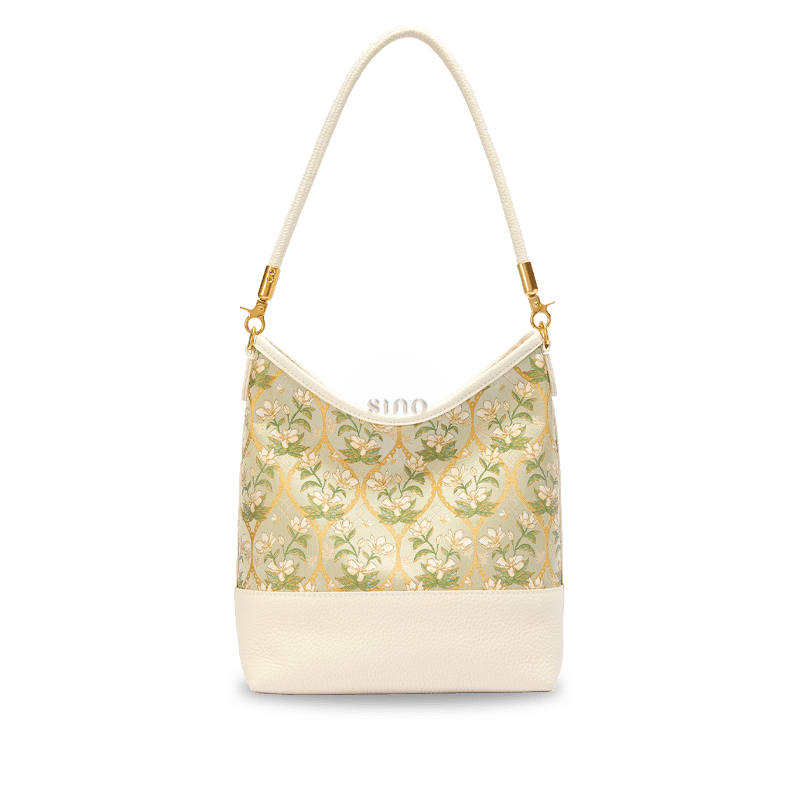
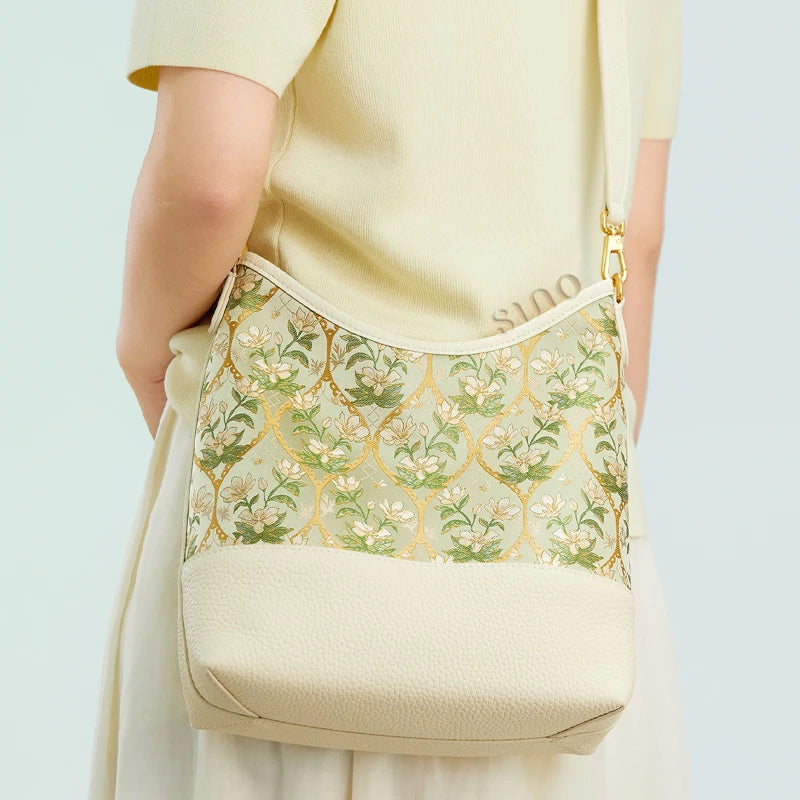
Verdant floral motifs meet the natural elegance of a bamboo handle.
$379.00 USD
SHOP NOW
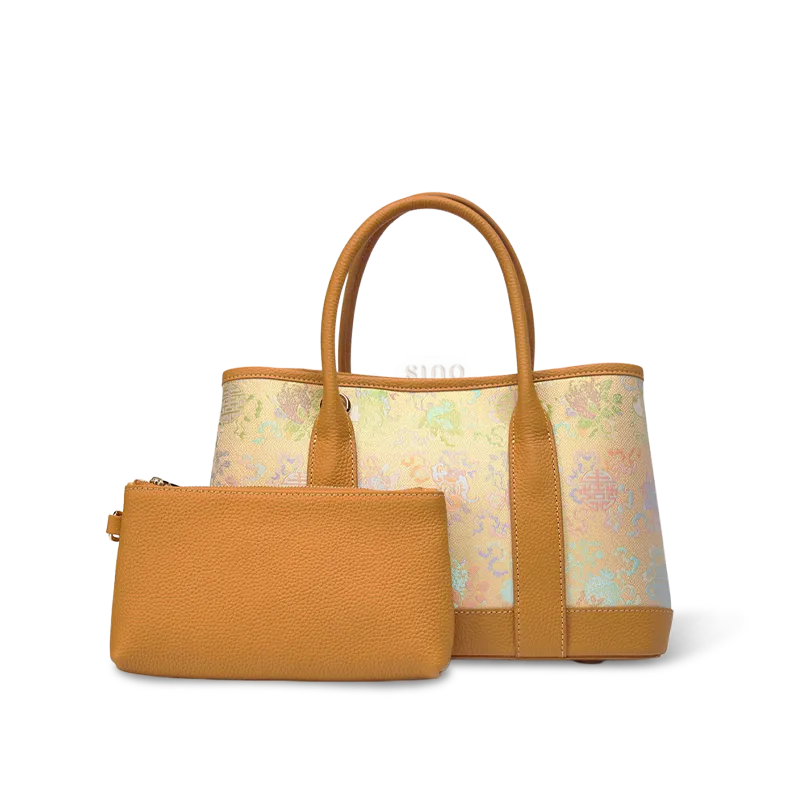
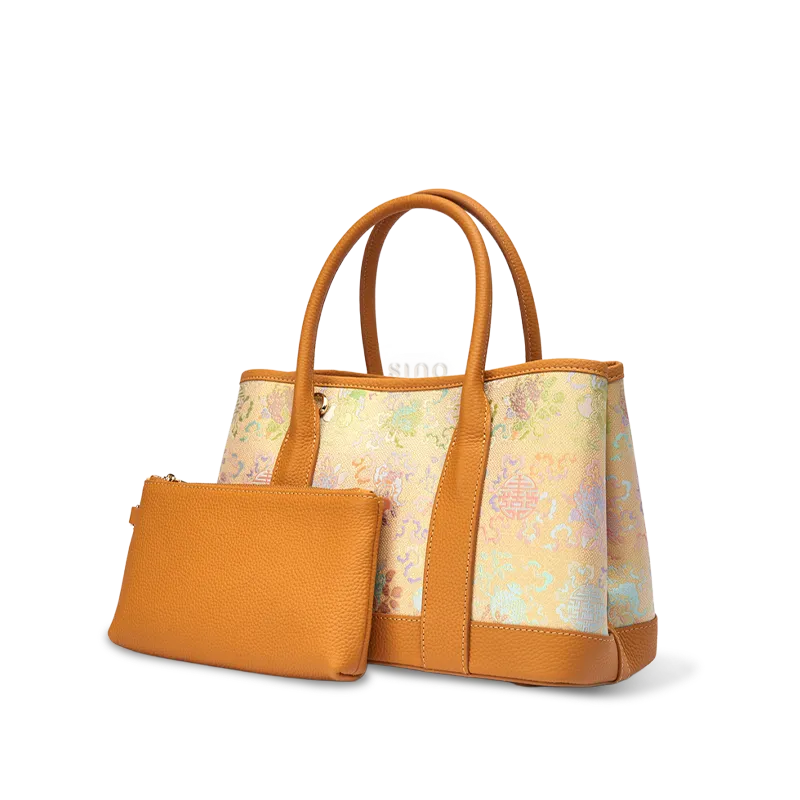
A traditional brocade motif celebrating fortune and longevity.
$379.00 USD
SHOP NOW
A playful panda motif paired with an auspicious gourd design.
$379.00 USD
SHOP NOW
A mythical Qilin motif woven into richly textured Shu brocade.
$379.00 USD
SHOP NOWWhat began as a $10 auction find in California became a journey into the history of Chinese brocade. By following the inscription to the Du Jinsheng Five-Color Brocade Factory in Hangzhou, we learned more about the weaving tradition behind the artwork and explored the meaning of its title and imagery. Just as meaningful was the exchange itself: a collector's curiosity about Chinese art brought us together across the Pacific, reminding us how a single object can open the door to a deeper cultural conversation.
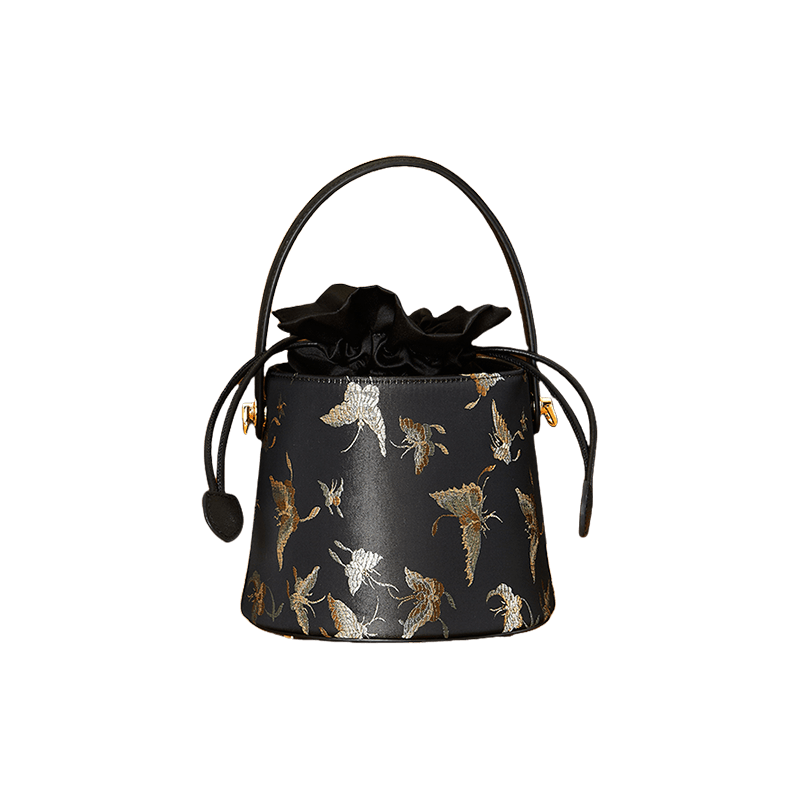
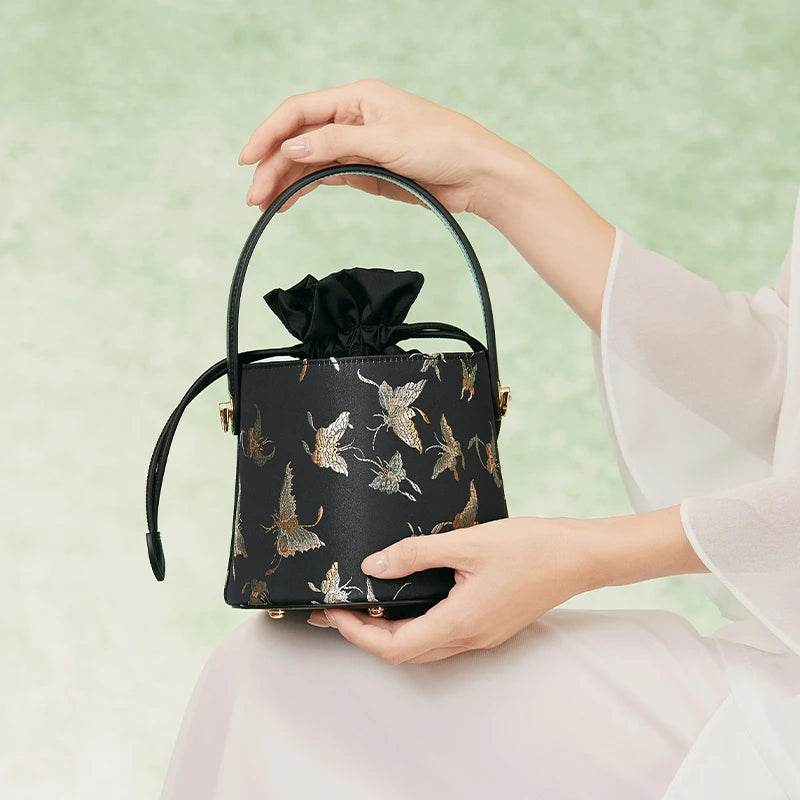
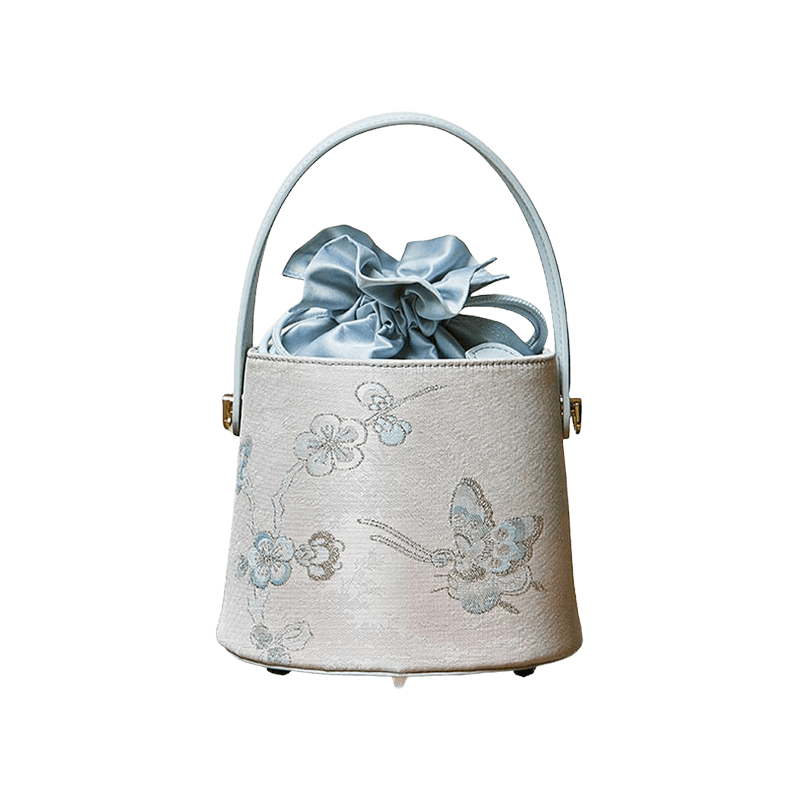
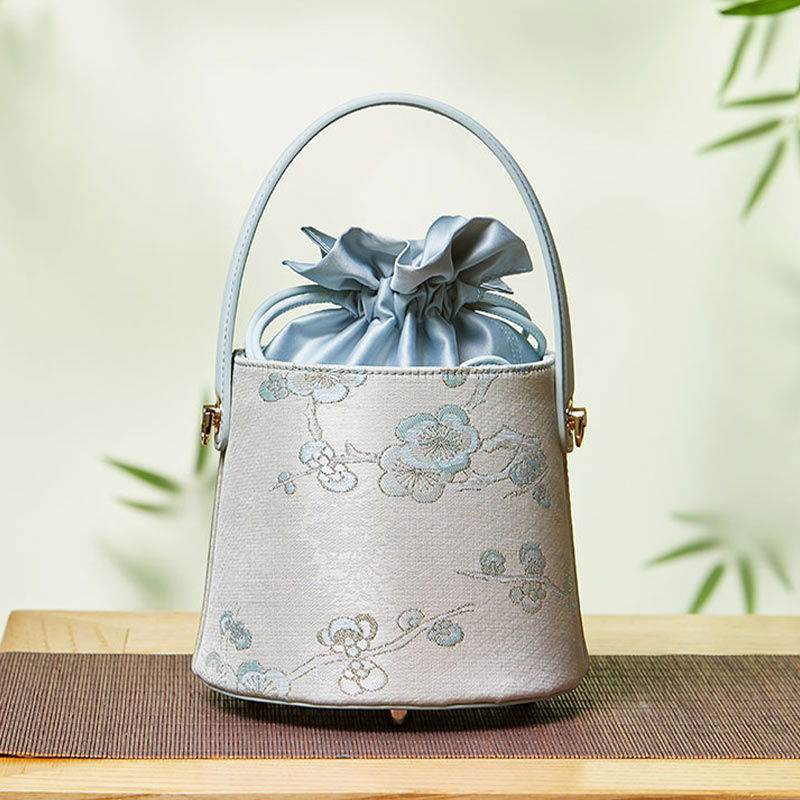
If this story has sparked your curiosity about Chinese brocade, we invite you to explore our collection of brocade handbags. Bringing traditional woven textiles into contemporary design, each piece offers another way to appreciate the artistry and cultural heritage woven into Chinese craftsmanship.