Passer au contenu



Feng shui colors are deeply rooted in China's ancient Five Elements system (五行, Wǔ Xíng). This philosophy assigns one of five primary colors-Qing (青), Chi (赤), Huang (黄), Bai (白), and Hei (黑)—to the fundamental energies that govern the natural world. Understanding these colors unlocks not just the practice of feng shui, but over five thousand years of Chinese art, ritual, and cultural symbolism.

Have you ever stood before the crimson walls of the Forbidden City and felt an inexplicable sense of harmony? Or been captivated by a line of poetry describing a "sky-blue glaze waiting for rain"? There is a reason traditional Chinese colors carry such profound weight—and it all begins with the Chinese Five Traditional Colors, or Wǔ Zhèng Sè (五正色).
Qing (青), Chi (赤), Huang (黄), Bai (白), and Hei (黑). These are far more than aesthetic choices. They are the underlying cosmic code through which Chinese civilization has interpreted the body, power, nature, and everyday life.
In traditional Chinese cosmology, these five imperial colors do not exist in isolation—they are the visible manifestations of the Wu Xing (Five Elements: Metal, Wood, Water, Fire, Earth), generating and balancing universal vital energy (Qi).
The Living Cosmic Palette of Wu Xing:
- White (Bái 白) • Metal (Jīn 金): Associated with purity, mental clarity, and protective resilience.
- Celadon Green (Qīng 青) • Wood (Mù 木): Embodies spring, vibrant health, and continuous personal renewal.
- Cobalt Azure (Hēi/Lán 黑/蓝) • Water (Shuǐ 水): Signifies flowing abundance, wisdom, and intuitive peace.
- Cinnabar Crimson (Chì 赤) • Fire (Huǒ 火): Radiates royal celebration, auspicious luck, and dynamic passion.
- Imperial Ochre (Huáng 黄) • Earth (Tǔ 土): Rooted in the center, symbolizing grounding balance, sovereignty, and wealth.
To ensure this thousand-year-old cosmic wisdom is not lost to museum vitrines, SinoCultural has translated these five celestial hues into tangible, tactile talismans. Master artisans in Jingdezhen—China’s porcelain capital—have merged genuine high-fired porcelain craftsmanship with the protective form of the traditional gourd (Hulu or Wu Lou), creating modern, wearable Feng Shui amulets for everyday poise.
SinoCultural Chinoiserie Five Elements Porcelain Hulu Bag Charm
High-fired Jingdezhen porcelain glazed in the sacred five canonical colors, paired with genuine leather hardware. Hang it as an auspicious Feng Shui charm on your favorite handbag or carry it as your personal guardian.

Table of Contents
- What Are the Five Primary Colors? China's Original Color System
- The Five Elements (Wu Xing): China's Model of the Universe
-
The Beauty of Each Color: A Journey Through the Five Elements
- 1. Blue-Green (青 Qīng): The Color of Spring and Wood
- 2. Red (赤 Chì): The Intensity of Fire, the Color of China
- 3. Yellow (黄 Huáng): The Virtue of Earth, the Emperor's Color
- 4. White (白 Bái): The Stillness of Metal, the Beauty of Emptiness
- 5. Black (黑 Hēi): The Depths of Water, the Mystery of the Void
- The Five Primary Colors Today: Ancient Code in Contemporary Life
- Frequently Asked Questions (FAQ)
What Are the Five Primary Colors? China's Original Color System
In modern usage, "primary colors" is a technical term from art class. In ancient China, it was a moral and cosmological declaration.
The Rites of Zhou (Zhōulǐ·Kǎogōng Jì), one of China's foundational classical texts, outlines this system clearly:
"In the art of painting, the five colors are combined. The east is called Qing (青), the south is called Chi (赤), the west is called Bai (白), the north is called Hei (黑), the sky is called dark, and the earth is called Huang (黄)."
These five colors—Blue-green (青), Red (赤), Yellow (黄), White (白), and Black (黑)—were designated zhèng sè, meaning pure or correct colors.

Colors produced by mixing them (like green, pink, violet, or amber) were called jiān sè (secondary colors) and held a subordinate status. This strict color hierarchy governed everything from imperial court rituals to the exact shade of a scholar's robe.
The Five Elements (Wu Xing): China's Model of the Universe
Why these specific five colors? Because behind each one stands an entire cosmic network: The Five Elements.
Ancient Chinese thinkers organized all phenomena into five fundamental energies: Wood, Fire, Earth, Metal, and Water. Like pieces of an intricate puzzle, colors, directions, seasons, and even bodily organs were mapped to one of these elements.
This table was the ancient world's "universal app." When the emperor performed rituals to the Eastern Azure Emperor, he wore blue-green robes. Autumn ceremonies called for white. Even the tradition of executing criminals "after autumn" was connected to white's association with Metal and endings — a color coordinated with cosmic justice.

The clothes you wore placed you within the coordinates of heaven and earth.
The Five Elements also generate one another in a continuous cycle: Wood feeds Fire → Fire creates Earth (ash) → Earth yields Metal → Metal holds Water → Water nourishes Wood. Color was not static — it flowed in a living cycle of transformation.

This Five Element color system is the direct philosophical root of what the Western world now calls feng shui colors. Feng shui is fundamentally about the flow and balance of qi (vital energy). Color is one of its most immediate tools. For example:
-
Place blue-green in the east to invite growth.
-
Use red in the south to activate passion.
-
Anchor the center with yellow for stability.
-
Bring white to the west for mental clarity.
-
Use black in the north to cultivate depth and wisdom.
Every feng shui color recommendation you read in a home design magazine is, at its core, tracing the path of the Five Elements. The Five Primary Colors are not museum pieces — they are a spatial language still in active use.
The Beauty of Each Color: A Journey Through the Five Elements
Now that we understand the underlying code, let's step inside each primary color and discover its unique aesthetic story.
1. Blue-Green (青 Qīng): The Color of Spring and Wood
The Chinese character for 青 combines the radicals for "growth" and "cinnabar," capturing its original meaning: plants breaking through the soil.
The color range of 青 is remarkably expansive. It encompasses what we now call blue and green, and sometimes even black. In poetry, “blue-green mountains and clear waters” (青山绿水) paints a lush landscape. This fluid inclusivity perfectly expresses the generative spirit of the East.

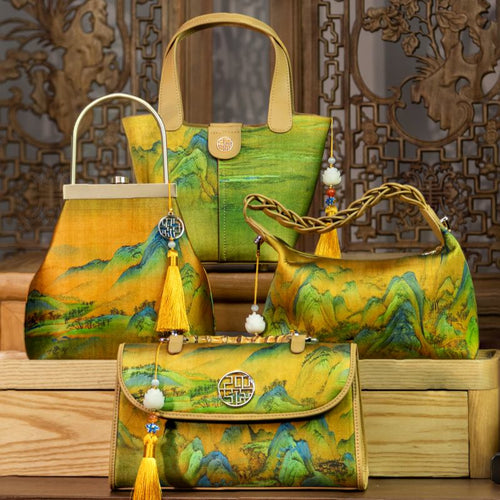
✨ Bring it to your life: This same vitality flows through the art of traditional silk art. Our chinese painting silk handbags in blue-green patterns carry this Eastern energy into everyday life — the freshness of spring, made wearable. → Chinese Art Handbags & Purses: Traditional Landscape Painting Style


2. Red (赤 Chì): The Intensity of Fire, the Color of China
The oracle bone inscription for 赤 shows a human figure (大) above fire (火) — a person reddened by flames, face flushed with heat. This is the most primal meaning of red: the color of fire itself, a designation that predates even the more familiar word hóng (红) in becoming a primary color.

As the color of the South and Fire, red radiates warmth, illumination, and luck. It colors the walls of the Forbidden City, the lanterns of Chinese New Year, and the traditional garments of brides. It is the ultimate visual representation of celebratory energy.

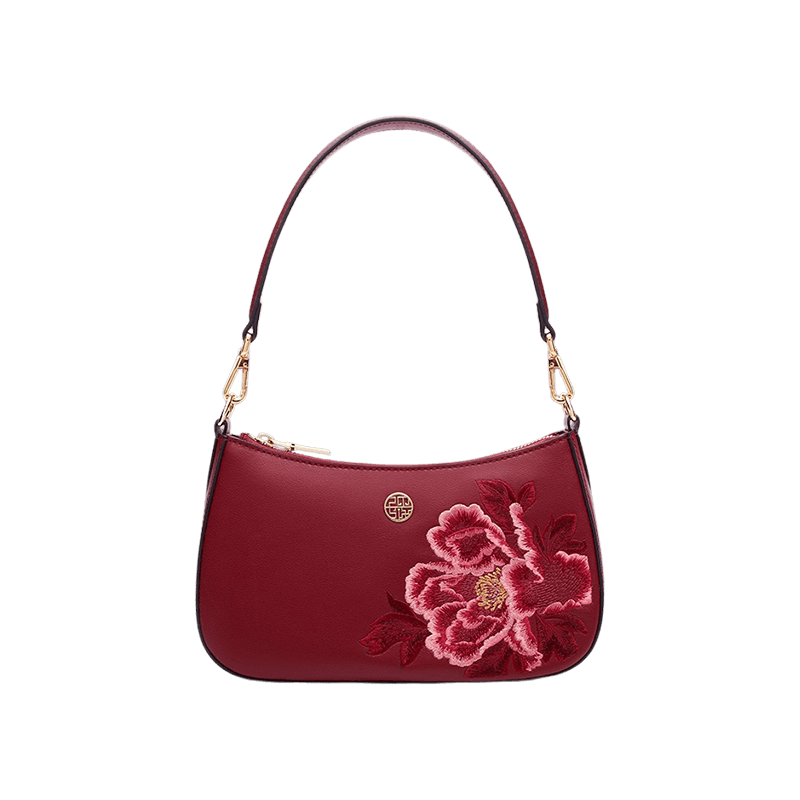
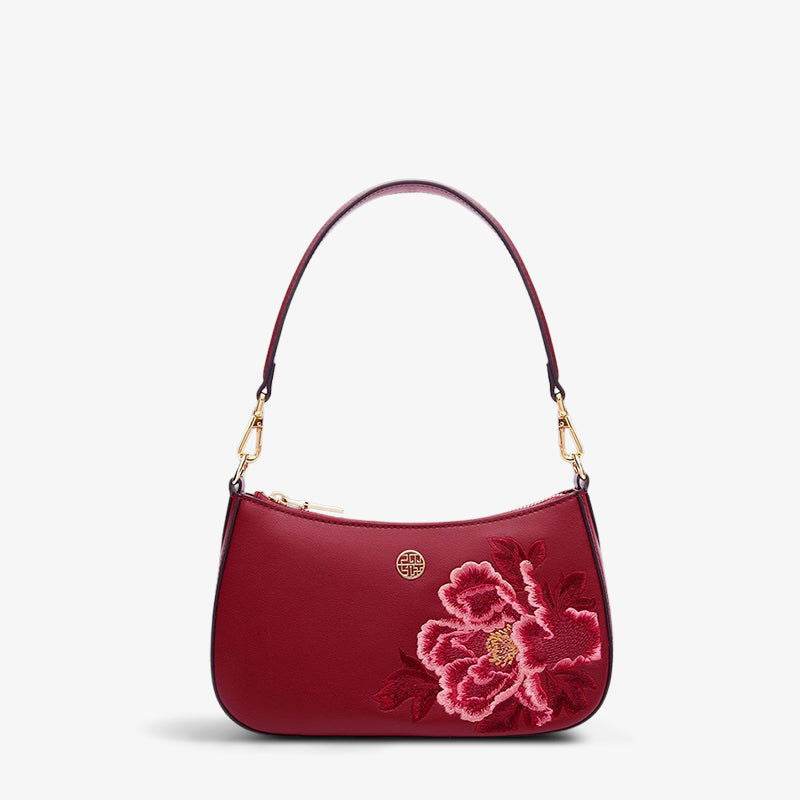
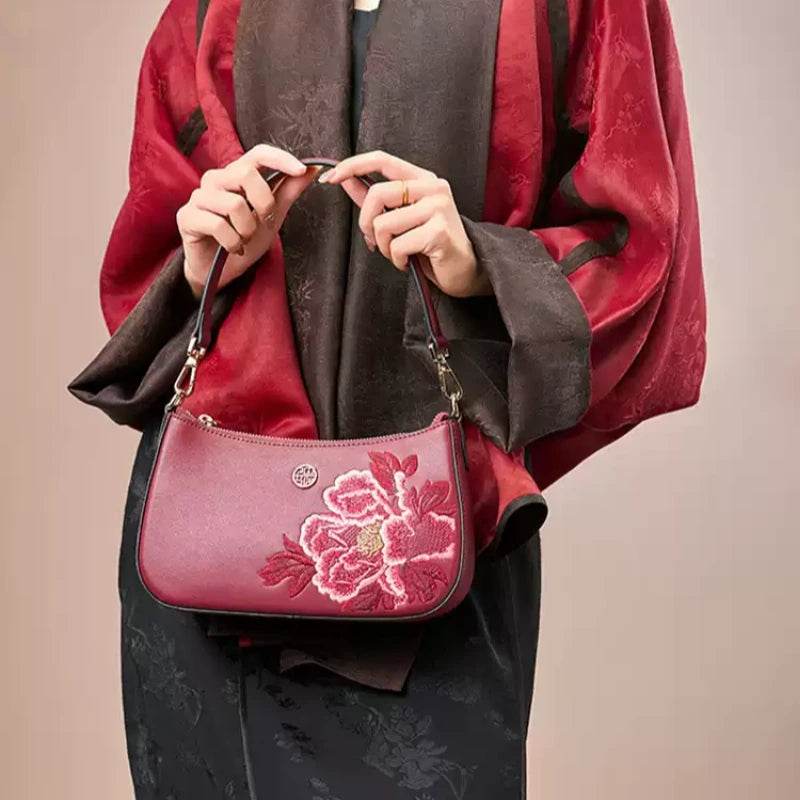
✨ Bring it to your life: Red's festive energy makes it the most natural choice for gifting. Our red embroidered handbags and silk scarves bring this Chinese red into daily life — whether for yourself or as a meaningful gift, each piece is a quiet tribute to a tradition that has celebrated in red for millennia. → Chinese New Year Handbags & Purses: Lucky Red Embroidery 2026|SinoCultural
Auspicious Red: Handbags & Purses


3. Yellow (黄 Huáng): The Virtue of Earth, the Emperor's Color
Yellow is the color of soil. In a civilization built on agriculture, earth occupies the center — governing all four seasons, nourishing all life — and yellow naturally carries connotations of harmony, orthodoxy, and nobility.

Yellow symbolizes the land and imperial authority. The dragon robes of ancient emperors were predominantly yellow, broadcasting supreme status. Yet yellow's elevation to an exclusively imperial color only became law after the Tang Dynasty, when Emperor Gaozu decreed that "commoners and scholars may not wear red-yellow garments." From then on, the "yellow robe" became synonymous with imperial power. When the general Zhao Kuangyin had a yellow robe draped over his shoulders at Chenqiao in the Song Dynasty — a moment that launched a dynasty — yellow became the ultimate symbol of legitimate rule.

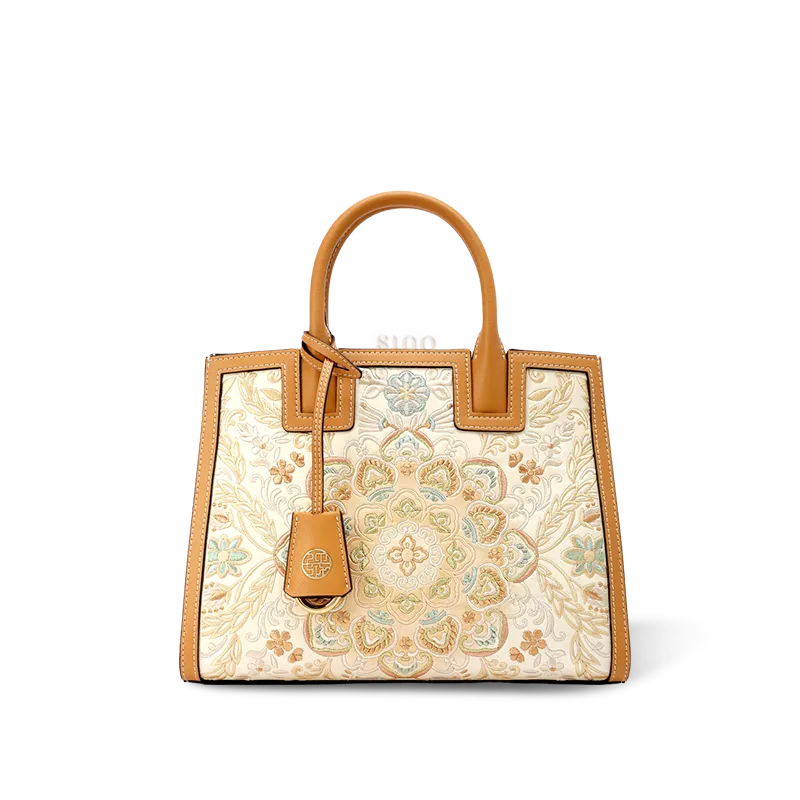
✨ Bring it to your life: The weight and grandeur that yellow represents finds its richest expression in brocade and woven silk. Our curated yellow-toned silk products carry forward this warm, grounded palette — a color that speaks of earth, harvest, and centuries of imperial refinement. → Embroidered Leather Handbag with Baoxiang Motif | Sinocultural

4. White (白 Bái): The Stillness of Metal, the Beauty of Emptiness
White today reads as pure and serene, representing cleanliness, integrity, and light. Within the Five Elements system, however, white corresponds to autumn and Metal — carrying the more complex meanings of precision, endings, and refined restraint. The Shang Dynasty revered white; sacrificial animals were white. After the Zhou Dynasty, white became increasingly associated with the west direction and mourning — yet it simultaneously symbolized transcendence and scholarly purity. The white-robed literati of ancient China wore it as a badge of intellectual refinement.

The most profound aesthetic concept white generates is liú bái — "leaving white." Chinese ink painting is built around the idea that empty space carries equal weight to marks: white areas become clouds, water, and breathing room. Related is the concept of bái bèn (白贲): the Book of Changes suggests that pure white adornment — decoration stripped to its essence — is the highest form of beauty. White is the most brilliant kind of simplicity.

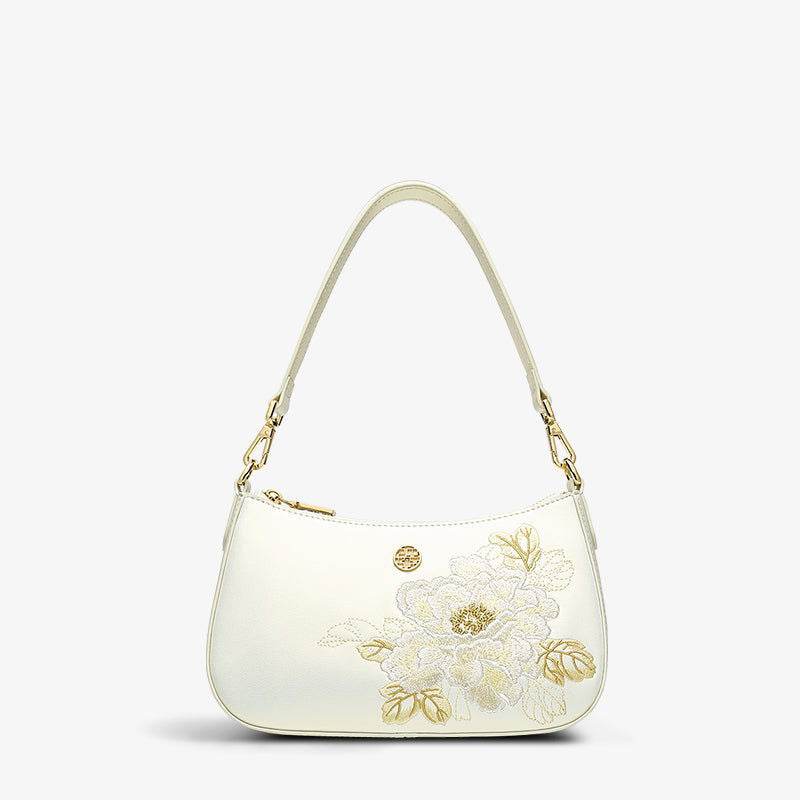
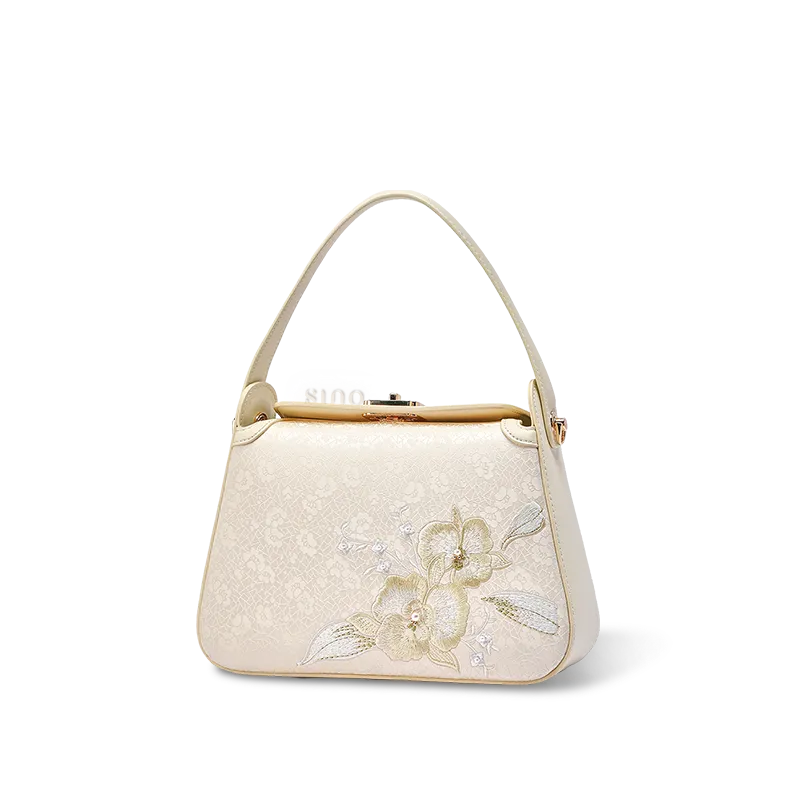
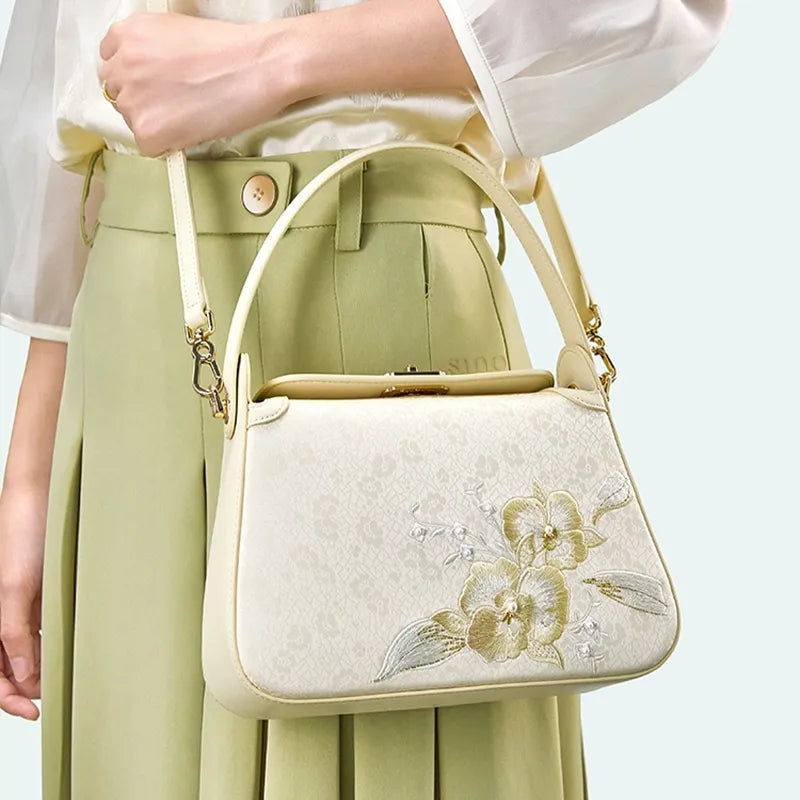
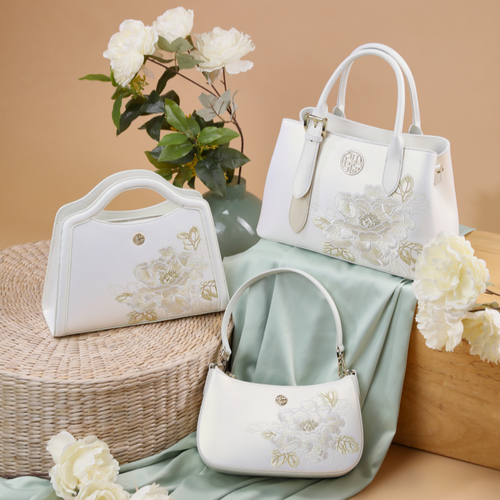
✨ Bring it to your life: This minimalist aesthetic lives on in contemporary Chinese-inspired design. Our white embroidered silk handbag with orchid butterfly designa modern expression of this same philosophy — beauty through restraint, elegance through reduction. →Chinoiserie Luxury White Handbag in Embroidered Silk | Sinocultural

5. Black (黑 Hēi): The Depths of Water, the Mystery of the Void
Black is Water. It is the north, winter, and the force that holds everything within itself. The Qin Dynasty, believing it had succeeded the fire-virtue Zhou, declared itself aligned with Water — and elevated black to the color of imperial ceremony, making black robes and black banners the signature of China's first unified empire. This was history's original "elevated black."

Black is solemn and commanding, representing depth, stillness, and authority. In ancient ritual contexts, black conveyed reverence before heaven and the spirit world.
Chinese ink painting pushed black to its absolute limit: with nothing but varying concentrations of ink — wet and dry, light and dark — artists rendered entire universes. "Ink contains five colors," the saying goes — meaning black, used with mastery, contains everything. The Taoist classic echoes this: "Dark upon dark, the gateway to all mystery." The character xuán (玄), meaning dark reddish-black, carries exactly this quality — depth that cannot be fully seen.

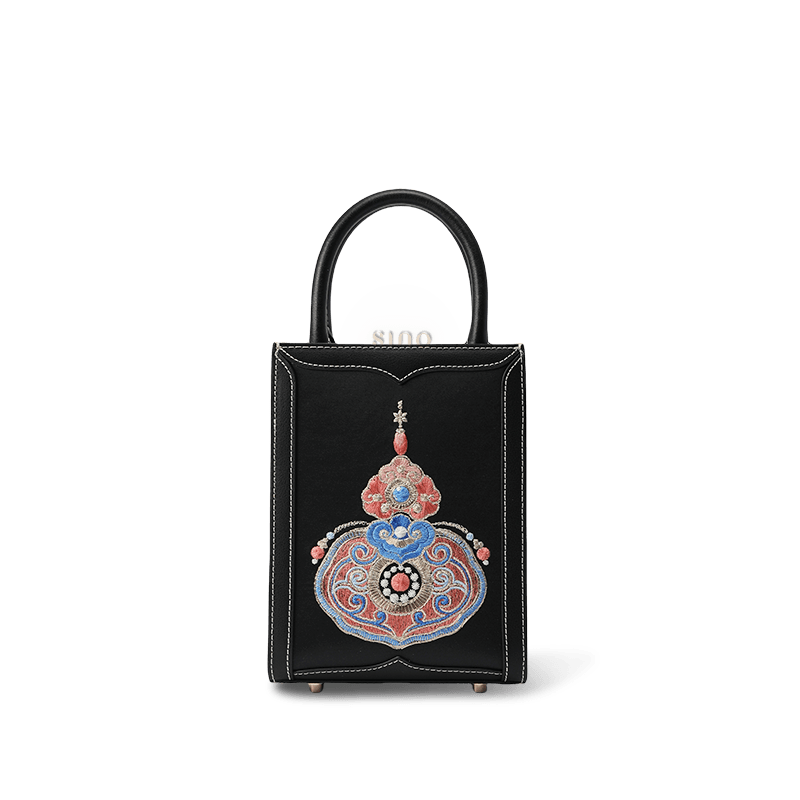
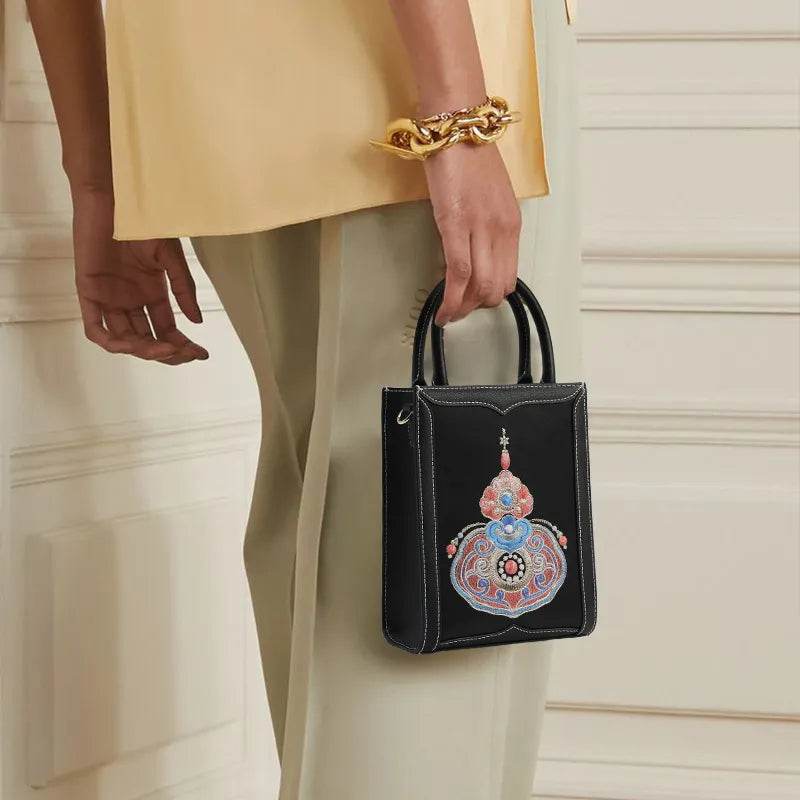
✨ Bring it to your life: Black's quiet authority makes it the most timeless of colors. Our black-ground embroidered bags — ink-dark bases brought to life with gold thread or vivid embroidery — are a contemporary translation of this xuán quality: depth made visible. → Chinese Luxury Embroidery Handbags & Embroidered Bags | SinoCultural

The Five Primary Colors Today: Ancient Code in Contemporary Life
The Five Primary Colors never left; they simply evolved.
-
Design & Fashion: The red walls and yellow roofs of the Palace Museum inspire modern palettes. The rich blues, ochres, and blacks of ancient Dunhuang murals regularly reappear in high fashion and interior design.
-
Seasonal Food Culture: We eat green rice cakes (青团) in spring for Wood vitality, and red bean dumplings in summer for Fire energy. Countless food traditions unknowingly follow the Five Elements.
-
Pop Culture: When artists sing of "sky-celadon blue waiting for rain," they are channeling the Song Dynasty's poetic expression of
Conclusions
Blue-green(青 Qīng) is the first wisp of mist on a spring mountain. Red (赤 Chì) is the warm glow of a lantern on New Year's snow. Yellow(黄 Huáng) is the sound of wind moving through a ripe wheat field. White(白 Bái) is the infinite possibility of an untouched sheet of xuan paper. Black(黑 Hēi) is the night sky above an old courtyard...
The next time you drape a blue-green scarf around your shoulders, you aren't just wearing a color—you are standing inside a color universe that has been turning for a thousand years.
Frequently Asked Questions (FAQ)
What are the five traditional colors of China?
The five traditional colors (五正色 wǔ zhèng sè) are Blue-green (青 qīng), Red (赤 chì), Yellow (黄 huáng), White (白 bái), and Black (黑 hēi). Rooted in the ancient Five Elements philosophy, they have shaped Chinese art, feng shui, and architecture for over two millennia.
What do feng shui colors mean?
In feng shui, colors carry the energy of the Five Elements:
-
Blue-green (Wood): Growth and new beginnings.
-
Red (Fire): Passion, luck, and celebration.
-
Yellow (Earth): Stability, harmony, and nourishment.
-
White (Metal): Clarity, precision, and transition.
-
Black (Water): Wisdom, flow, and depth.
What is the luckiest color in Chinese culture?
Red is universally considered the luckiest color in Chinese culture. Tied to the Fire element, it is used at weddings, Lunar New Year celebrations, and in gift-giving to invite good fortune, joy, and ward off negative energy.
Why is white associated with mourning in Chinese culture?
In the Five Elements system, white corresponds to Metal and autumn—seasons and elements associated with endings, harvest, and withdrawal. However, white also carries highly positive meanings, symbolizing scholarly purity, minimalist beauty (liu bai), and spiritual clarity.
How can I incorporate Chinese traditional colors into my wardrobe?
Start with an anchor color tied to your intention: blue-green for creative energy, red to invite luck, or yellow for warmth. Silk scarves and embroidered accessories are the most versatile ways to bring this ancient color philosophy into modern everyday life.