تخطي إلى محتوي
Modern Song Brocade continues to evolve beyond traditional collections, finding new expression in fashion, handbags, interiors, and contemporary design. Its place in modern life has been shaped not by preservation alone, but by the recovery of endangered techniques, continued weaving innovation, distinctive artistic visions, and new ways of reaching a wider audience.
Qian Xiaoping, Li Dexi, Lu Meiying, and SAINT JOY represent four important paths in this journey. From restoring nearly lost craftsmanship and reworking traditional weaving structures to developing new visual languages and bringing Song Brocade into contemporary life, each has contributed a different chapter to its modern revival. This guide brings their stories together and invites you to explore the people, ideas, and creative practices behind the Song Brocade we see today.
Four Masters of Song Brocade at a Glance
Modern Song Brocade has not been shaped by a single method. Its development has depended on the recovery of endangered knowledge, the reconstruction of weaving structures, new forms of artistic expression, and the ability to enter contemporary life. The three masters and one heritage brand below represent four distinct but connected paths in this continuing story.
Qian Xiaoping: Restoring a Craft at Risk of Disappearing

When the looms fell silent, Song Brocade was at risk of losing more than its intricate patterns. The knowledge behind its layered structures, shifting colors, and precise arrangement of threads was beginning to disappear as well.
Qian Xiaoping looked for answers in the fabric itself. To her, surviving brocade fragments were not simply relics, but clues. By studying each thread, color change, and woven layer, she began piecing together techniques that had nearly vanished and bringing them back to the loom.
Yet restoration was only the beginning. How did she turn fragments of the past into a living craft, and how did her work shape the next chapter of modern Song Brocade?
Li Dexi: Reconstructing Song Brocade for a New Era

Recovering the knowledge behind Song Brocade was only the first step. To become a living textile again, its historic patterns had to be translated back into threads, repeats, color sequences, and working looms.
Li Dexi brought decades of hands-on weaving experience to that challenge. Shaped by years spent with looms, silk threads, and technical adjustments, he understood that a traditional motif was never just an image—it was also a structure, a rhythm, and a system that had to function in real fabric. Where others might see a finished pattern, he saw density, sequence, balance, and the practical decisions needed to bring Song Brocade back into production.
But reconstruction was not his final goal. As Song Brocade returned to the loom, Li Dexi also helped guide it toward a new era—one in which traditional craftsmanship could continue to evolve through contemporary design and renewed relevance.
Lu Meiying: Giving Song Brocade a New Artistic Voice

Once Song Brocade had returned to the loom, another question emerged: how could it speak to a new generation?
Lu Meiying brought to Song Brocade the sensitivity she had developed through kesi, where subtle shifts in silk, color, and light shape the character of a woven surface. In her hands, traditional motifs became more expressive. Animals, flowers, and symbolic imagery were no longer treated as decoration alone, but as part of a richer visual story.
Through layered colors and lively compositions, she gave Song Brocade greater warmth, personality, and emotional depth. Her work opened a new way of seeing the textile—not simply as a preserved tradition, but as an artistic language still capable of evolving.
In Lu Meiying's hands, Song Brocade began to feel less like an echo of the past and more like a story still unfolding.
SAINT JOY: Bringing Song Brocade into Modern Life

A craft can be restored, woven, and artistically renewed, but its future also depends on whether it can find a place in contemporary life.
SAINT JOY helped move Song Brocade beyond preservation by connecting traditional woven structures with electronic jacquard production, material innovation, modern design, and brand development. Through fashion, handbags, scarves, interiors, and cultural products, the textile gained new forms and reached audiences far beyond the traditional workshop.
This modern revival is not simply about producing more fabric. It is about creating more opportunities for Song Brocade to be seen, worn, carried, and understood. Through SAINT JOY, the textile became more than a symbol of heritage; it became part of a living design culture.
Song Brocade was no longer waiting to be admired from a distance. It was ready to become part of everyday life again.
Beyond Preservation: What Keeps Song Brocade Alive?
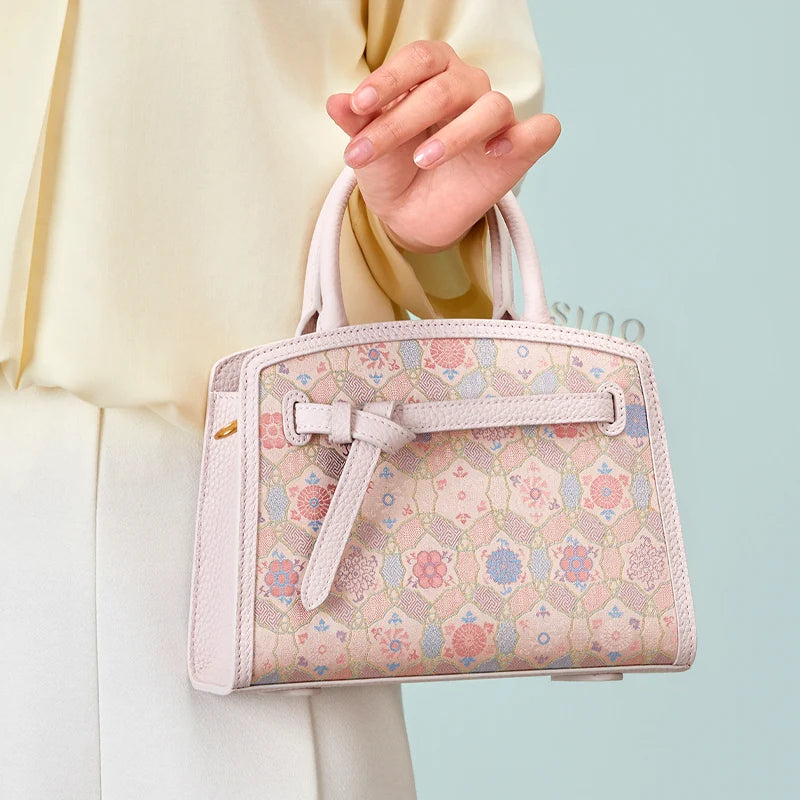
Song Brocade remains alive not because it has stayed unchanged, but because each generation has found new ways to preserve its knowledge, refine its craftsmanship, reinterpret its patterns, and bring it into contemporary life. From restored weaving traditions to modern leather silhouettes, today's Song Brocade continues through objects that can be seen, carried, and lived with.
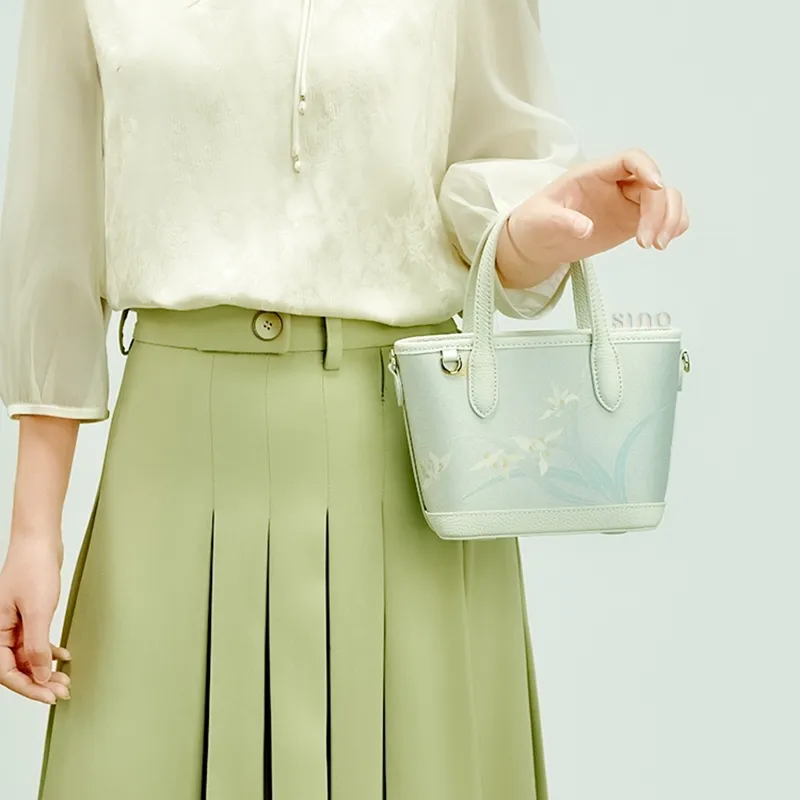
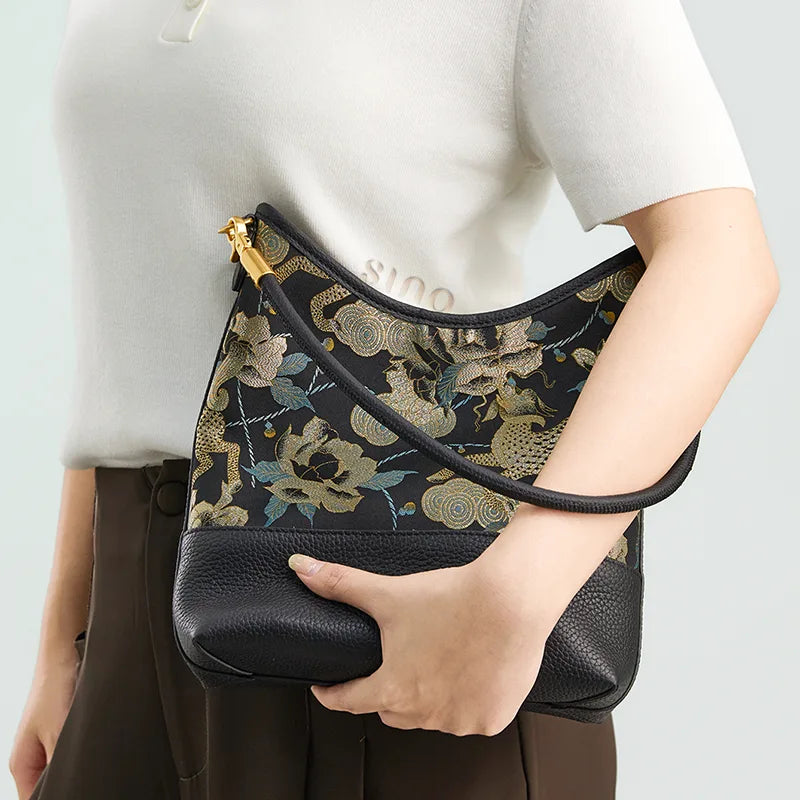
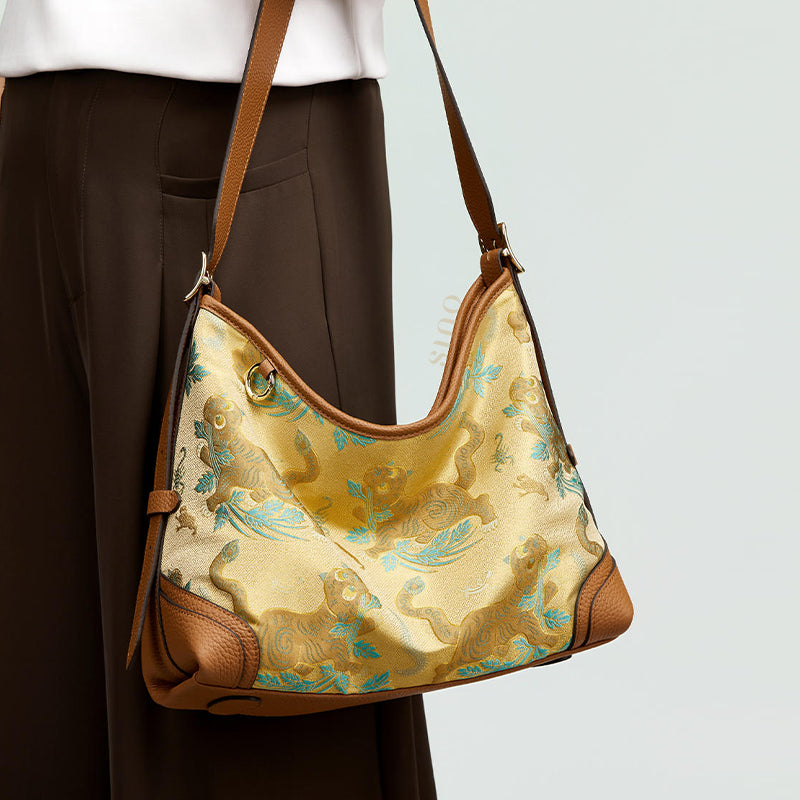
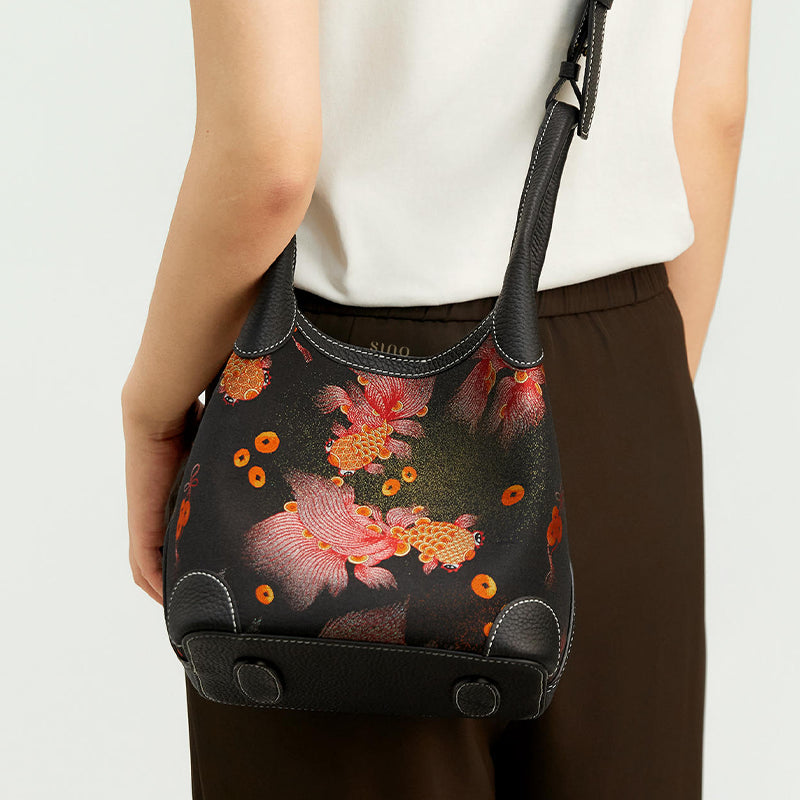
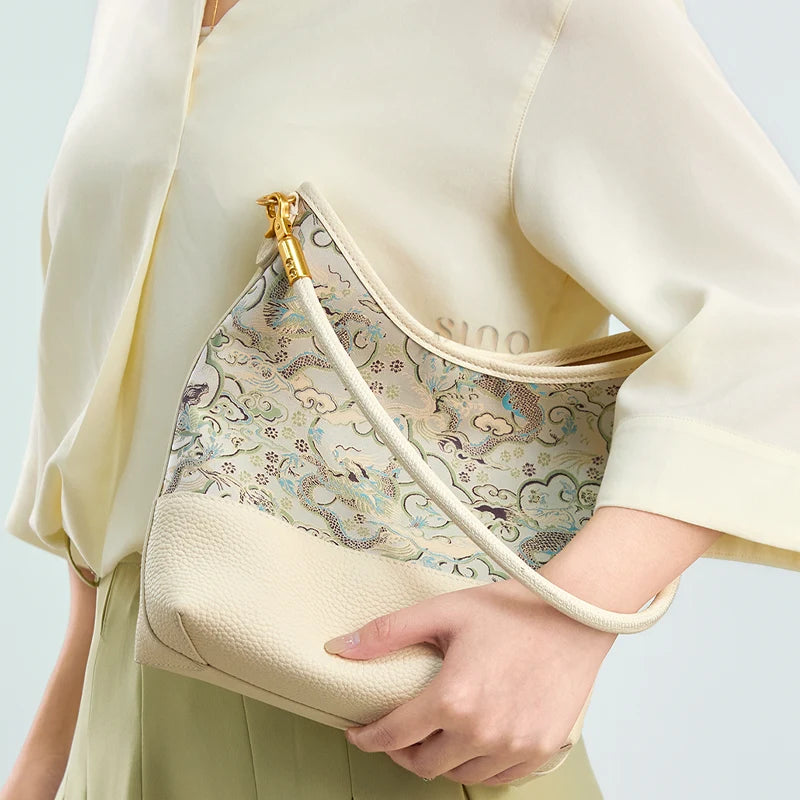
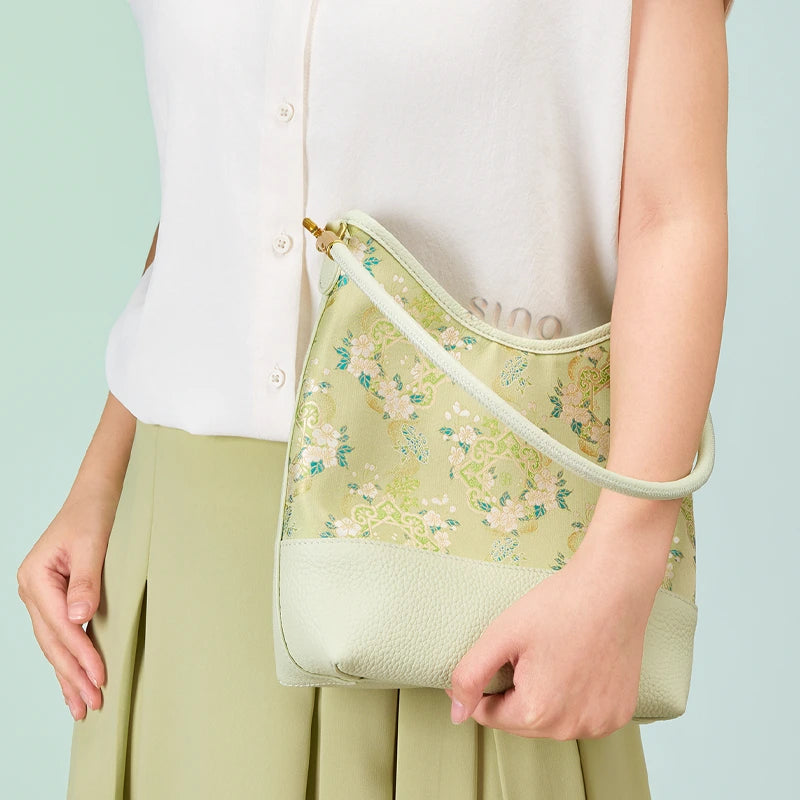
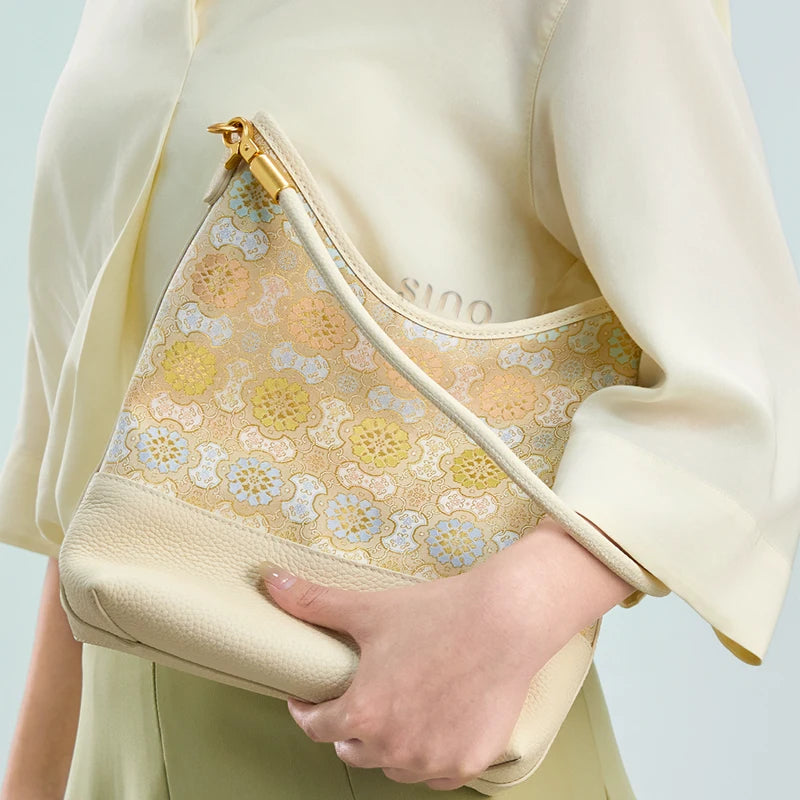
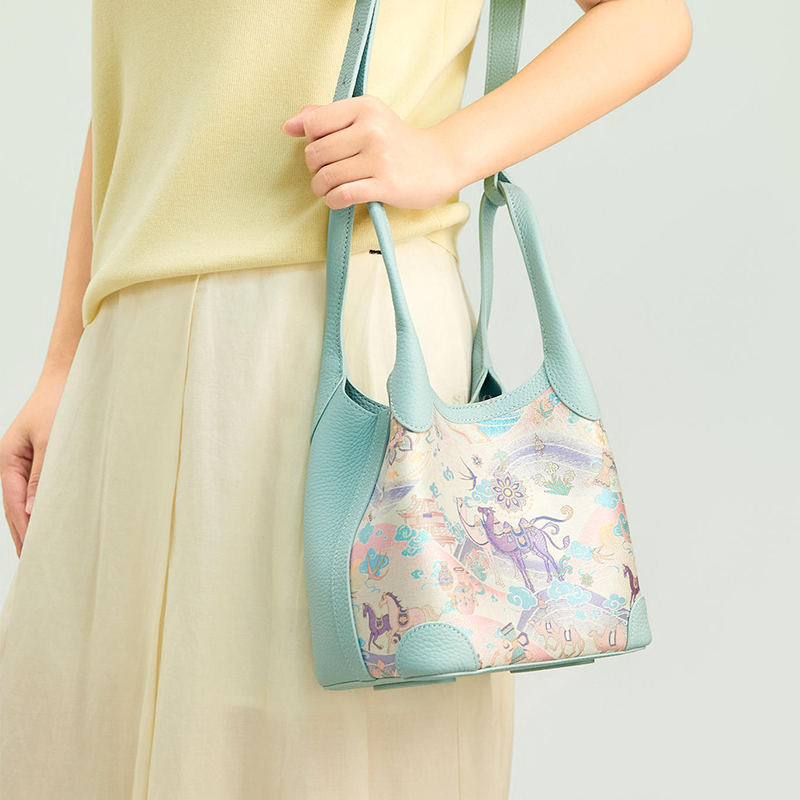
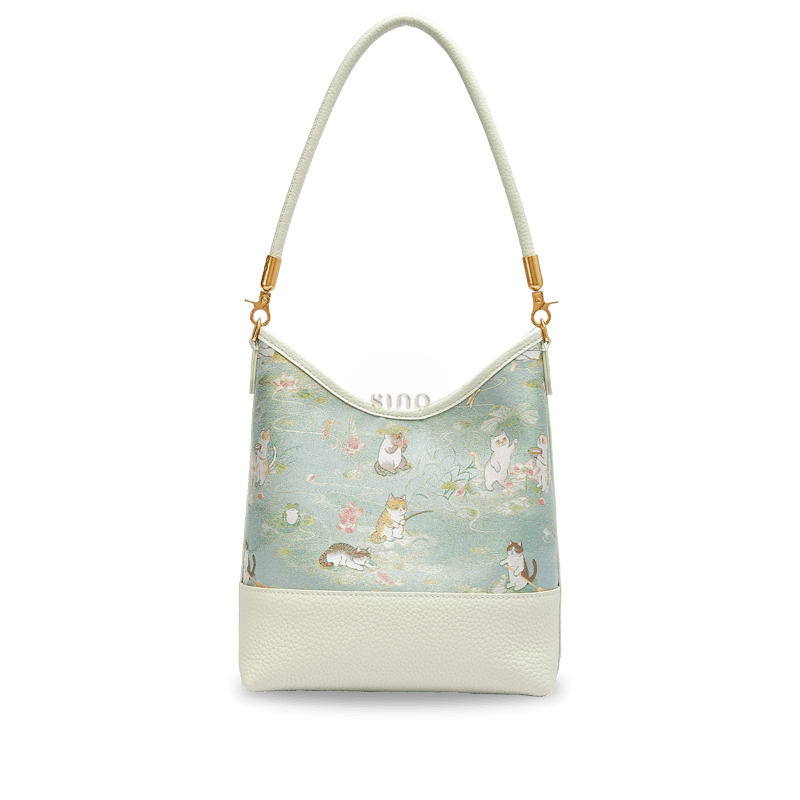
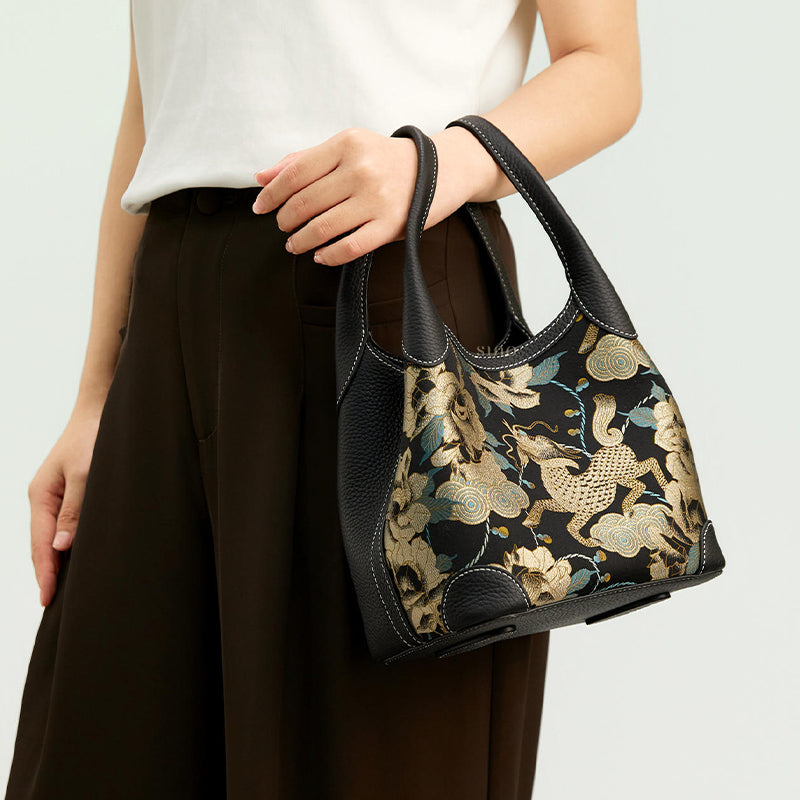
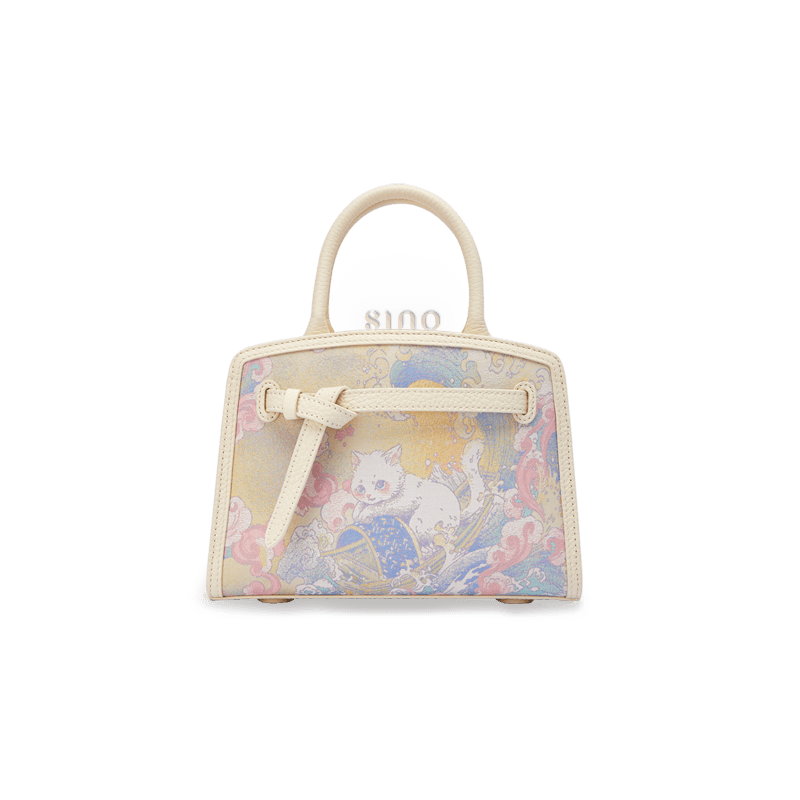
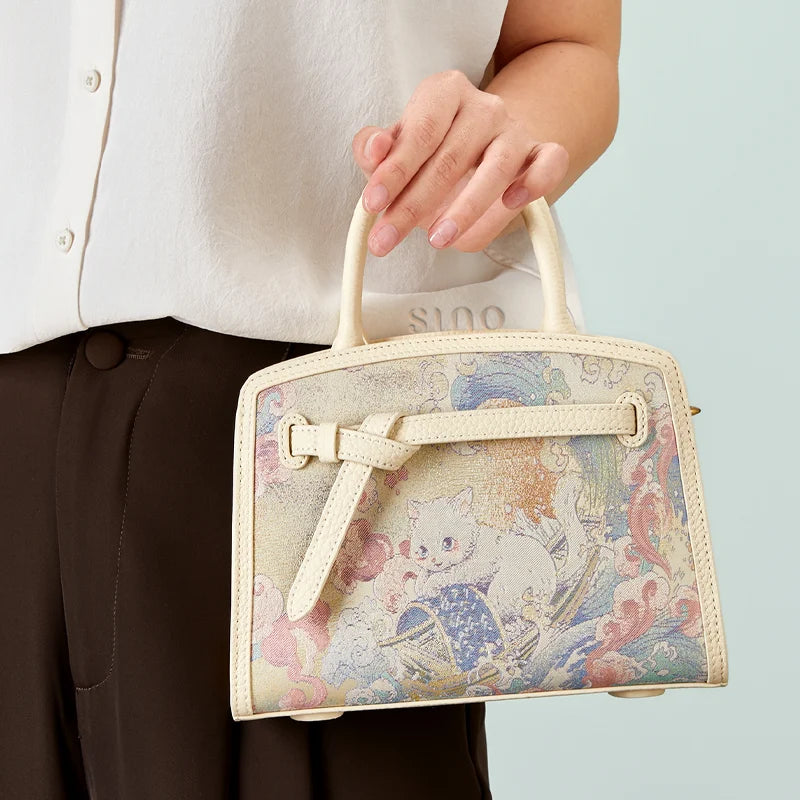
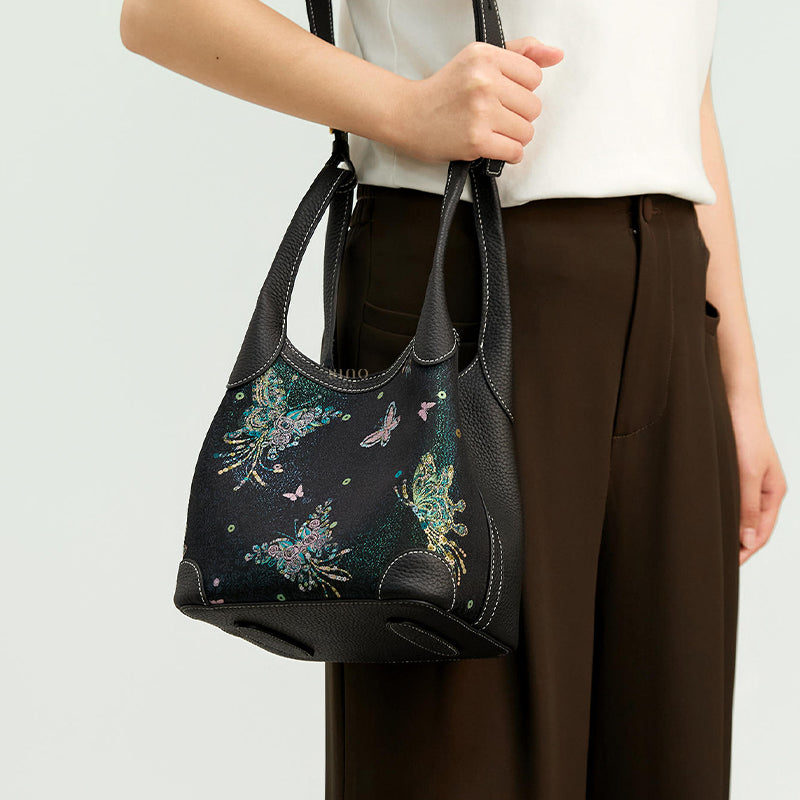
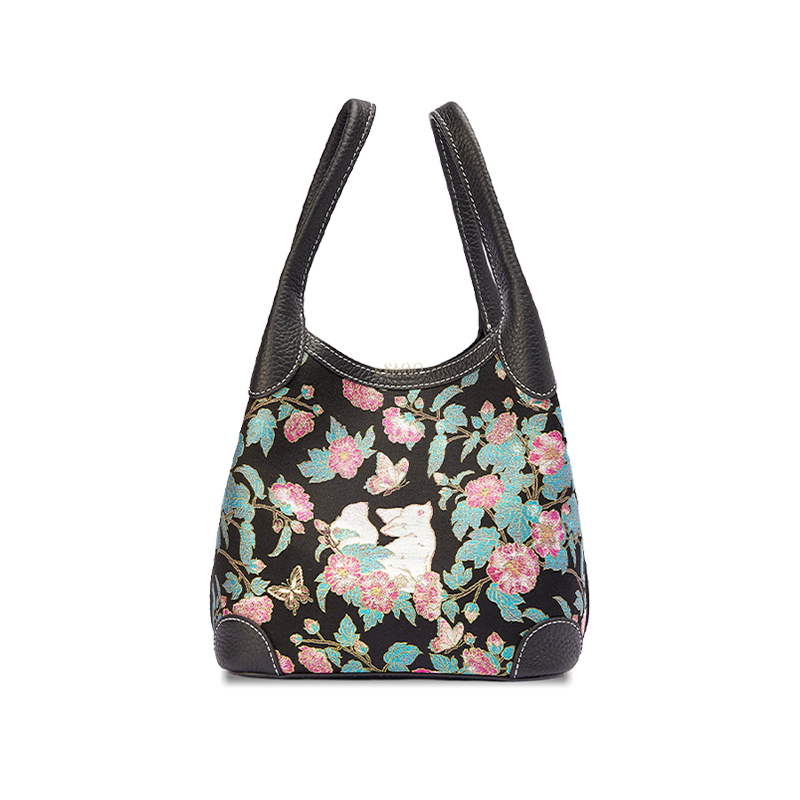
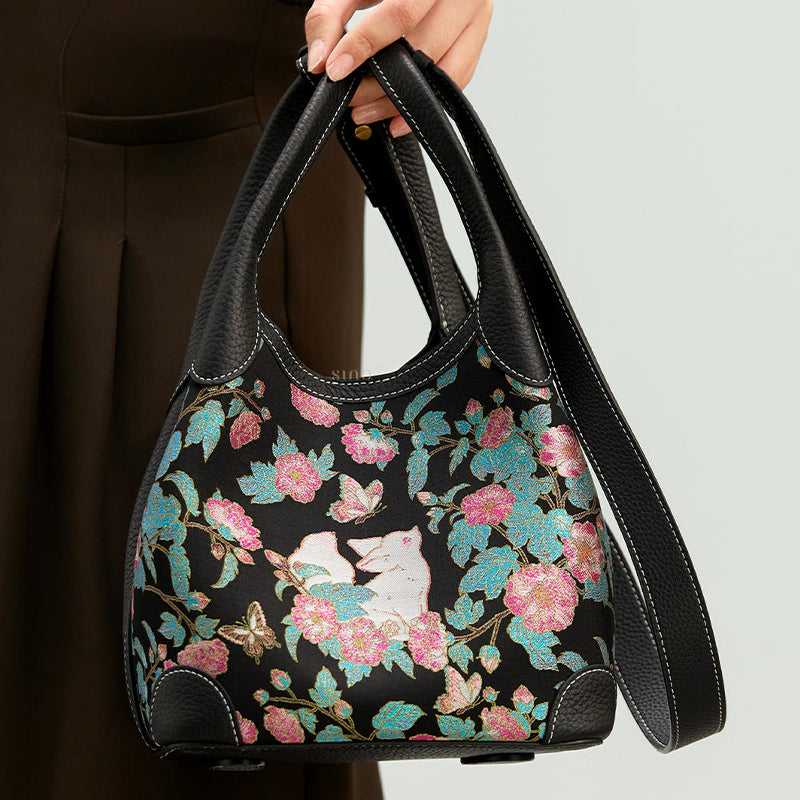
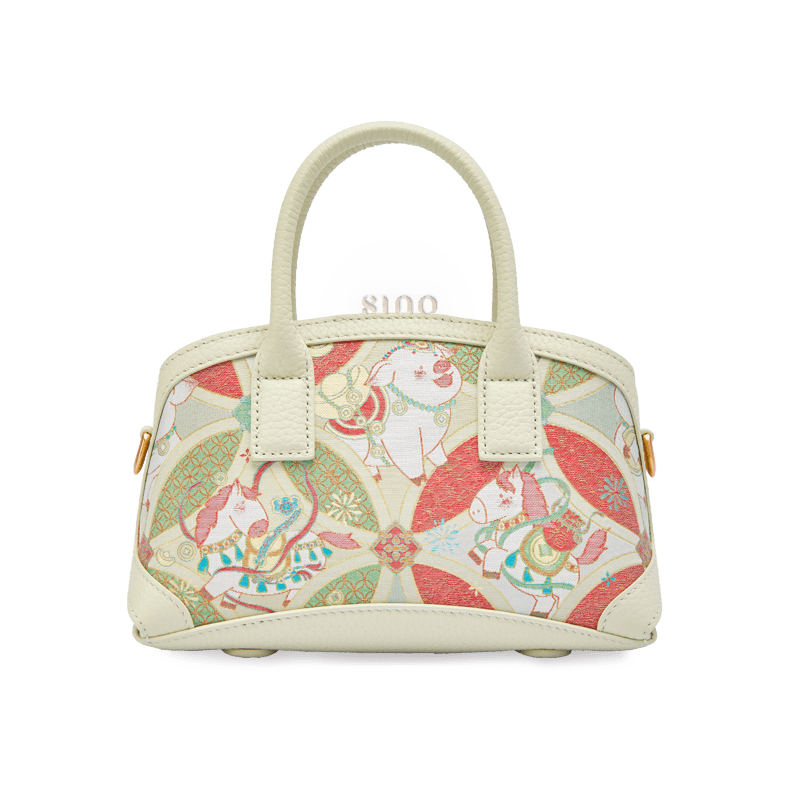
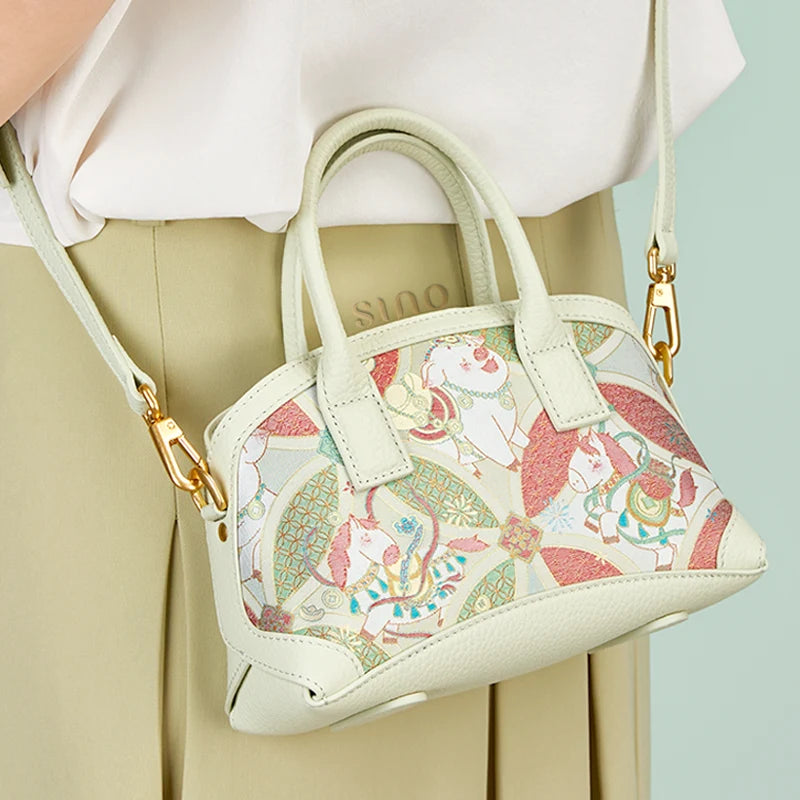
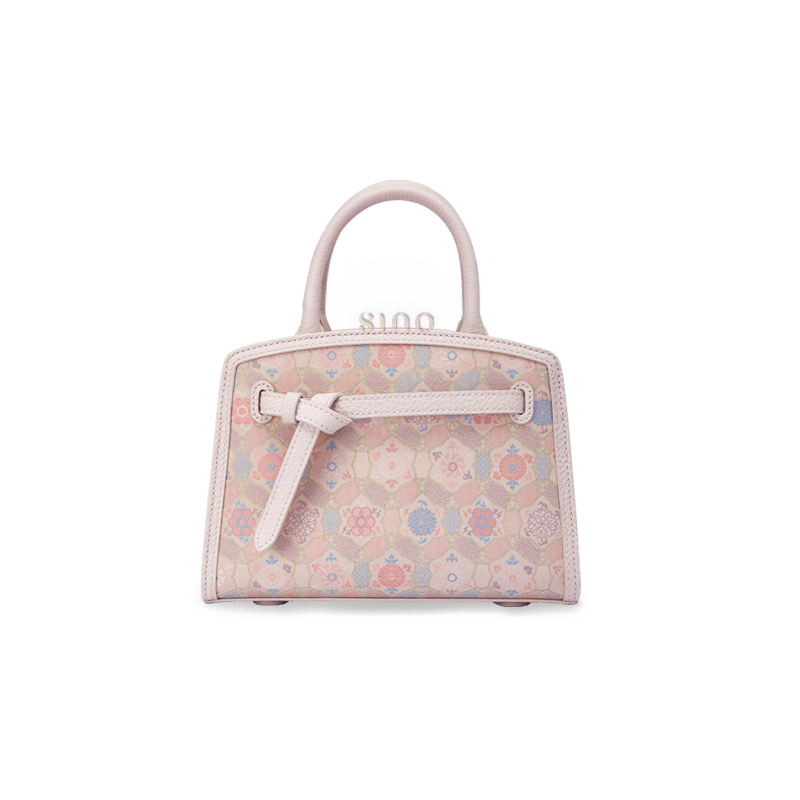
The woven motifs find their contemporary expression in these four handbags, where traditional imagery is reworked through modern forms, materials, and everyday functions.
-
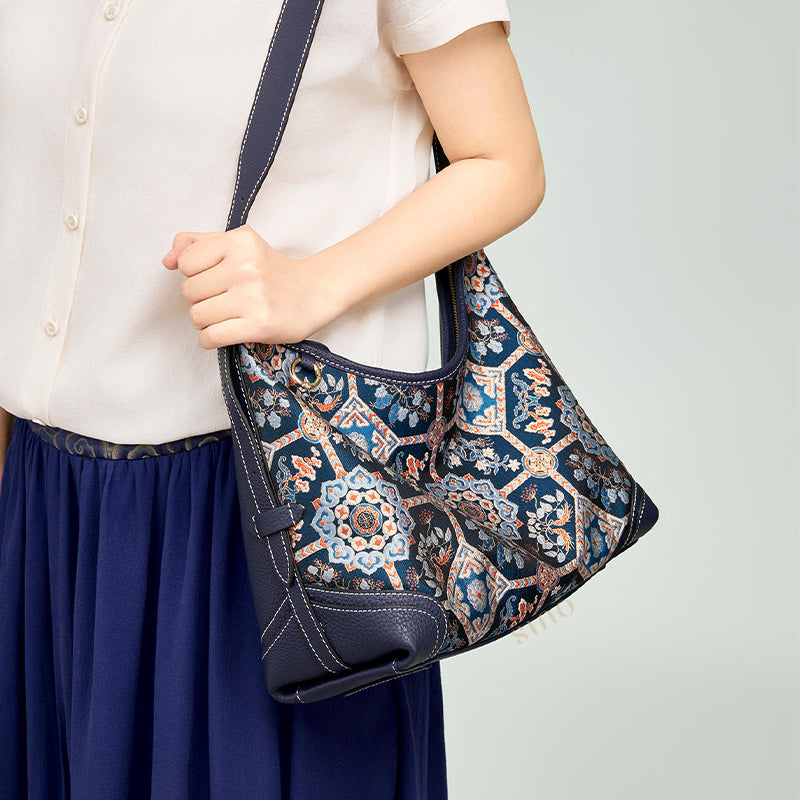
Qian Xiaoping Song Brocade - Traditional Baoxiang Floral Pattern: The woven pattern appears on the Luxury Song Brocade Blue Baoxiang Floral Leather Crossbody Bag, where the layered blue palette and symmetrical Baoxiang floral motif are framed by a refined leather silhouette.

-
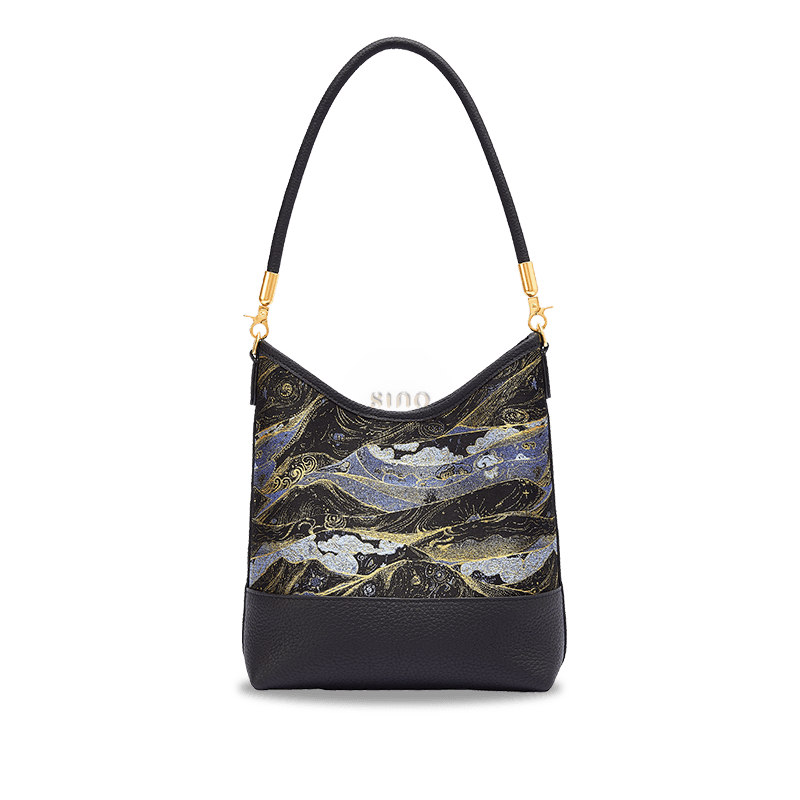
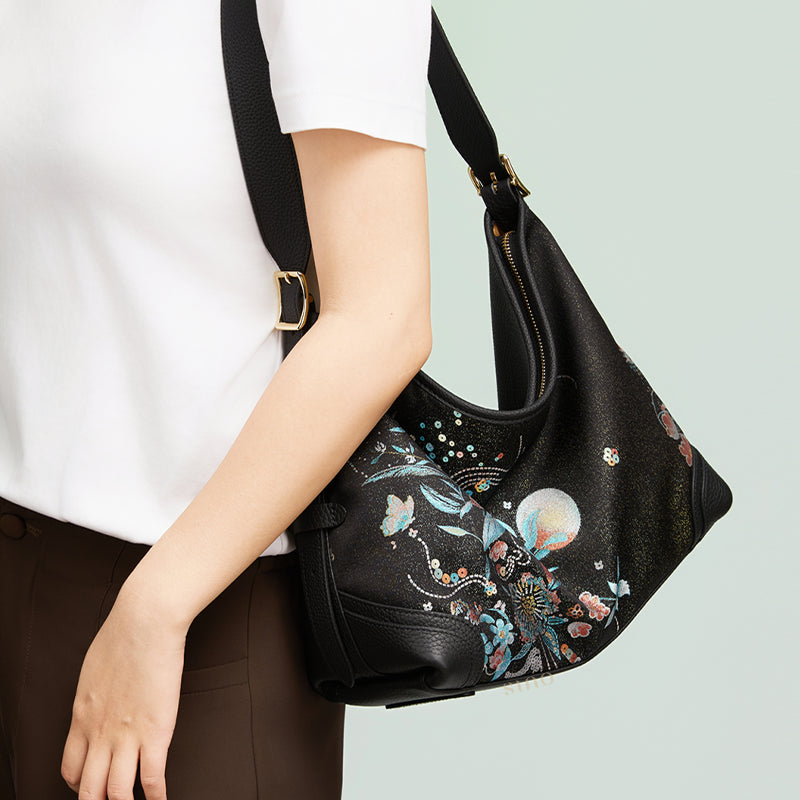
Li Dexi Song Brocade - Moonlit Splendor Pattern: The woven pattern appears on the Chinoiserie Luxury Song Brocade Moonlit Splendor Leather Shoulder Bag, translating the atmosphere of moonlight, shadow, and flowing silk into an elegant contemporary shoulder bag.

-
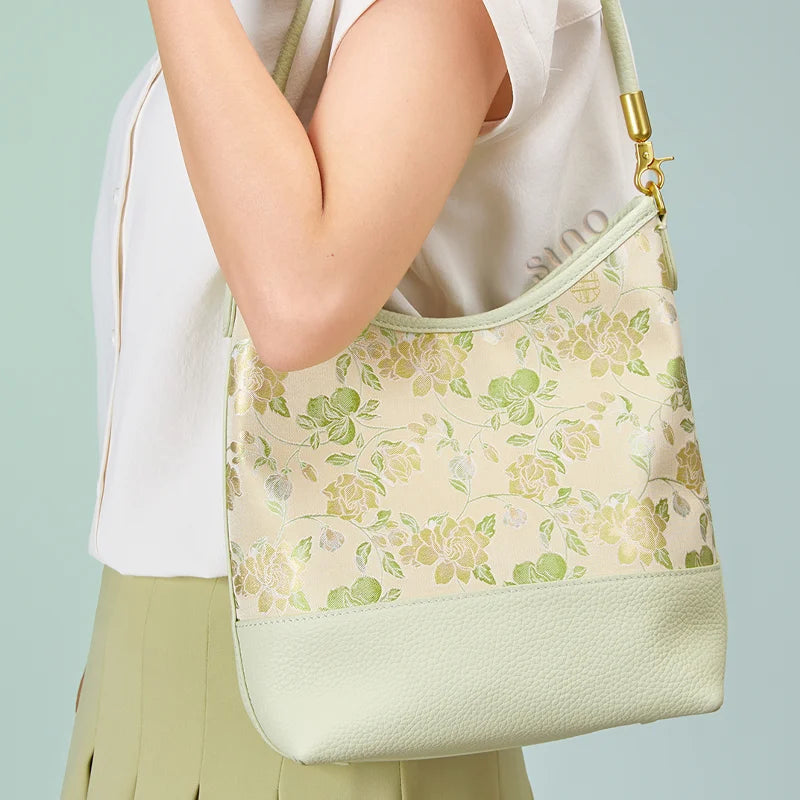
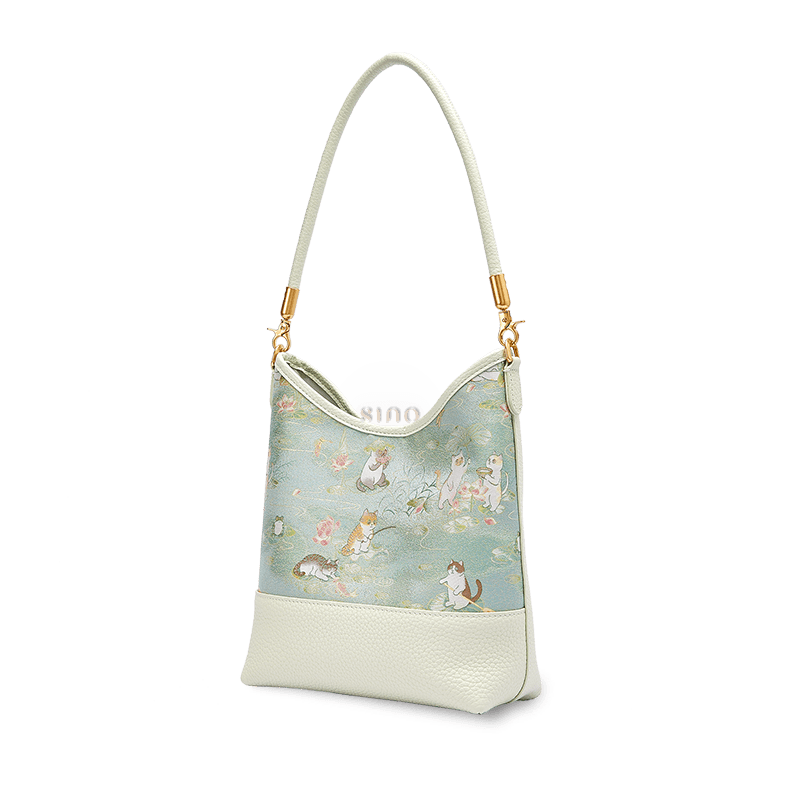
Lu Meiying Song Brocade - Cats in the Lotus Garden: The woven pattern appears on the Chinoiserie Luxury Song Brocade Springtime Tales Leather Shoulder Bag, where cats, lotus flowers, and garden imagery create a playful visual story filled with warmth and character.

-
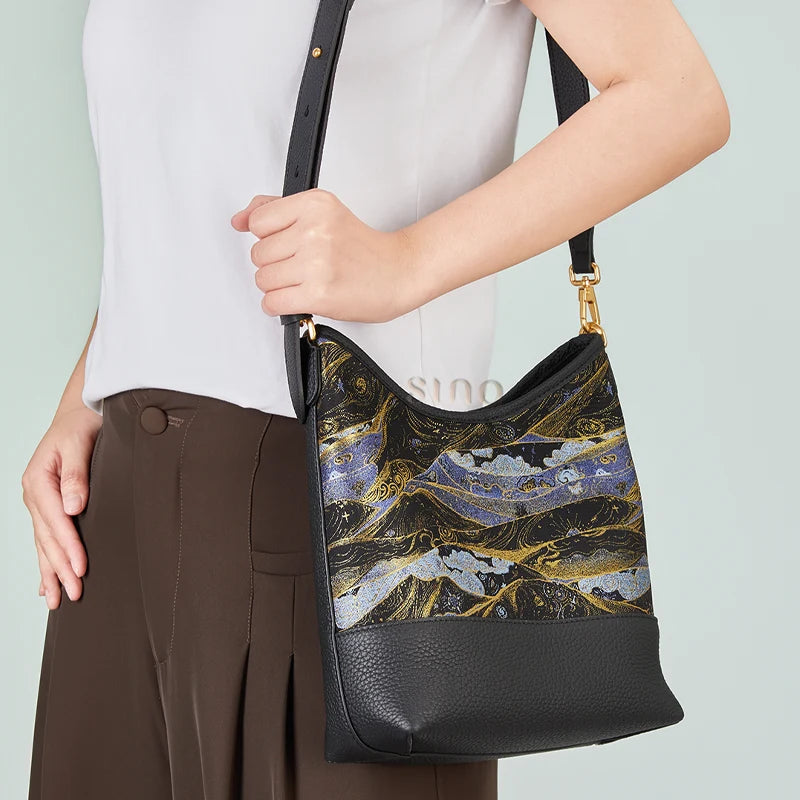
SAINT JOY Song Brocade - Blue Misty Mountain Forest: The woven pattern appears on the Luxury Song Brocade Misty Mountain Forest Leather Basket Tote Bag, transforming layered mountains, drifting mist, and blue forest tones into a spacious modern basket silhouette.

Seen together, these designs show that preservation does not have to mean keeping Song Brocade at a distance. Its patterns can retain their cultural character while taking on new proportions, materials, and practical roles. Perhaps this is what keeps a tradition alive: not only being remembered, but continuing to be made, reimagined, and chosen as part of modern life.
The Story Continues in Every Pattern

You have discovered the people behind modern Song Brocade. Now explore the woven patterns through which their stories continue to be seen, carried, and lived with.