تخطي إلى محتوي
For Song Brocade to remain a living tradition, preserving its techniques is only the beginning. A heritage textile must also be produced consistently, redesigned for contemporary life, introduced through modern fashion, and supported by a commercial system that allows more people to see, wear, and appreciate it. This is how Song Brocade can move beyond museums, specialist workshops, and niche craft circles to become part of a wider vision of modern Chinese luxury.
SAINT JOY, known in Chinese as Shangjiukai上久楷, represents this next stage in the story of Song Brocade. Rather than centering on a single master artisan, the brand has worked to connect historical weaving heritage with modern production, design, branding, fashion, and cultural gifting. Its development offers a valuable example of how an ancient Suzhou textile can reach audiences across China and enter a broader international conversation about Eastern aesthetics and luxury.
From a Qing-Era Suzhou Silk House to SAINT JOY

Suzhou has long been one of China’s most important centers of silk weaving, where refined textiles were produced for court ceremonies, elite households, and formal cultural occasions. SAINT JOY traces its heritage to the late-Qing Shangjiukan上久坎 Silk and Satin House, a Suzhou business known for producing fine Song Brocade and other luxury silk textiles associated with tribute and upper-class consumption. As China’s silk industry changed during the early twentieth century, the original business gradually withdrew from Song Brocade production and later became connected with the development of the Dongwu Silk Weaving Factory. Although the historic name faded from public view, its weaving knowledge, equipment, skilled workers, and local industry traditions continued to form part of Suzhou’s silk heritage.

This legacy was brought back into the modern market in 2011, when the historic brand was revived under the Chinese name Shangjiukai and the English name SAINT JOY. The change from kan坎 in Shangjiukan上久坎 to kai楷 in Shangjiukai上久楷 was more than a phonetic adjustment: the Chinese character kai suggests a model, standard, or example to follow. It expressed the ambition to preserve the cultural memory of the old silk house while giving Song Brocade a new identity for contemporary China. Rather than simply reproducing an old trademark, SAINT JOY rebuilt this heritage around modern design, branding, and high-end silk culture. Yet history alone could not bring Song Brocade back into everyday use—the next challenge was to overcome the limits of traditional production and make the textile suitable for a much wider modern market.
How SAINT JOY Took Song Brocade Beyond the Traditional Workshop
Reviving a historic silk-house name gave SAINT JOY a strong cultural foundation — but bringing Song Brocade back as a living industry required something more. Traditional hand weaving was slow, costly, and limited in output. It remained essential for restoration, collecting, and artistic preservation, yet it couldn't independently support the textile's return to wider use. The challenge was practical: how could the complex structures, layered patterns, and distinctive beauty of Song Brocade be preserved while adapting to the demands of a modern market?
This wider industrial development was possible because the craft itself had first been systematically studied and restored. Qian Xiaoping’s revival of traditional Song Brocade craftsmanship helped recover essential weaving knowledge and establish the cultural and technical foundations on which later production systems could build.

The answer came in 2012, when Wu Jianhua and his team developed a pioneering electronic jacquard system built on the traditional weaving structures and technical parameters of Song Brocade. The goal was not to replace handcraft with machinery, but to translate the textile's intricate warp-and-weft logic into a production process that could scale. Fabric consistency improved. Output increased. The range of dimensions and applications available to designers expanded significantly — while the layered color, refined texture, and structural character of Song Brocade remained intact.A complementary technical path can be seen in Li Dexi’s reconstruction of ancient silk weaving techniques, which helped bring historic textile structures back into practical use.
The result was more than faster weaving. It was a commercially sustainable system through which Song Brocade could move beyond specialist workshops and into clothing, handbags, scarves, home furnishings, and cultural gifts. With that foundation in place, the next question became: what should a distinctly modern SAINT JOY Song Brocade look and feel like?
What Defines SAINT JOY Song Brocade?
Patterns and Cultural Meanings in SAINT JOY Song Brocade
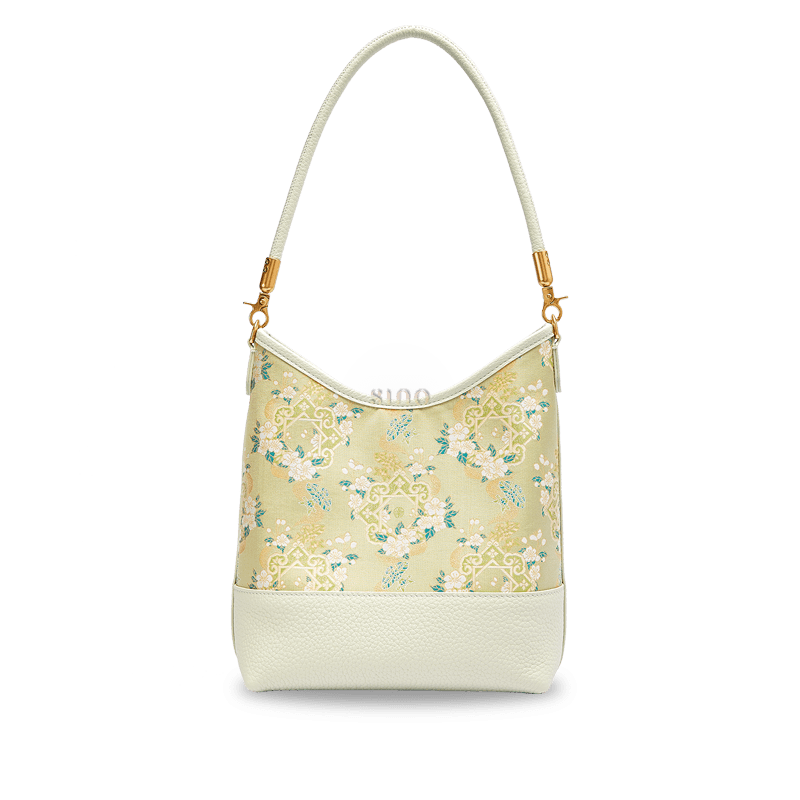
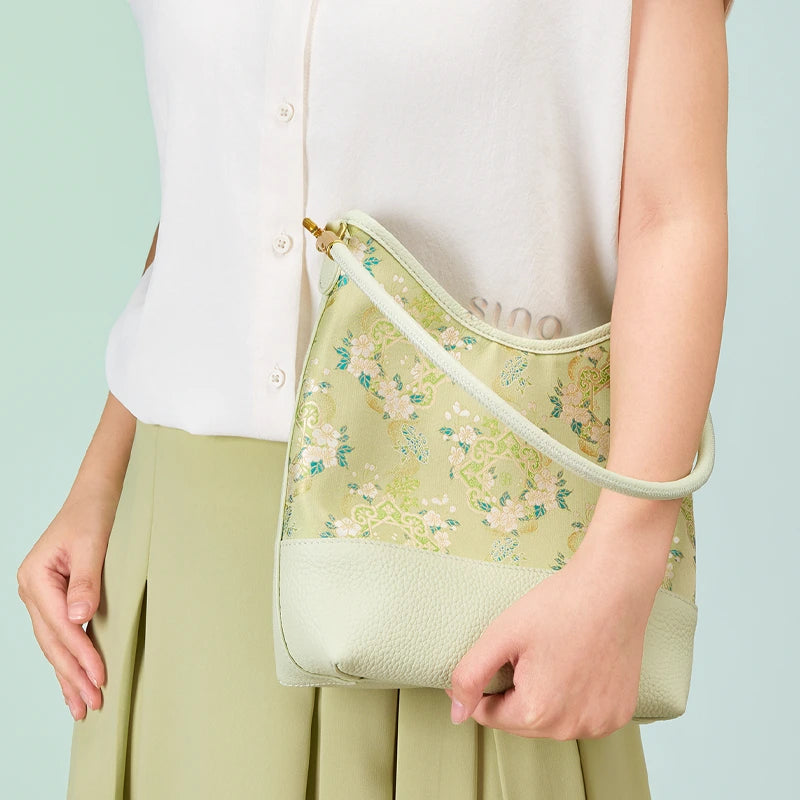
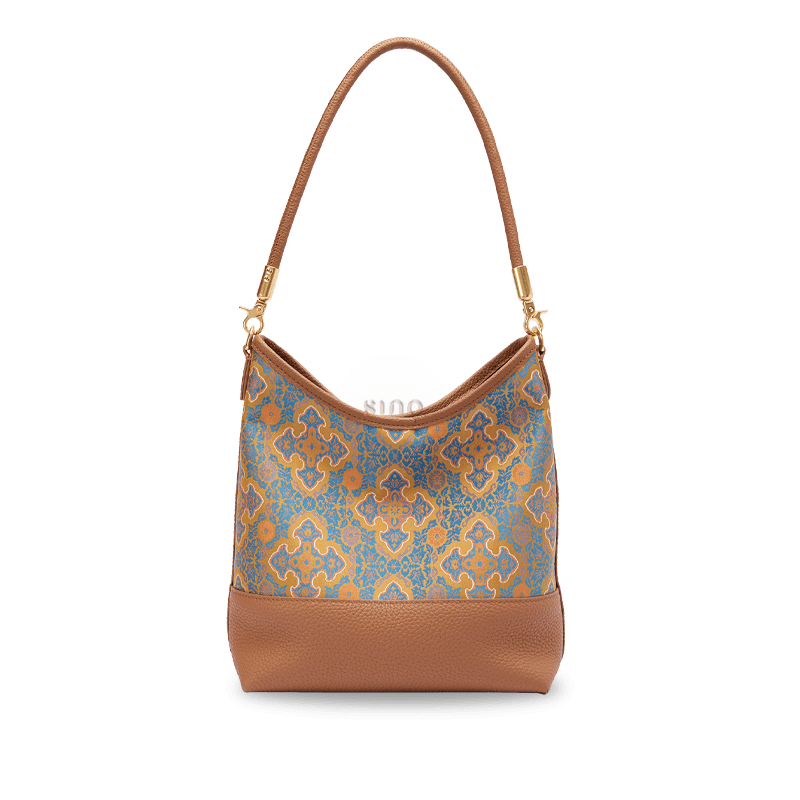
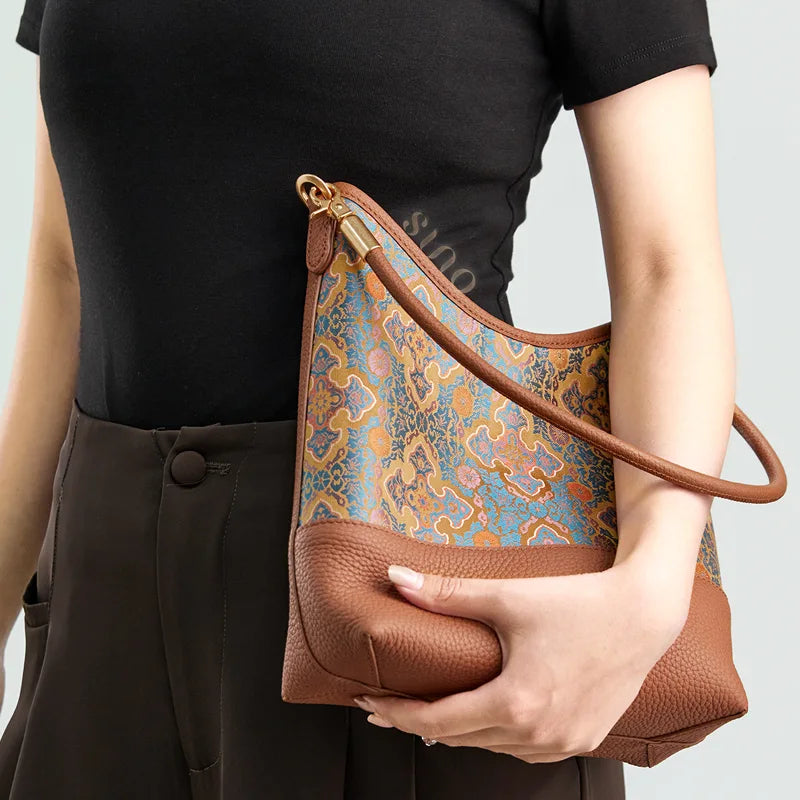
Drawing on its roots in Suzhou’s historic silk-weaving tradition, SAINT JOY has researched and revived hundreds of classical Song Brocade patterns, many of which originate from traditional Chinese decorative motifs. Rather than simply reproducing designs from the past, the brand reinterprets them through renewed compositions, colors, and contemporary applications. The following three patterns show how this cultural heritage is carried into SinoCultural handbags, allowing their traditional symbolism to remain visible and meaningful in modern design.
1. Misty Mountain Forest: Stability, Ambition, and Enduring Strength
-
Motif: Inspired by blue ink-wash landscapes, the pattern features camphor trees, flying birds, and distant mountains arranged in a tranquil, layered composition.
-
Meaning: Mountains symbolize stability, dependable support, and steady career growth. Flying birds represent freedom, ambition, and the promise of a bright future, while the evergreen camphor tree suggests vitality, resilience, and enduring strength.

If you are drawn to the serenity of Chinese landscape painting and wish to carry symbols of steady progress and resilience, explore our Luxury Song Brocade Misty Mountain Forest Leather Basket Tote Bag.
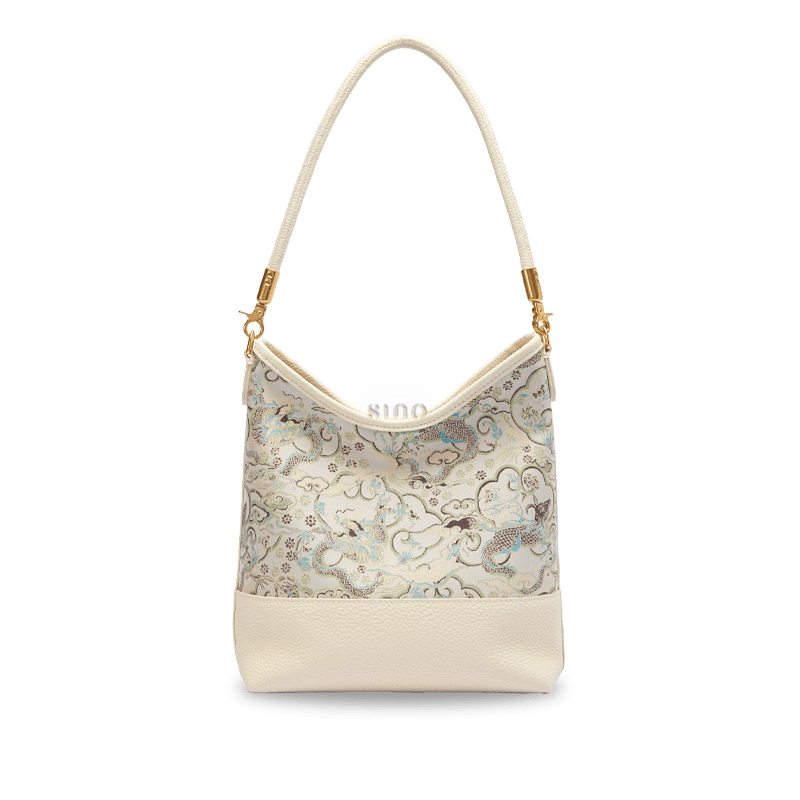
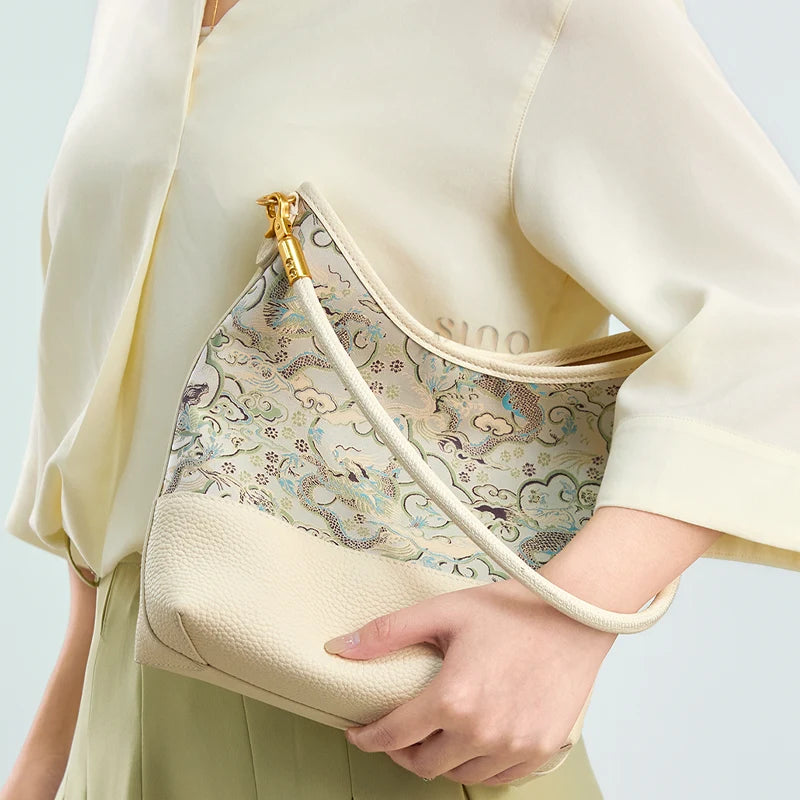
2. Ox-Head Dragon: Power, Prosperity, and Rising Success
-
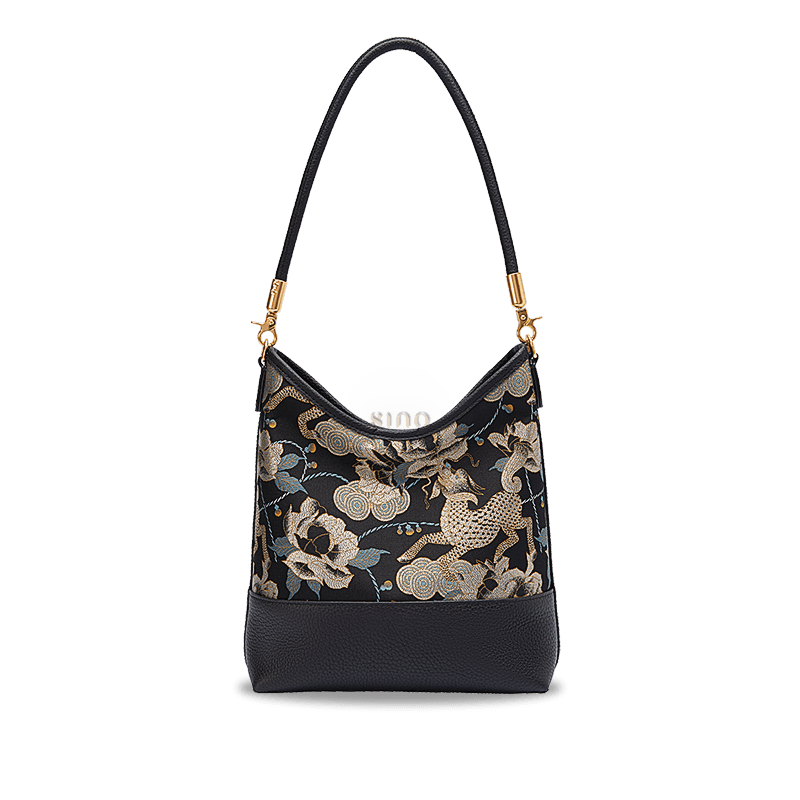
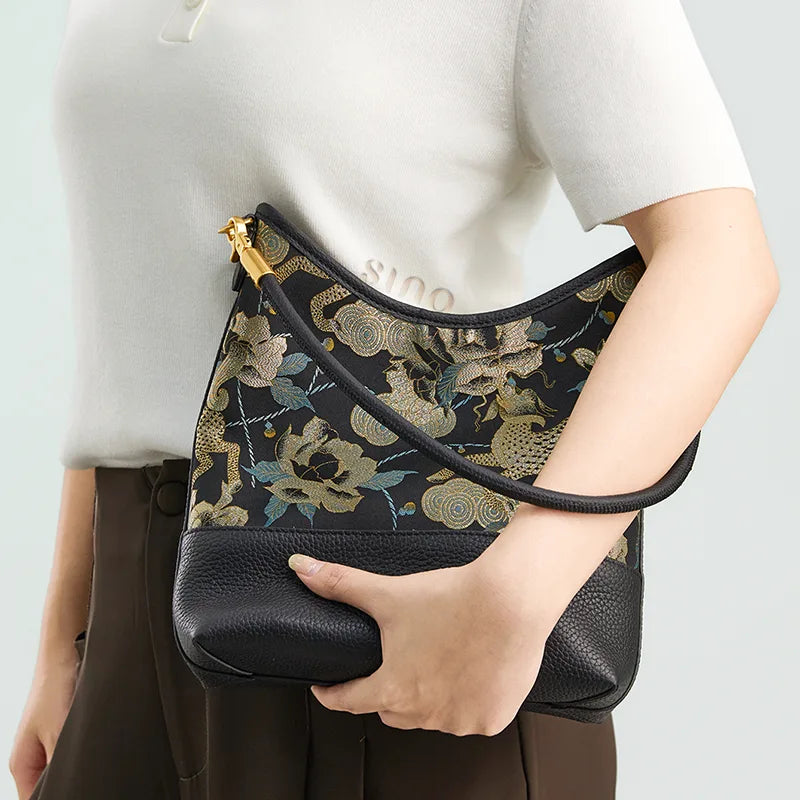
Motif: The Ox-Head Dragon combines the powerful body of a dragon with the head of an ox, shown rising through clouds in a dynamic and auspicious composition.
-
Meaning: In Chinese culture, the dragon is associated with authority, protection, success, and good fortune, while the ox represents strength, diligence, and prosperity. Together, they symbolize the ability to overcome difficulties, attract wealth, and rise steadily toward greater achievement.

If you are seeking a meaningful symbol of strength, prosperity, and career advancement, explore our Chinoiserie Luxury Song Brocade Ox-Head Dragon Leather Shoulder Bag.
3. Bada Yun: Harmony, Order, and the Unity of Heaven and Humanity
-
Motif: The Bada Yun pattern is formed through interlocking polygonal frameworks and layered “frame within a frame” structures. Circles and squares appear in balanced order, while geometric ground patterns inspired by tortoiseshell motifs add richness and precision.
-
Meaning: The composition reflects the classical Chinese philosophy of harmony between humanity and the natural world. Its balanced geometry symbolizes order, unity, stability, and the idea that different elements can coexist within a greater whole.

If you appreciate the balance of classical Chinese philosophy and refined geometric design, explore our Luxury Song Brocade Bada Yun Motif Leather Top Handle Bag.
From Couture to Cultural Diplomacy: Building a Modern Song Brocade Luxury Brand
SAINT JOY’s expansion into couture gave Song Brocade a new public identity. Through runway collections, formalwear, and custom looks created for actors and television personalities, the textile moved beyond heritage exhibitions and entered the visual language of contemporary Chinese luxury. Traditional woven motifs were paired with modern tailoring, structured silhouettes, and experimental materials, showing that Song Brocade could express both cultural depth and contemporary fashion.

A defining turning point came at the 2014 APEC meeting in Beijing. Dingsheng Silk, the parent company behind SAINT JOY, was selected as one of the fabric suppliers for the leaders’ “New Chinese-style outfits,” with its Song Brocade serving as a core material. Nearly twenty samples were developed for each fabric, while fifty color samples were prepared for the selected Palace Red alone. Worn by leaders and their spouses from 21 APEC economies, the finished designs brought Song Brocade unprecedented national attention and introduced this historic Suzhou textile to an international audience.

The APEC appearance also strengthened SAINT JOY’s role in cultural diplomacy. According to the company’s official materials, more than 100 of its products have been used for diplomatic gifting and international cultural exchange, including occasions associated with the G20, BRICS meetings, the Boao Forum, and Shanghai Cooperation Organization summits. Through couture, ceremonial dress, and diplomatic gifting, SAINT JOY helped transform Song Brocade from a revived heritage textile into a recognizable expression of contemporary Chinese silk culture.
From Luxury Textile to Contemporary Life
SAINT JOY has helped bring Song Brocade closer to younger audiences by transforming the historic textile into contemporary couture for actors, performers, and public figures. When these custom designs appear at film events, television galas, fashion shows, and cultural celebrations, Song Brocade is introduced to audiences who may never encounter it through museums or traditional craft exhibitions. Shared through entertainment media and social platforms, these modern looks allow younger consumers to see Song Brocade not simply as an ancient ceremonial fabric, but as a material that can express personality, elegance, and contemporary Chinese fashion.

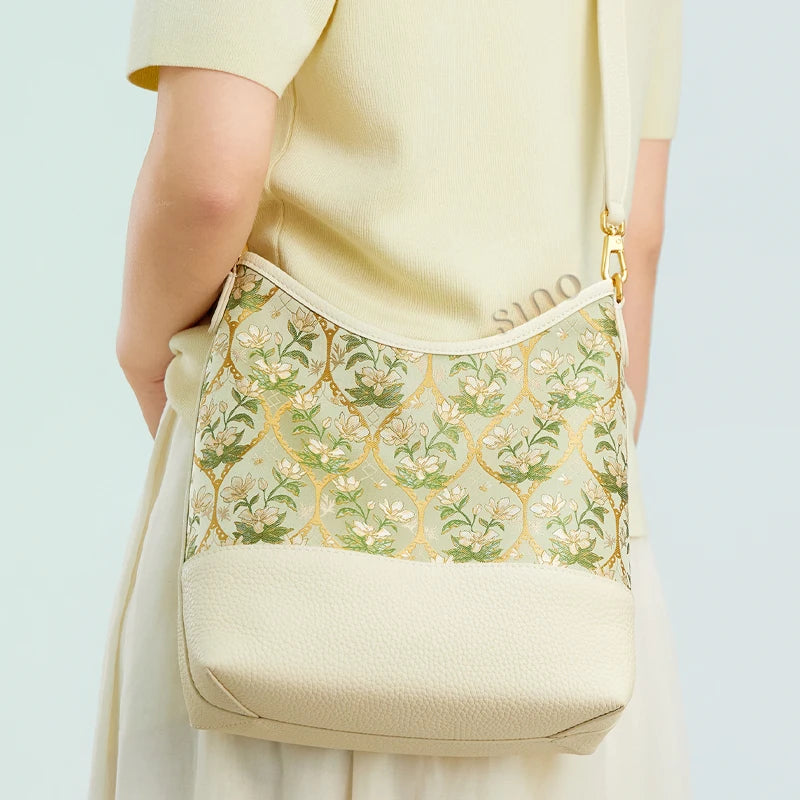
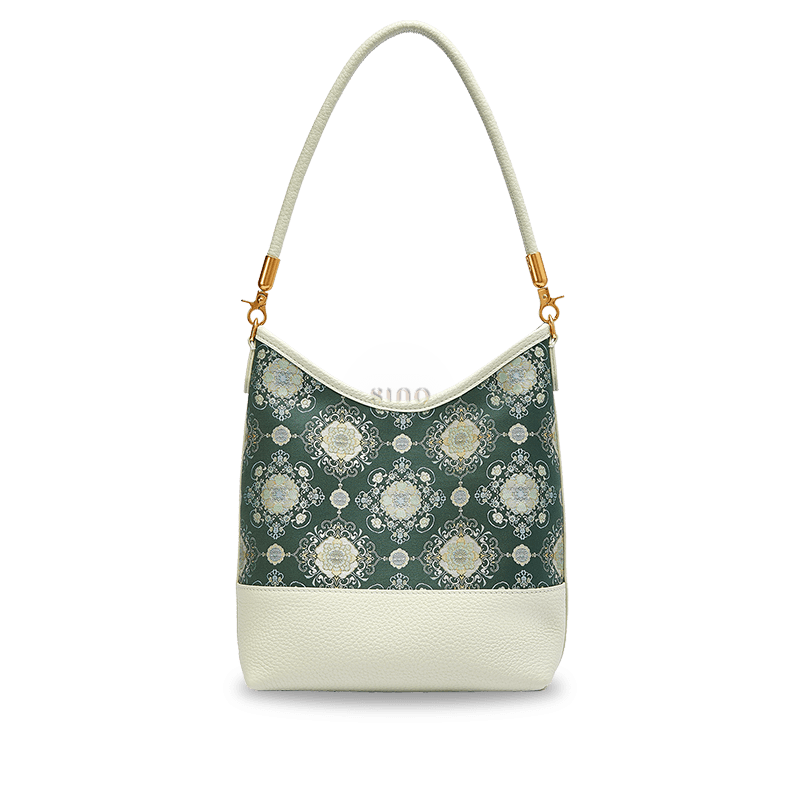
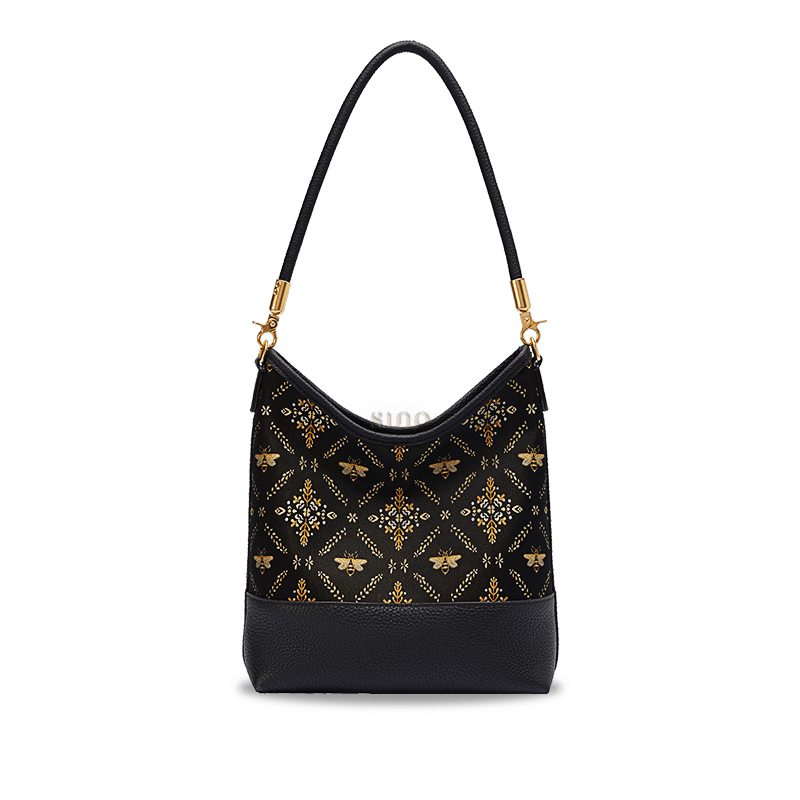
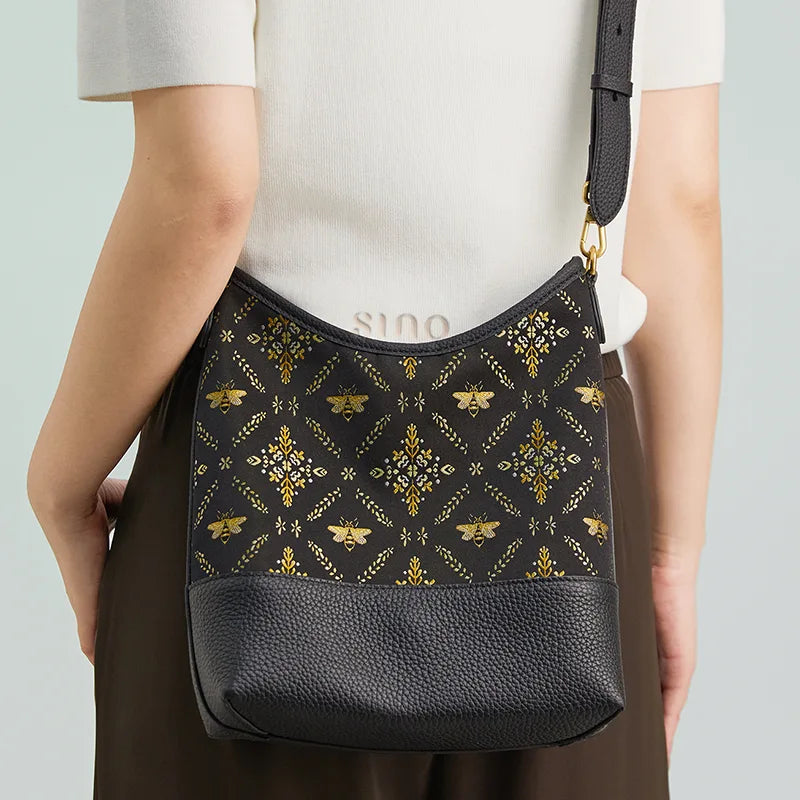
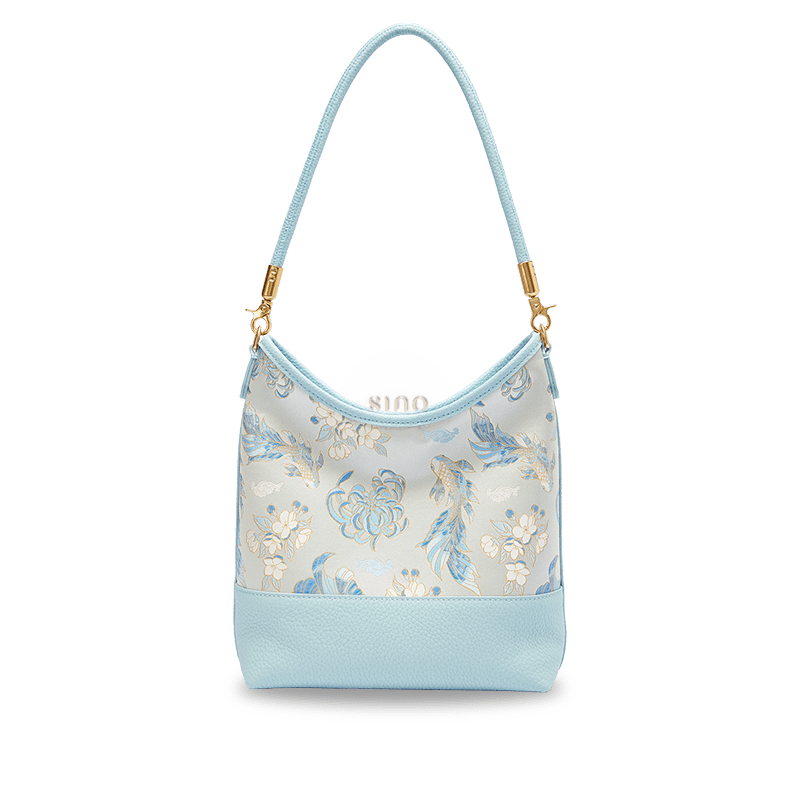
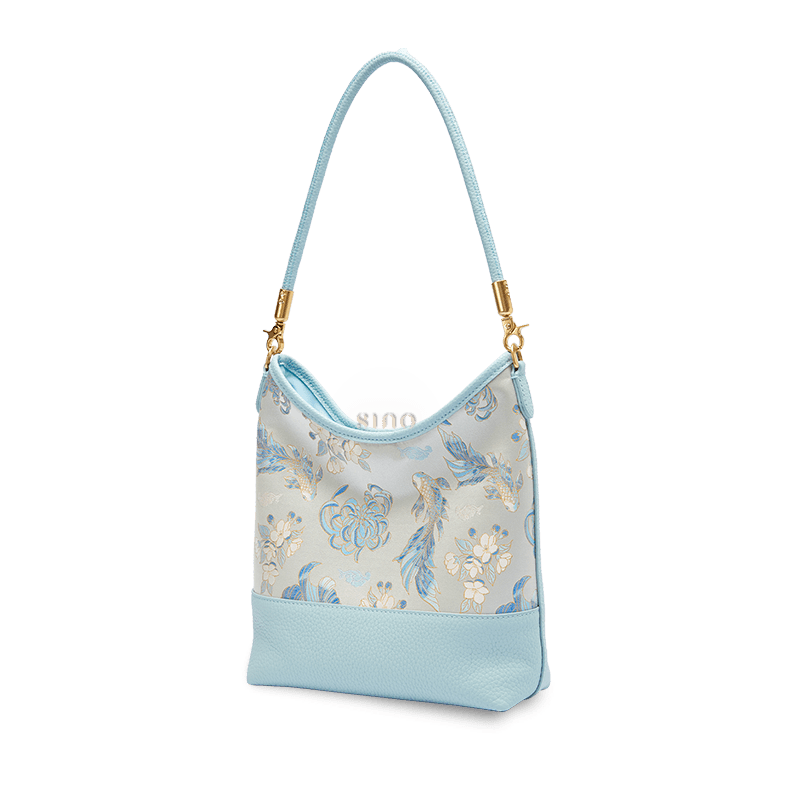
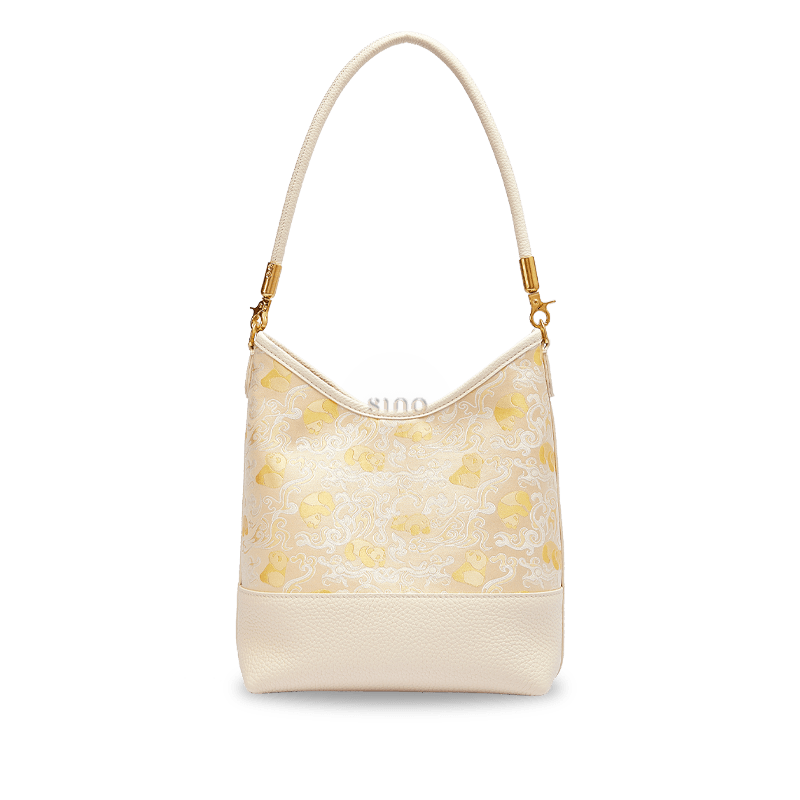
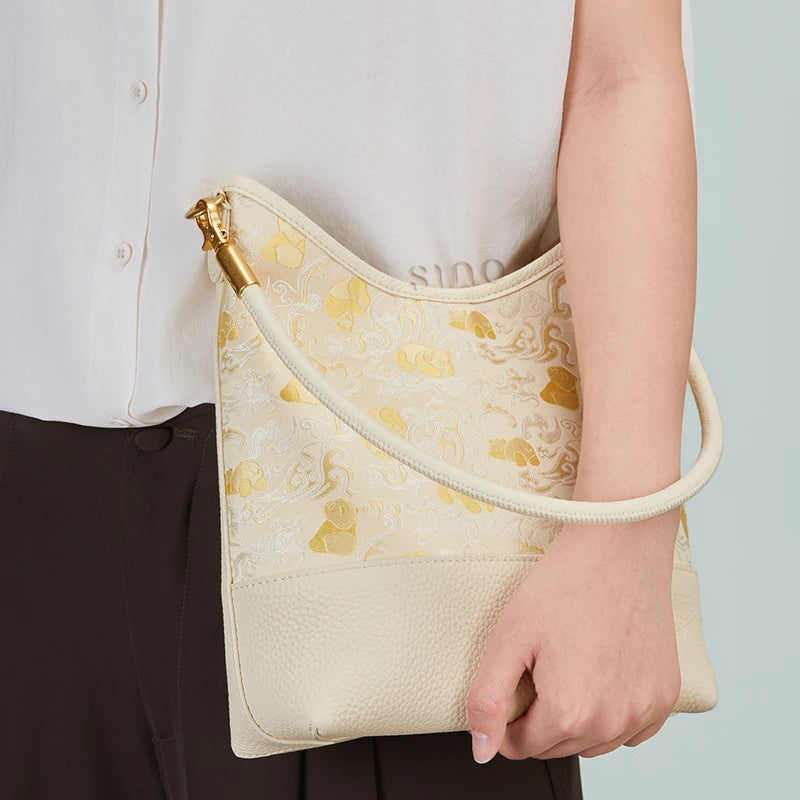
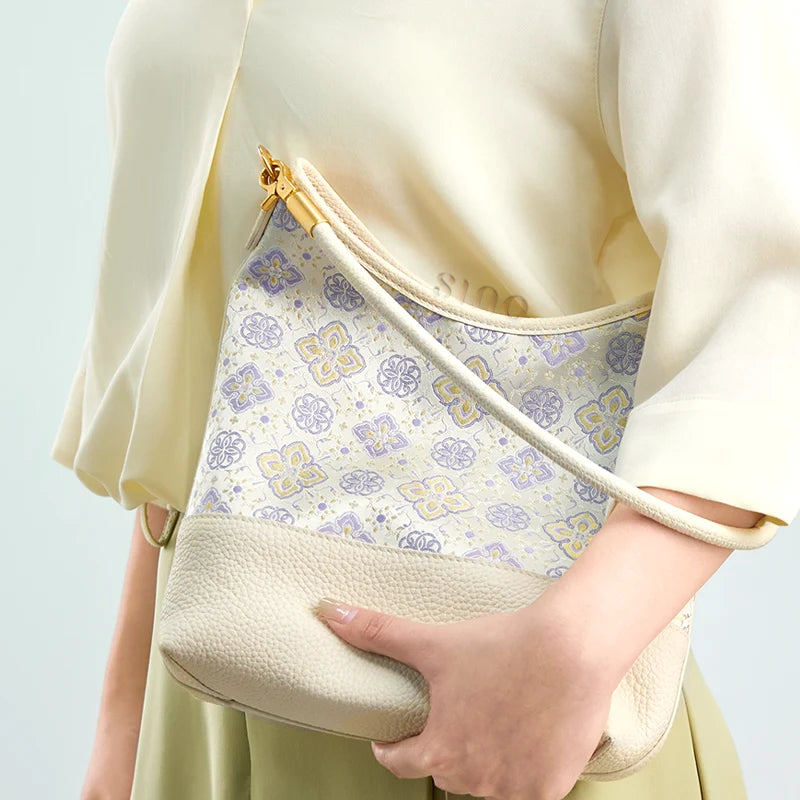
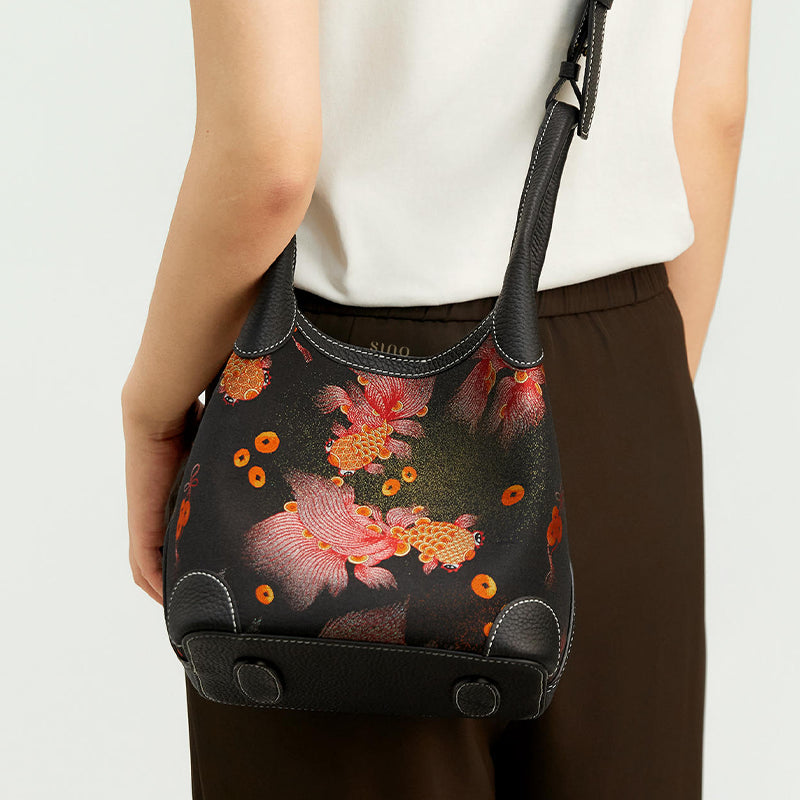
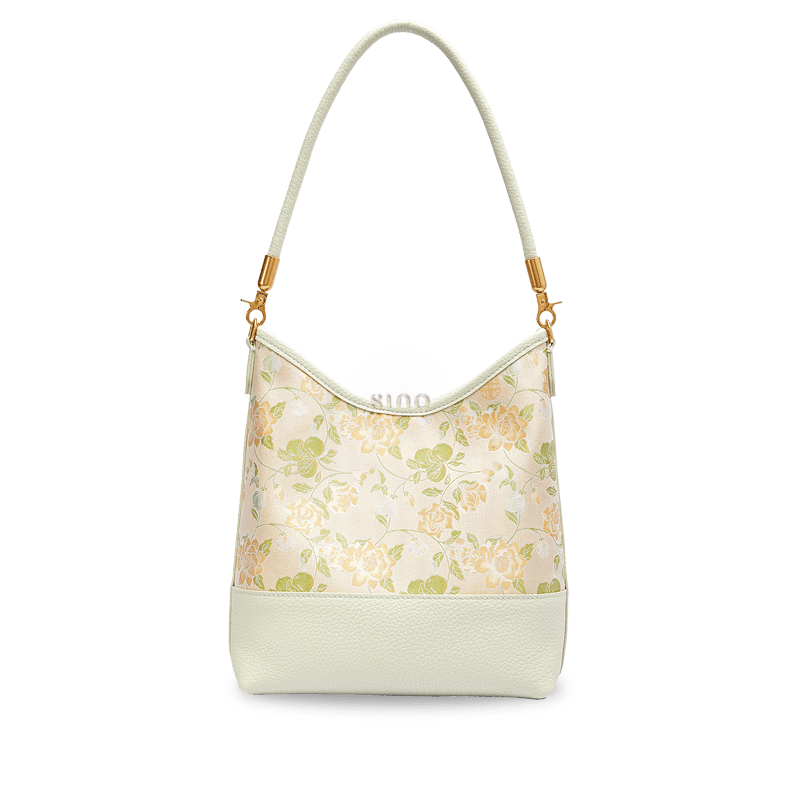
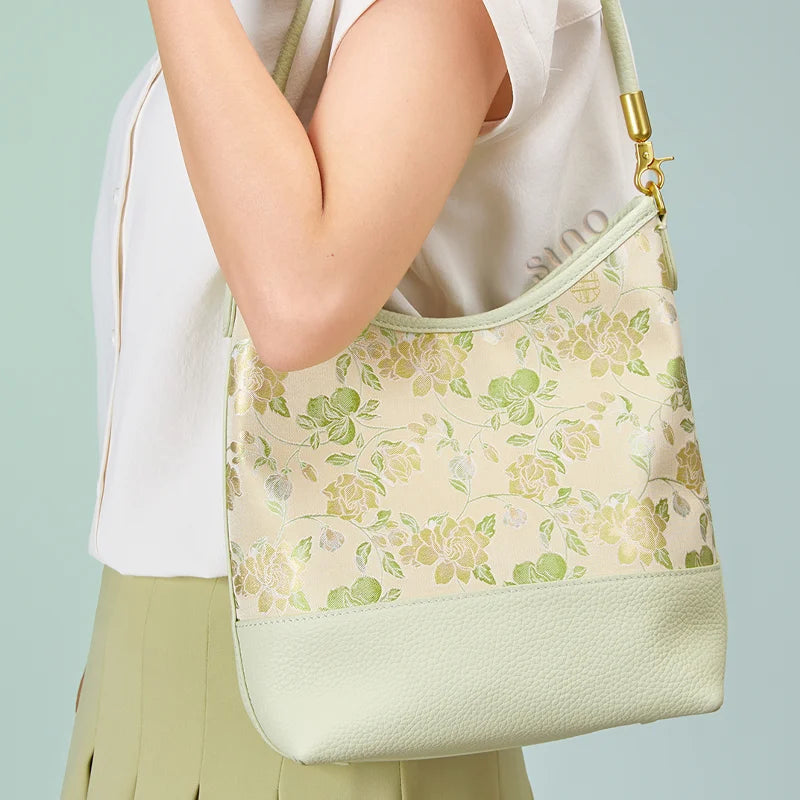
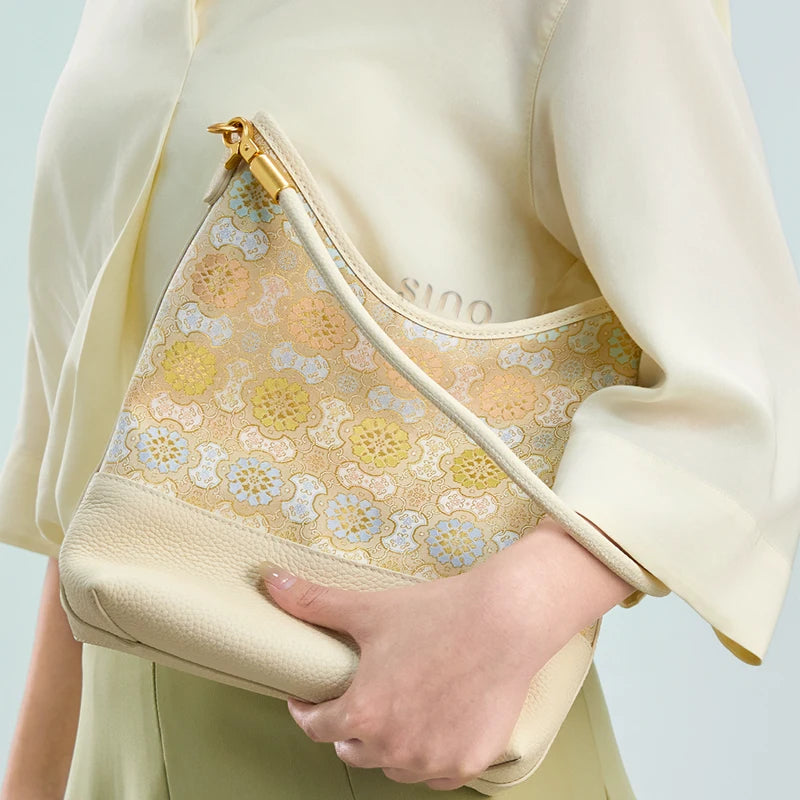
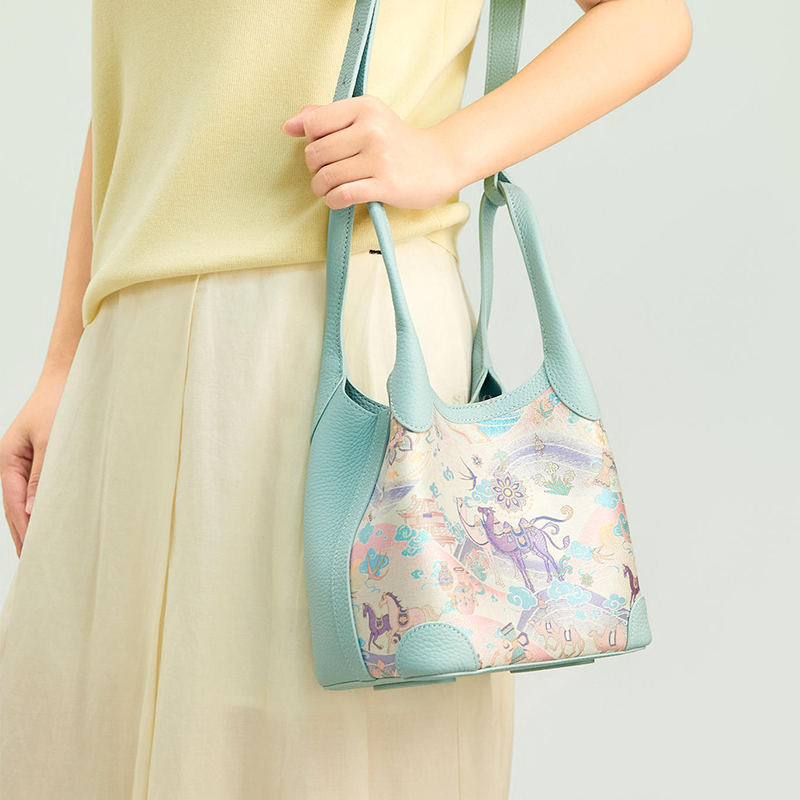
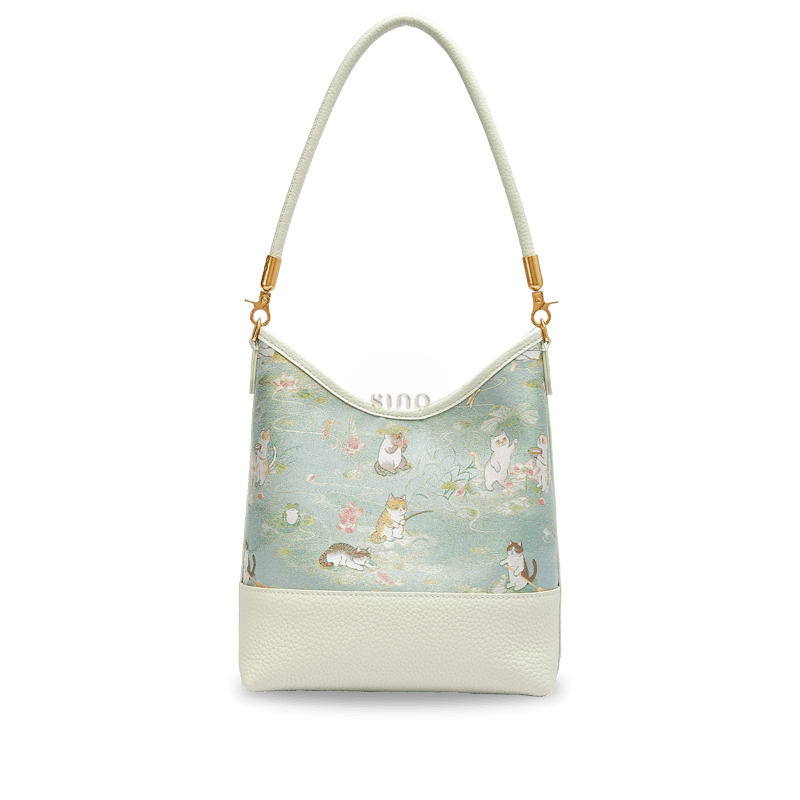
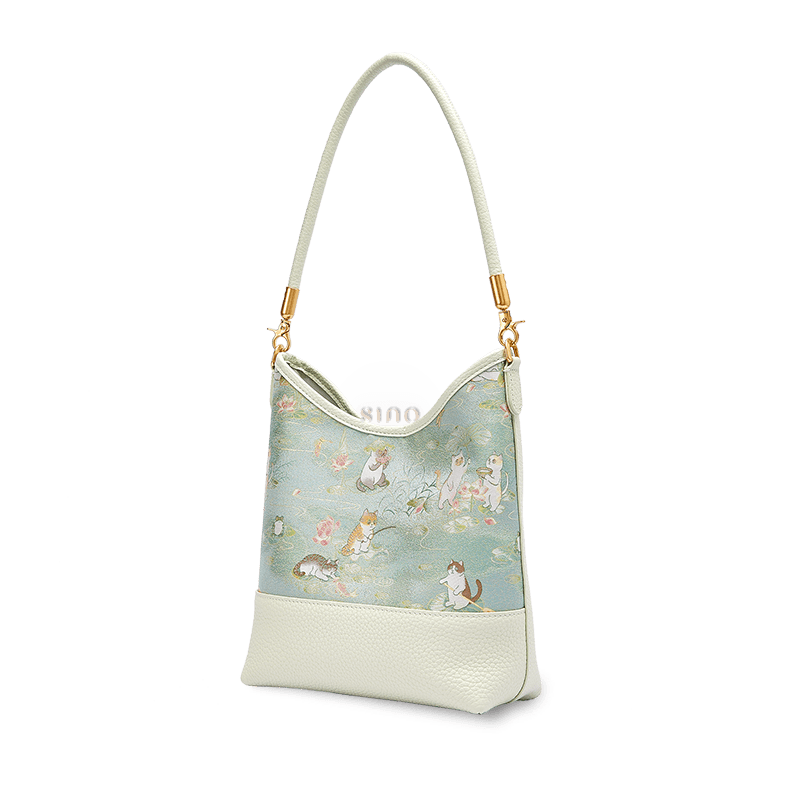
Bringing Song Brocade into modern life does not require everyone to own a complete couture outfit. Handbags offer a more accessible way to carry its woven textures, cultural motifs, and symbolic meanings into everyday dressing. At SinoCultural, we pair Song Brocade textiles from respected makers such as SAINT JOY with contemporary leather structures and practical handbag silhouettes, allowing traditional craftsmanship to become part of work, travel, social occasions, and meaningful gifting.

Explore Our Song Brocade Handbags
What SAINT JOY Means for the Future of Song Brocade
As the only commercial brand featured in this series, SAINT JOY represents a distinct but equally important path in the renewal of Song Brocade. Its contribution lies in connecting traditional weaving with modern production, original design, brand development, couture, cultural diplomacy, and a wider consumer market. This commercial approach does not replace the work of individual masters. Instead, it creates the production capacity, public visibility, and contemporary applications that allow the knowledge and craftsmanship preserved by artisans to reach new audiences.