Passer au contenu
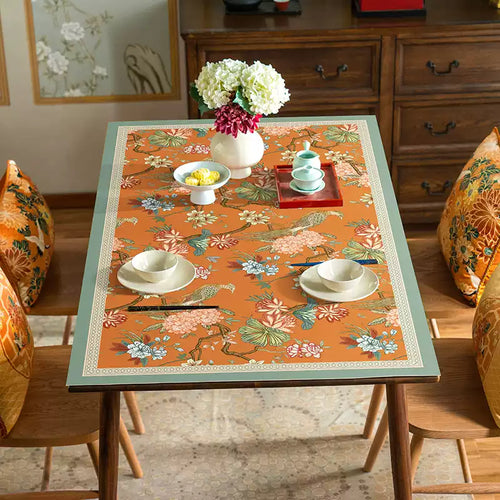
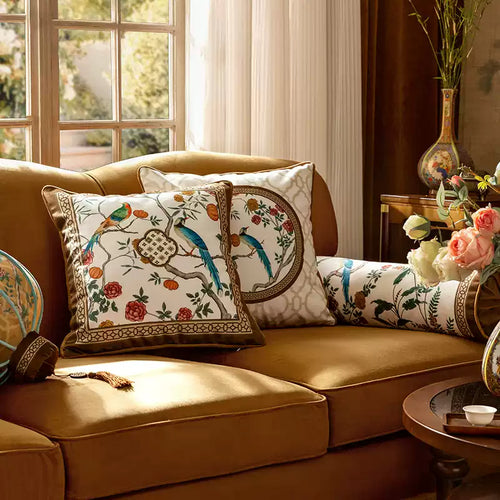
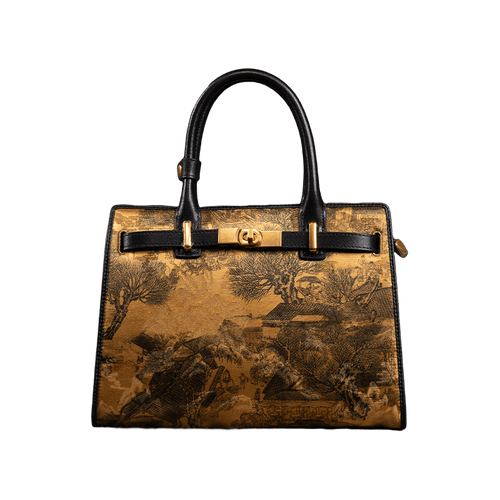
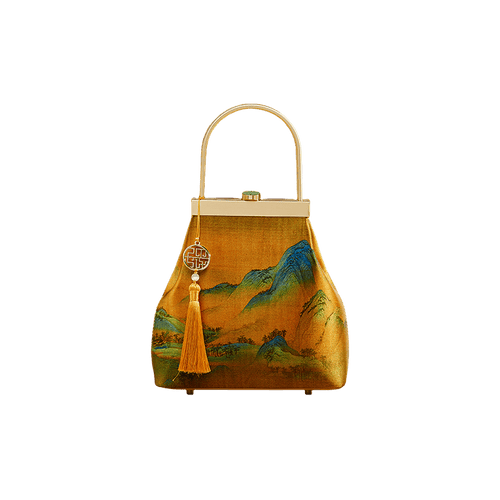


Fine textiles have always been more than materials. European tapestries, Italian silks, Chinese brocades — each one carries the memory, taste, and artistry of the culture that made it.
Among China’s historic silk traditions, Song Brocade stands apart: quietly elegant, intricately woven, and deeply rooted in the craftsmanship of Suzhou. Yet this heritage once faced a quiet crisis. It was not simply that Song Brocade became less common; the very techniques used to weave it had nearly disappeared, leaving the craft on the edge of being lost.
Its survival is inseparable from one name: Qian Xiaoping. Through decades of research, restoration, and quiet determination, she brought a nearly lost silk heritage back into the world. To understand what Qian Xiaoping Song Brocade truly represents, you have to look beyond the surface — into the craftsmanship, the cultural memory, and the history woven into every single thread.
Song Brocade: Suzhou's Silk Legacy Spanning a Thousand Years
Song Brocade — or Suzhou Song Brocade, as it is often called — is one of China's most refined silk traditions. Rooted in the silk-weaving culture of Suzhou, it is celebrated for its elegant texture, intricate woven patterns, and a surface that feels simultaneously soft and luminous.

Unlike printed fabric, Song Brocade creates its beauty entirely through weaving. Its patterns emerge from the careful interlacing of warp and weft threads — a process that gives the textile depth, structure, and a quiet sense of luxury that no printed surface can replicate. Historically, it was prized not only as a decorative fabric, but as a material for garments, the mounting and framing of paintings and scrolls, ceremonial objects, and objects of refined daily life.
Yet such a delicate craft did not continue into the modern age without difficulty. For a time, the weaving techniques behind authentic Song Brocade were nearly lost, making it difficult to reproduce the textile with its original structure, depth, and refinement. Its revival would require more than admiration for the past — it would require a master who could study, restore, and reimagine the craft for a new era.
To learn more about the history, craftsmanship, and cultural meaning of this traditional Chinese silk textile, read our complete guide to Song Brocade.
Qian Xiaoping: The Contemporary Master Who Revived Song Brocade
Before understanding why Qian Xiaoping Song Brocade is so valuable, it is important to understand the master behind its revival. Qian Xiaoping’s significance lies not only in preserving a traditional textile, but in restoring its lost weaving knowledge and helping Song Brocade return to contemporary life.
A Contemporary Master of Chinese Song Brocade

Qian Xiaoping is one of the most important contemporary figures in the preservation of Chinese Song Brocade. Born in 1939, she has spent nearly seven decades working with silk, from textile design and weaving research to the study and restoration of ancient Chinese brocades.
Her authority comes from more than experience. She is a national-level representative inheritor of Song Brocade weaving, a craft recognized as part of China’s intangible cultural heritage. She is also the founder and first director of the Suzhou Silk Museum, an institution dedicated to preserving and sharing China’s long silk history.
Often honored as the “Mother of Song Brocade,” Qian Xiaoping is not simply a designer of beautiful fabrics. She is a scholar, engineer, artist, and guardian of a nearly lost weaving tradition. Her life’s work gives Qian Xiaoping Song Brocade a depth of provenance that ordinary decorative brocade cannot easily claim.
Reviving a Nearly Lost Weaving Technique

The revival of Song Brocade began with something remarkably small: a palm-sized fragment of old brocade discovered in an antique shop.By 1998, Suzhou's last traditional Song Brocade factory had closed. The looms went quiet. The weavers moved on. And the knowledge of how to produce authentic Song Brocade — the precise thread counts, the structural logic of the weave, the intuition built over years at the loom — began to disappear with them.
Qian Xiaoping had spent years studying Song Brocade at a Suzhou weaving factory, filling notebooks with observations on its structure and technique. When she came across that small remaining piece of Lingge Sihe Ruyi Brocade, something shifted. She didn't see a relic. She saw a puzzle — and the first clue toward solving it.What followed was years of painstaking work. Every thread had to be counted. Every color change analyzed. The loom itself had to be reconstructed. The design redrawn. The weaving process tested, failed, and tested again. There were no instructions to follow, no teacher to consult. There was only the fragment, and what it was willing to reveal.
When the restored brocade finally emerged from the loom, it was more than a reproduction. It was proof that a weaving language thought to be lost could, with enough patience and precision, speak again.This is what separates Qian Xiaoping's contribution from simple preservation: she didn't keep Song Brocade alive as an artifact. She brought it back as a living craft.
Turning Heritage into Living Value
Qian Xiaoping’s approach to Song Brocade can be understood as a balance between preservation and innovation. She protected the roots of this heritage craft while helping it enter modern life through fashion, design, cultural experiences, and contemporary communication.
Through these efforts, Qian Xiaoping helped transform Song Brocade from a fragile heritage craft into a living textile culture — something that can be worn, gifted, collected, and passed on.
Why Qian Xiaoping Song Brocade Is Unique and Valuable
Qian Xiaoping Song Brocade stands apart from ordinary brocade fabrics in both craftsmanship and cultural significance. Its complex weaving, refined patterns, and historical authenticity set it apart, while these same qualities also contribute to its premium value in modern markets.
What Makes It Different from Ordinary Song Brocade
The following table highlights the core differences between Qian Xiaoping Song Brocade and ordinary or machine-woven Song Brocade, from craftsmanship to materials and design authenticity.
Why Qian Xiaoping Song Brocade Is So Valuable
This table highlights the main factors contributing to the premium value of Qian Xiaoping Song Brocade, from intricate craftsmanship to cultural significance.
Signature Patterns of Qian Xiaoping Song Brocade
Qian Xiaoping Song Brocade is known not only for its weaving technique, but also for its meaningful pattern language. Each motif carries cultural symbolism, turning silk into a visual expression of blessing, elegance, and heritage.
-
Lingge Sihe Ruyi Brocade: Lingge Sihe Ruyi Brocade is one of Qian Xiaoping’s representative restored patterns. Based on an antique brocade fragment, it combines a diamond-shaped structure with ruyi motifs, symbolizing harmony, fulfillment, and auspicious blessings. Although this pattern is not currently used in our handbag collection, it reflects Qian Xiaoping’s ability to revive historical Song Brocade from surviving textile fragments.

-
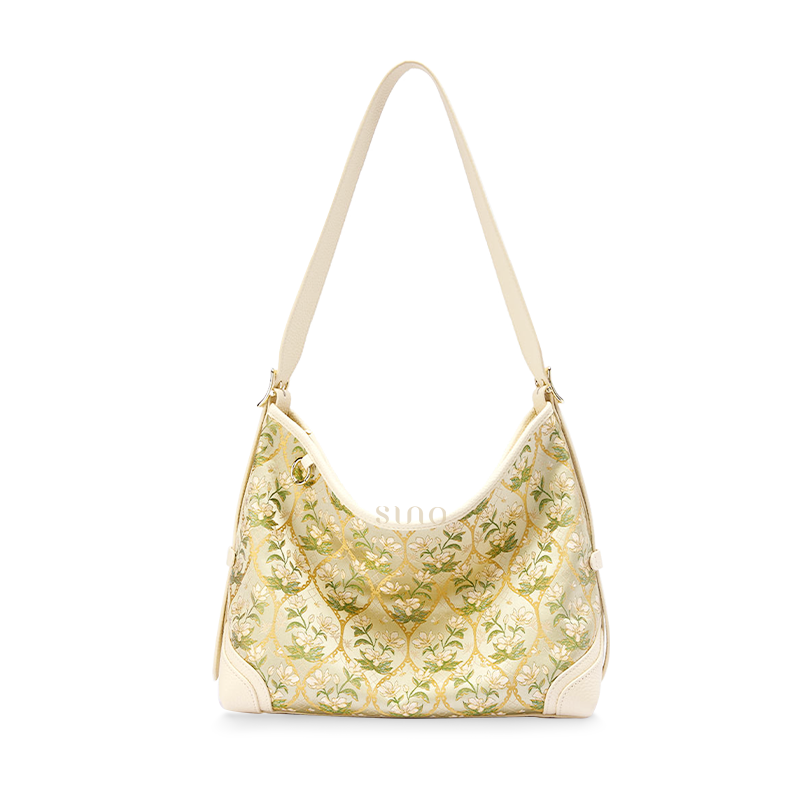
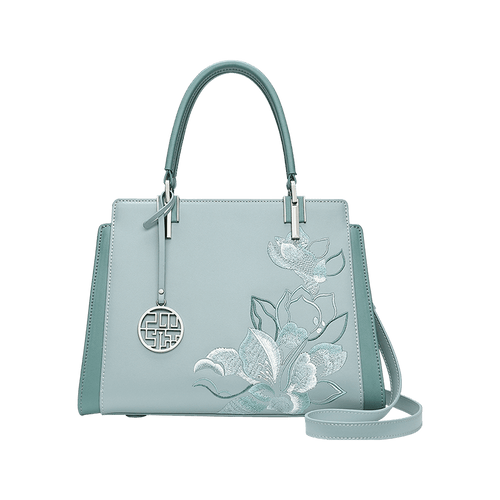
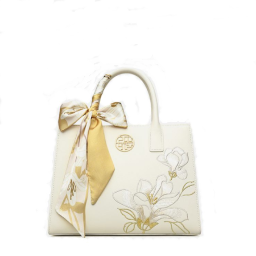
Magnolia Floral Pattern: The magnolia flower has long been admired in Chinese culture for its purity, nobility, beauty, and loyalty. Its upright form and delicate petals give the pattern a graceful character, while the deep blue-purple ground and subtle gold outlines create a refined sense of calm luxury. Rather than appearing loud or ornate, the magnolia motif expresses a quiet kind of elegance — soft, dignified, and enduring.

If you feel this floral pattern brings you positive energy and a sense of beauty, explore our Chinoiserie Luxury Song Brocade Phalaenopsis Orchid Round Bag. -
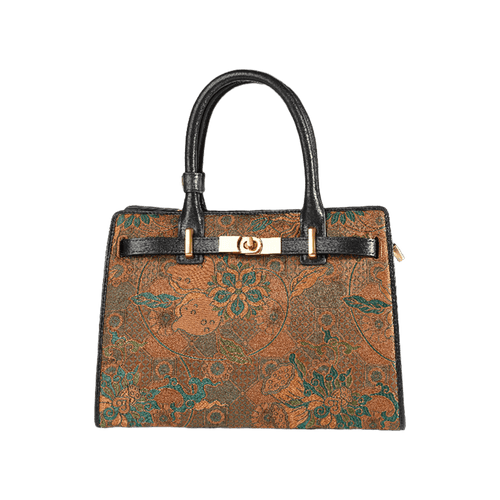
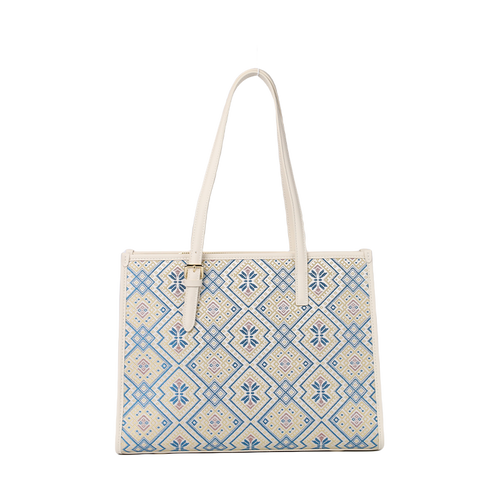
Baoxiang Flower Pattern:The Baoxiang flower is one of the most iconic motifs in Chinese decorative art. Based on the lotus and enriched with layered forms of peony and chrysanthemum, it carries a full, symmetrical beauty often associated with Buddhist art and classical ornament. Its layered petals symbolize prosperity, blessing, dignity, and abundance, making the pattern both visually rich and spiritually uplifting.

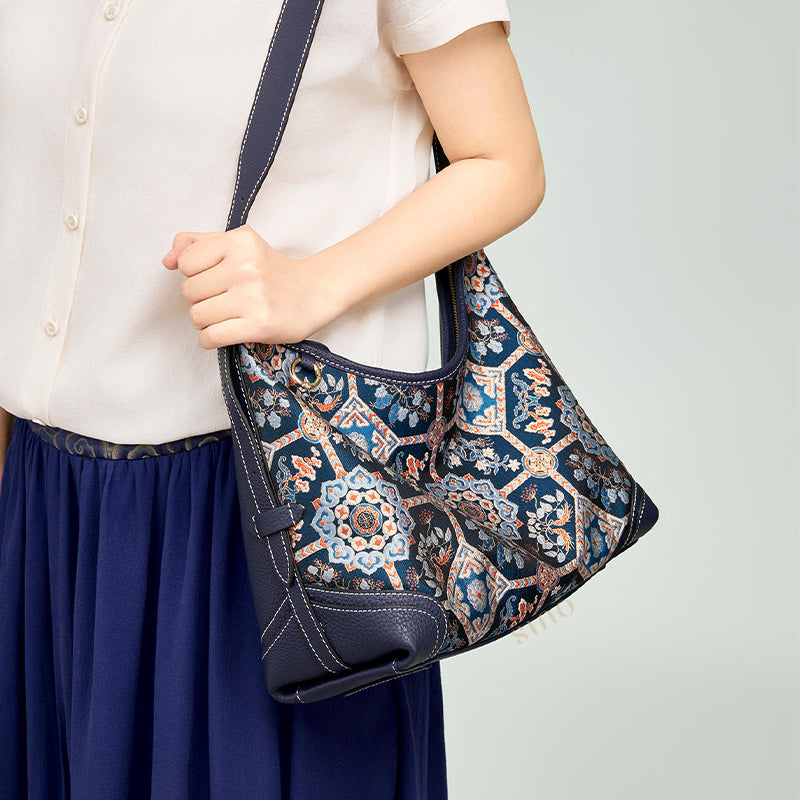
If you feel this auspicious pattern brings you positive energy and a sense of blessing, explore our Luxury Song Brocade Blue Baoxiang Floral Leather Crossbody Bag.
The Gift and Collectible Value of Qian Xiaoping Song Brocade
Qian Xiaoping Song Brocade carries a value that goes beyond beauty. As a gift, it offers more than a decorative pattern or a luxury fabric. Its motifs often express wishes for harmony, blessing, elegance, prosperity, and longevity, making each piece feel thoughtful and meaningful. For someone who appreciates culture, craftsmanship, or Chinese aesthetics, a gift made with Qian Xiaoping Song Brocade becomes a way to share heritage as well as beauty.
Its collectible value also comes from provenance. This is not an ordinary brocade chosen only for its appearance. Qian Xiaoping Song Brocade is connected to a recognized master, the revival of a nearly lost weaving technique, and the preservation of Chinese intangible cultural heritage. The fabric carries a story of restoration, research, and craftsmanship, which gives it a deeper cultural identity than mass-produced decorative textiles.

This is also why Qian Xiaoping Song Brocade commands a higher price. Its value is shaped by rare materials, complex weaving, limited production, symbolic patterns, and the authority of a master heritage lineage. To own or gift a piece made with this textile is not simply to buy silk brocade; it is to carry a revived Chinese silk heritage into modern life.
A Revived Silk Heritage, Woven for Today
Qian Xiaoping Song Brocade is more than a beautiful fabric. It represents the revival of a nearly lost Chinese weaving tradition, the mastery of a national heritage inheritor, and the refined symbolism of Eastern aesthetics.
To own or gift a piece made with this textile is to carry a part of Chinese silk heritage into modern life — not as something distant or forgotten, but as something woven, worn, cherished, and remembered.