Passer au contenu



In Suzhou, silk carries the memory of centuries. For more than forty years, Lu Meiying has worked at the loom, turning that memory into color, texture, and light. Trained in the exacting art of kesi tapestry weaving, she later brought the same sensitivity to Song Brocade, treating every thread not merely as material, but as a way to express her own vision of Chinese beauty.
What makes her story compelling, however, is not simply her devotion to tradition. It is her refusal to let tradition remain still. While historic brocades are often admired behind museum glass, Lu Meiying has continued to ask how they might be worn, touched, and lived with again. How did she transform an ancient textile into a deeply personal language of color—and help Song Brocade find a place in contemporary design?
From Kesi Artisan to Song Brocade Master
Lu Meiying's path to Song Brocade began with decades of patient work in kesi. In the workshop, her understanding of silk was formed through touch — the tension of a thread, the difference between fibers, the way color shifts when light moves across a woven surface. Kesi demanded that each section of an image be built gradually, color by color, teaching her to treat silk not just as a craft material but as an artistic language.

Her move into Song Brocade was a natural extension of that experience. Where kesi allowed her to create detailed woven pictures, Song Brocade offered a continuous textile surface that could carry pattern, color, and cultural meaning into clothing and design. Over time, this cross-craft practice became the foundation of her identity as a silk artist — approaching brocade not as a set of patterns to reproduce, but as a medium for personal interpretation.
When Kesi Meets Song Brocade: A New Language of Color
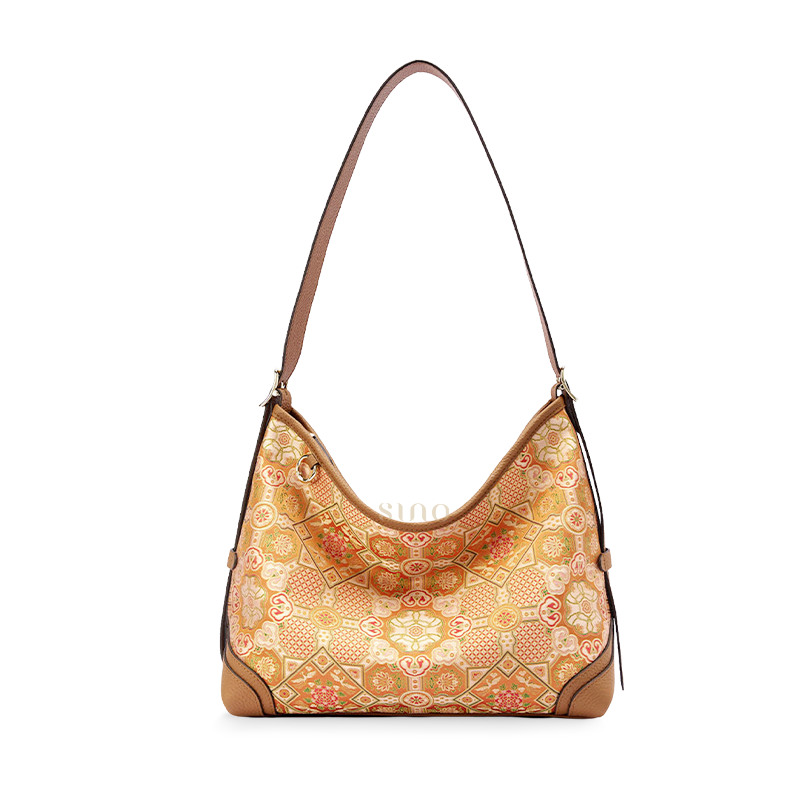
In Lu Meiying's Song Brocade, color is never flat. Background tones, colored silk wefts, and metallic highlights are layered to create depth and movement across the textile — as the viewing angle shifts, details emerge and recede, and the surface begins to feel less like repeated decoration and more like a picture unfolding across silk.

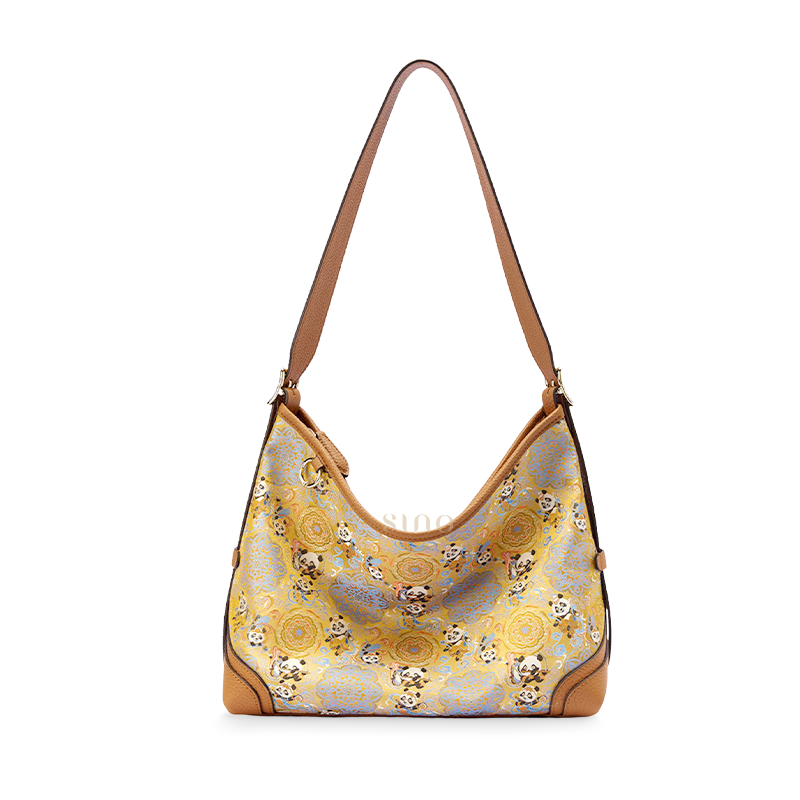
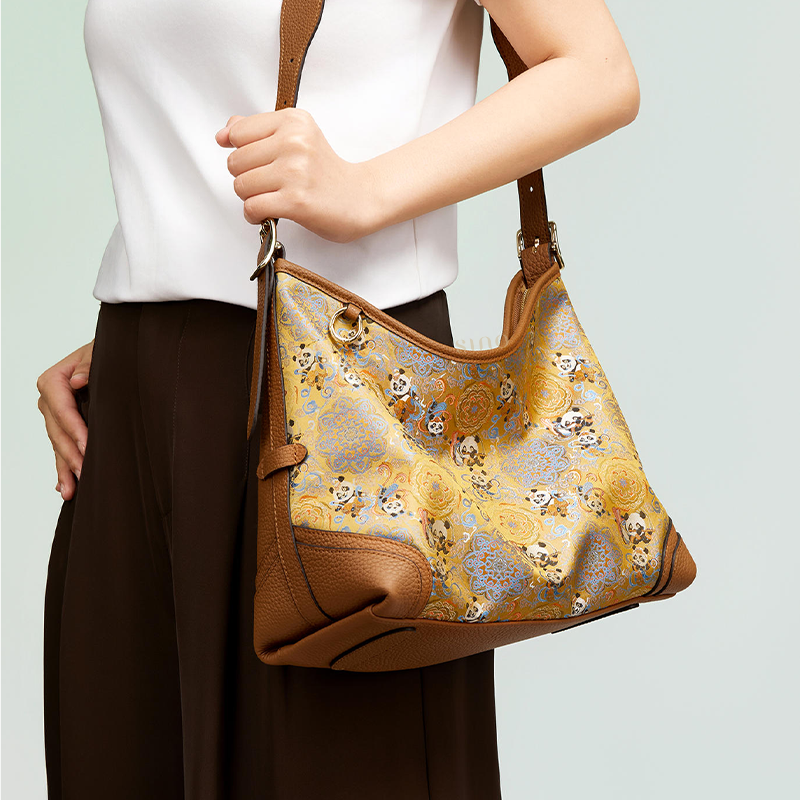
Alongside traditional floral and auspicious motifs, she often introduces animal imagery with a playful, gentle character — a quality that sets her apart from masters whose work leans toward formal historical patterns or grand ceremonial imagery. Each animal is treated as a complete composition: outline, expression, surrounding color, background, and reflected light all considered together. Rich reds, deep blues, greens, and golds are carefully balanced to give each figure depth and personality.
In Lu Meiying's work, color does more than decorate. It shapes mood, carries narrative, and transforms Song Brocade into something unmistakably her own.
What Defines Lu Meiying Song Brocade?
Signature Patterns and Their Cultural Meanings
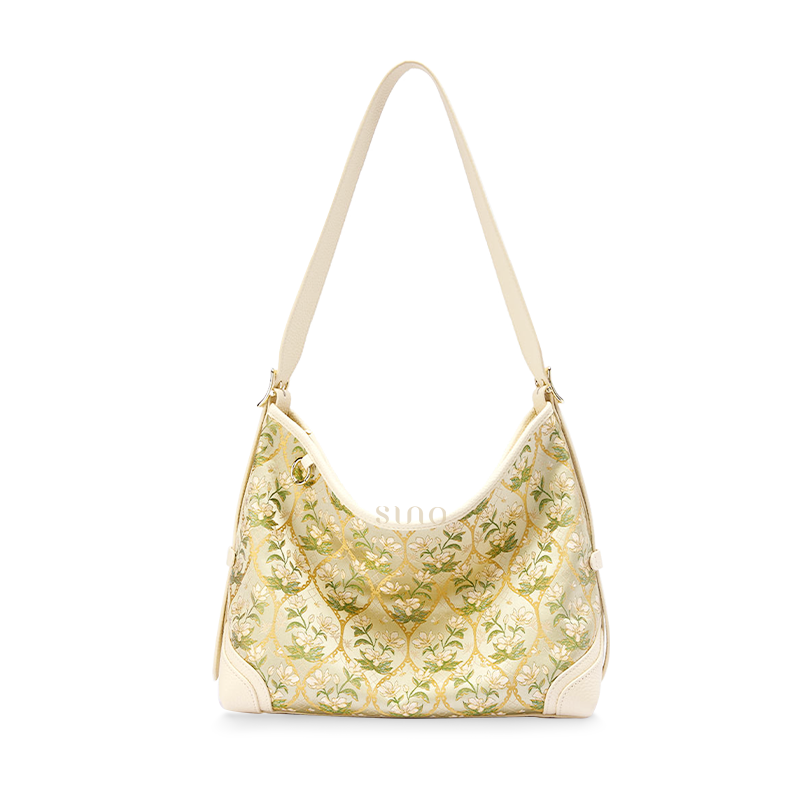
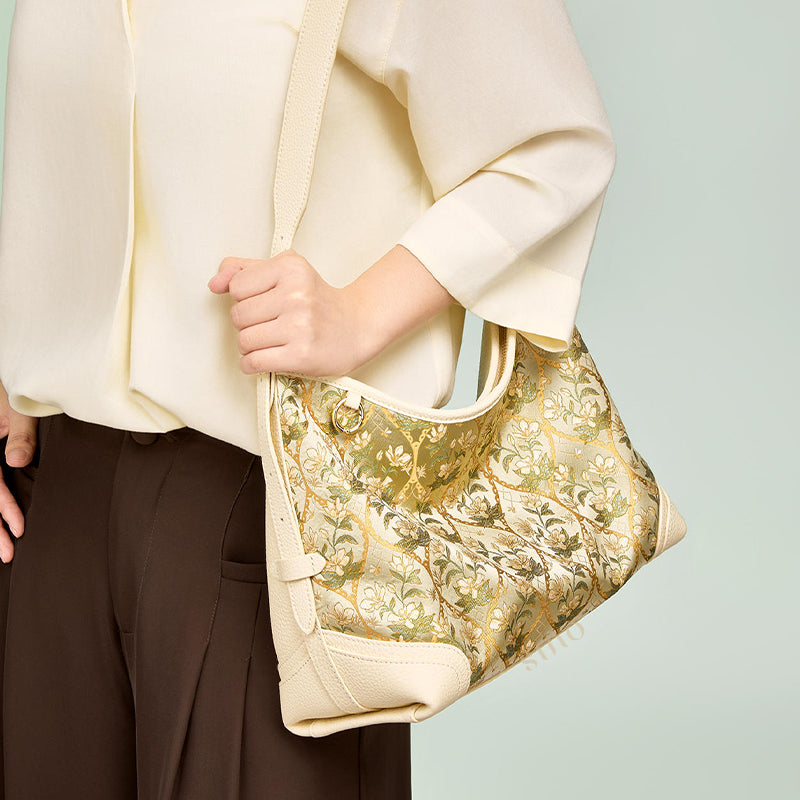
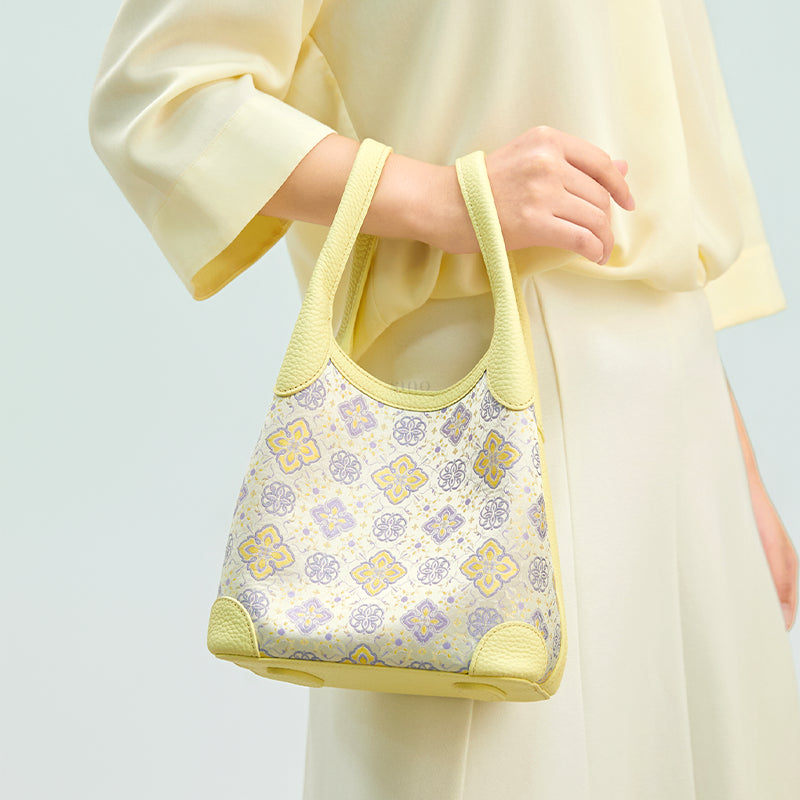
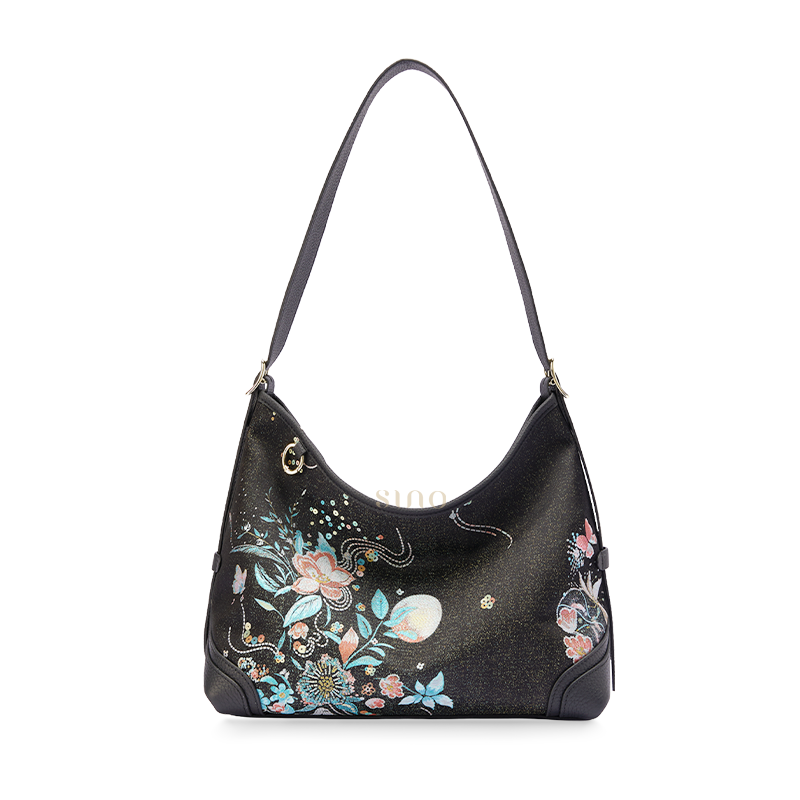
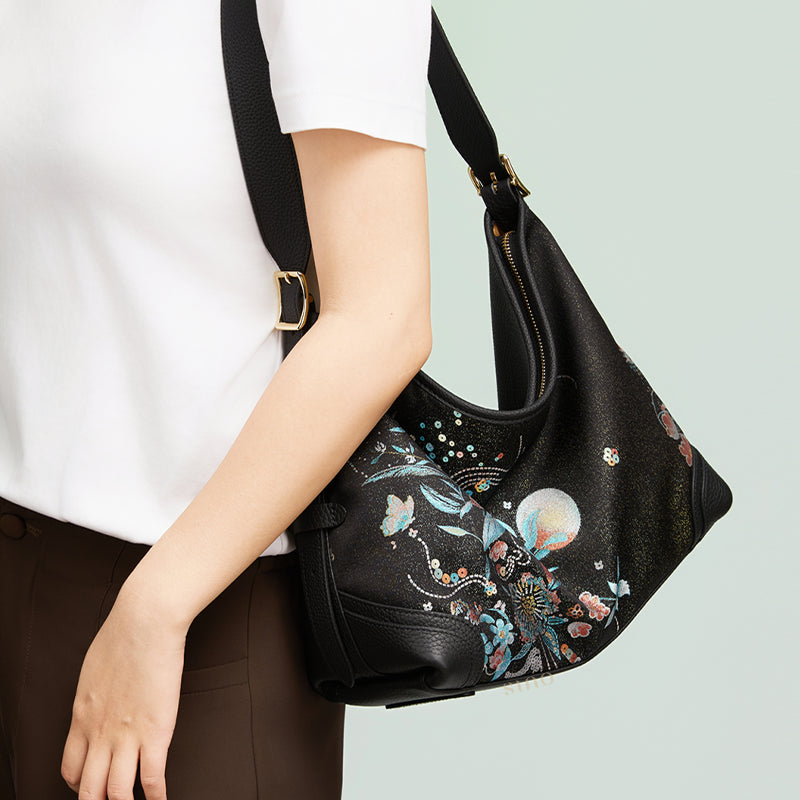
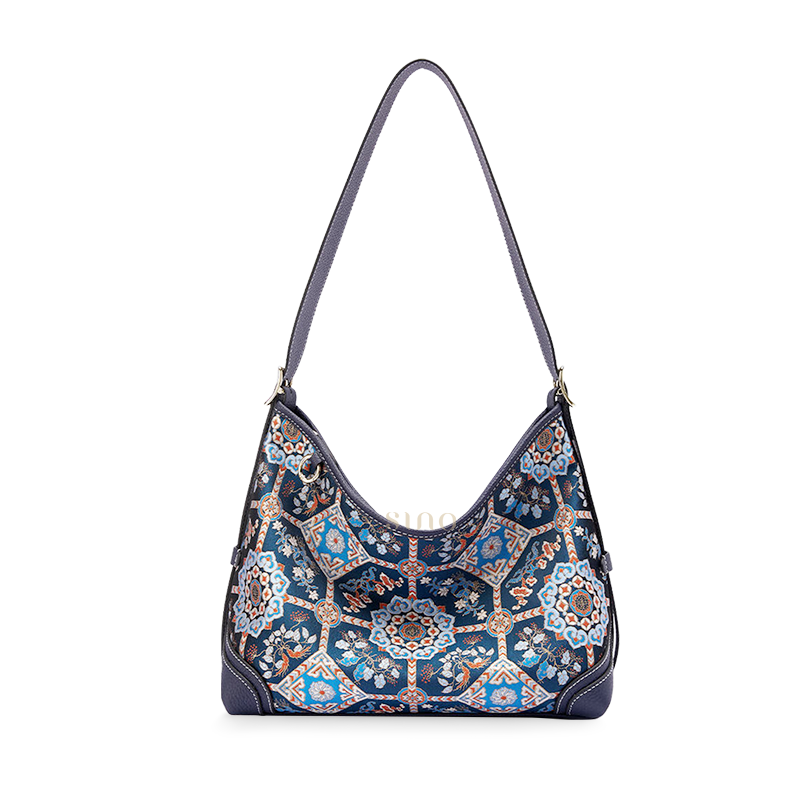
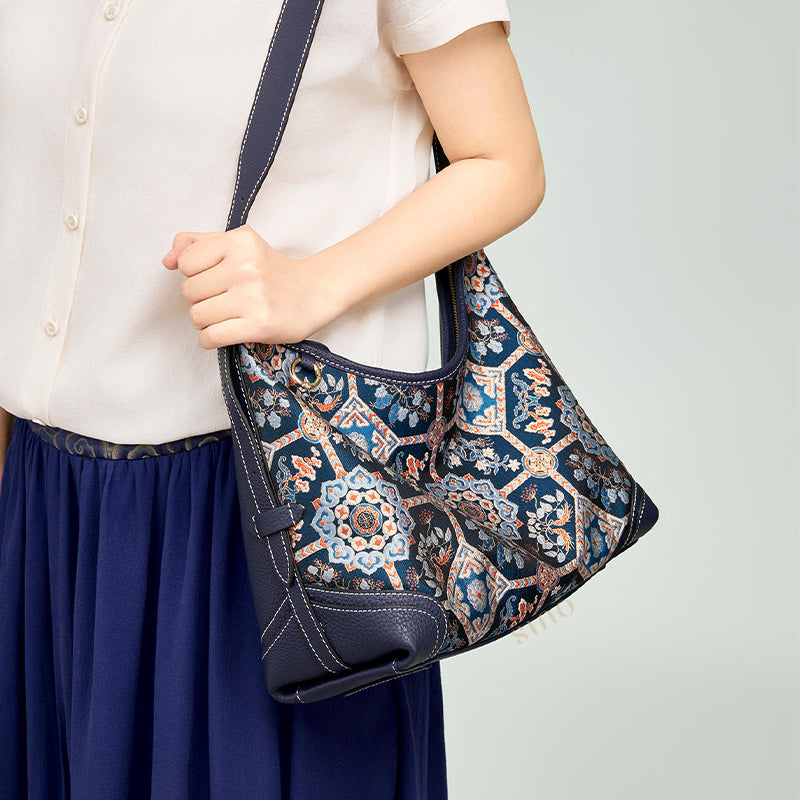
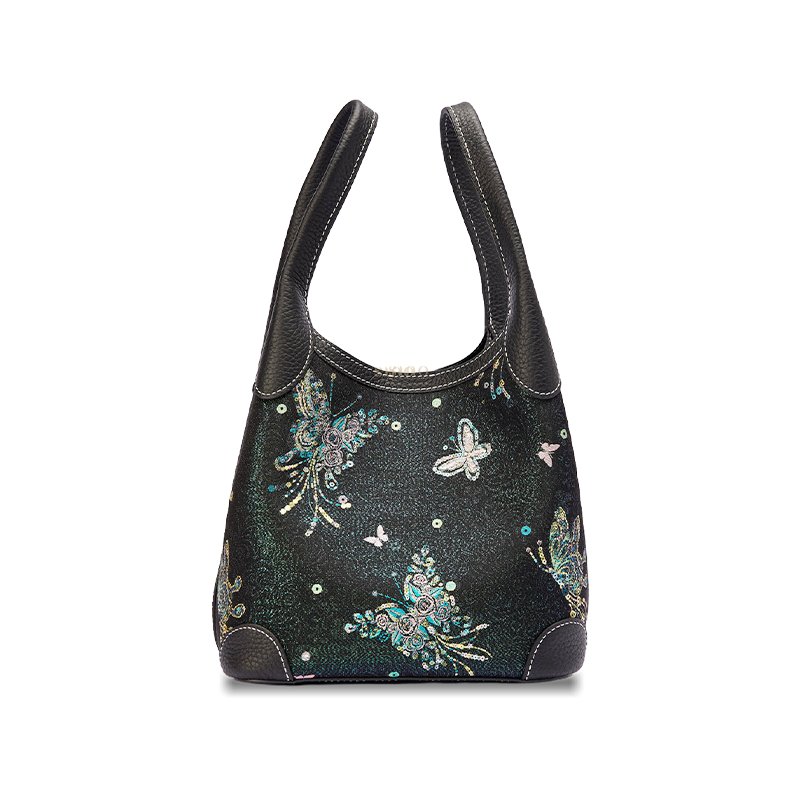
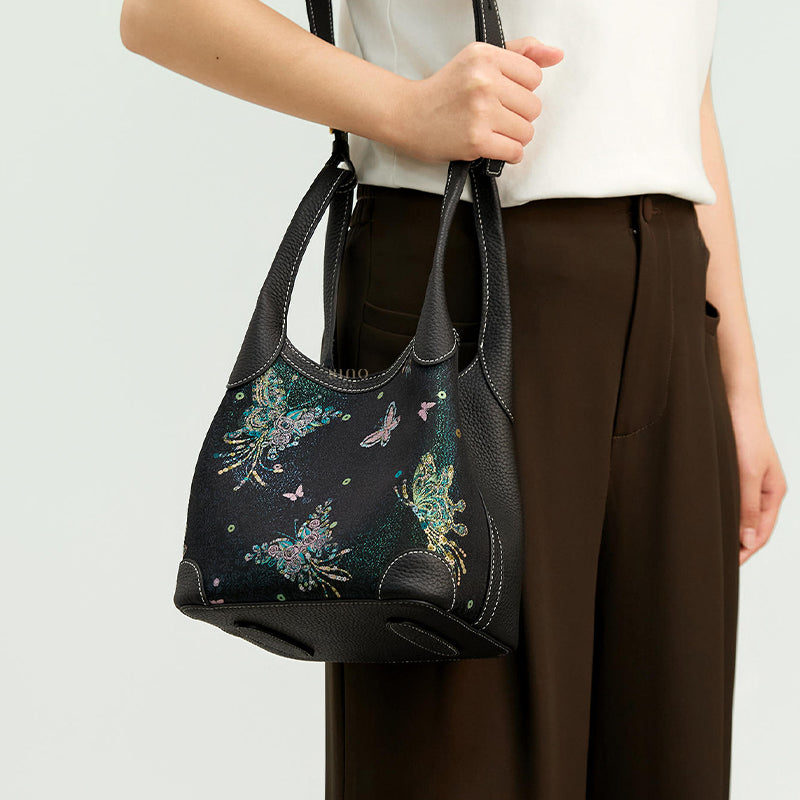
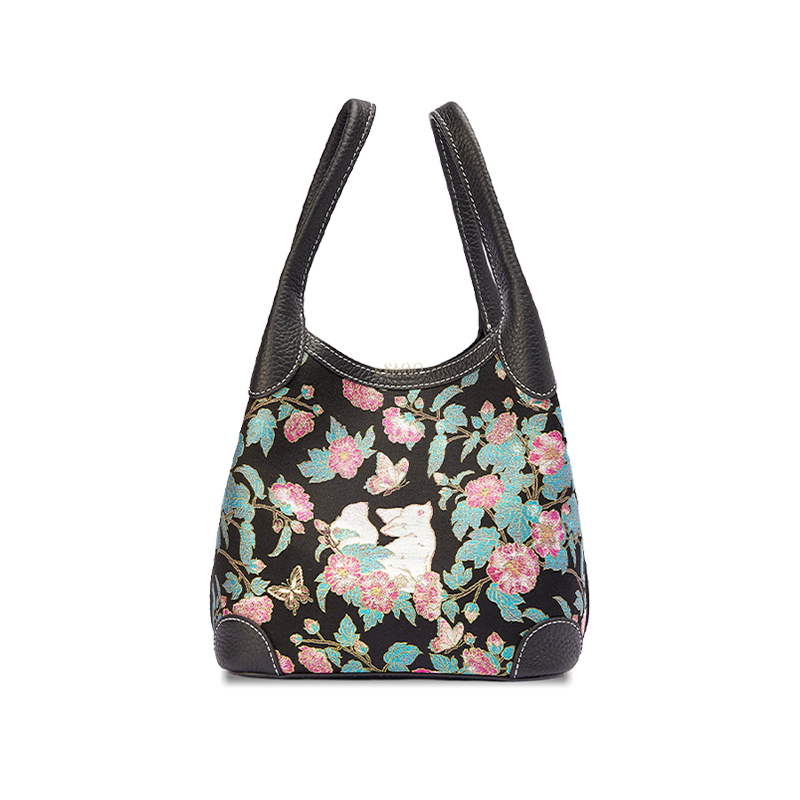
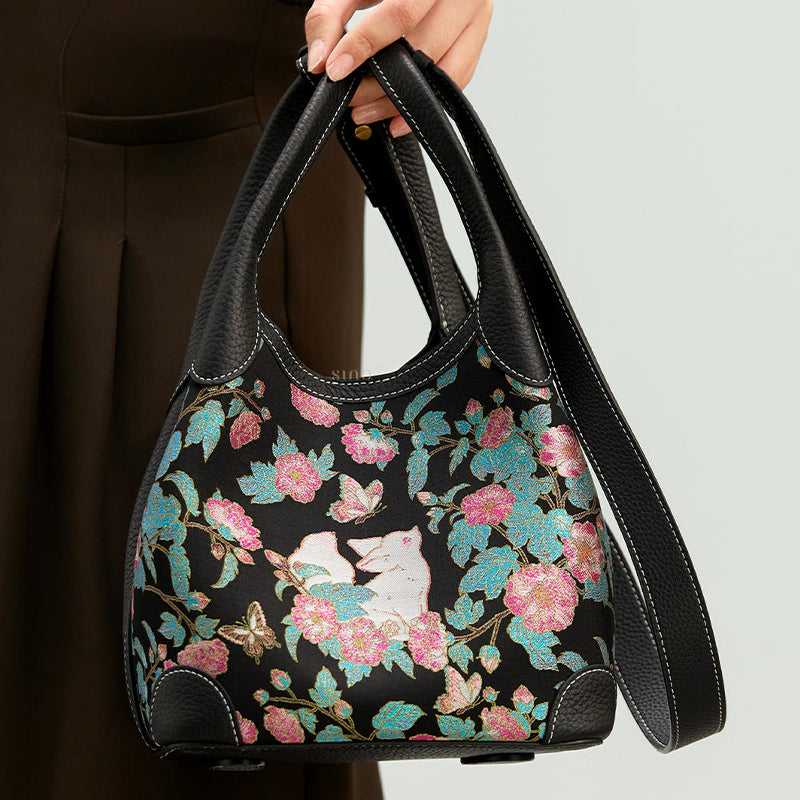
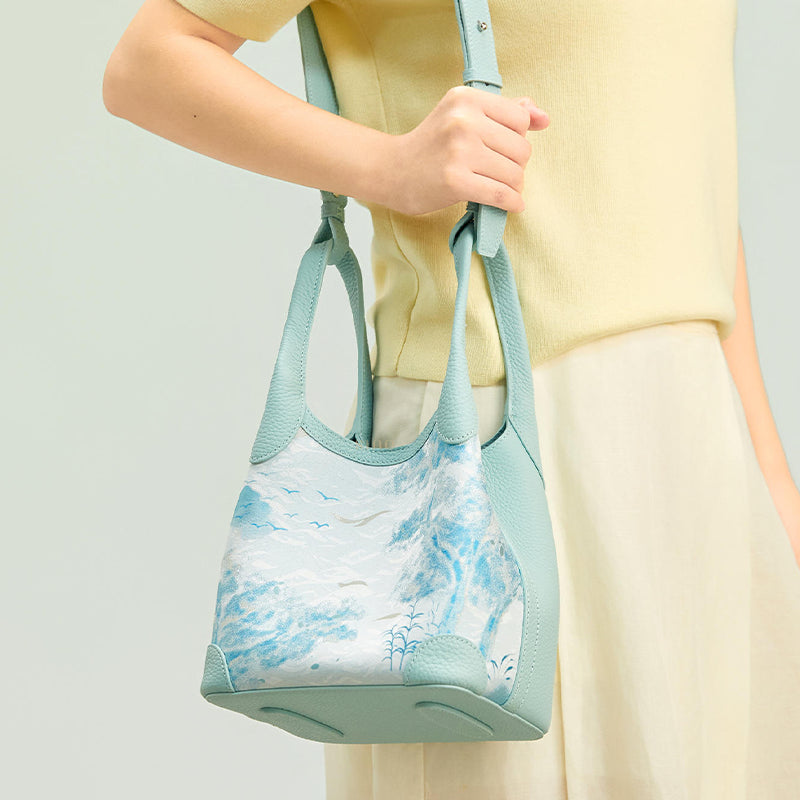
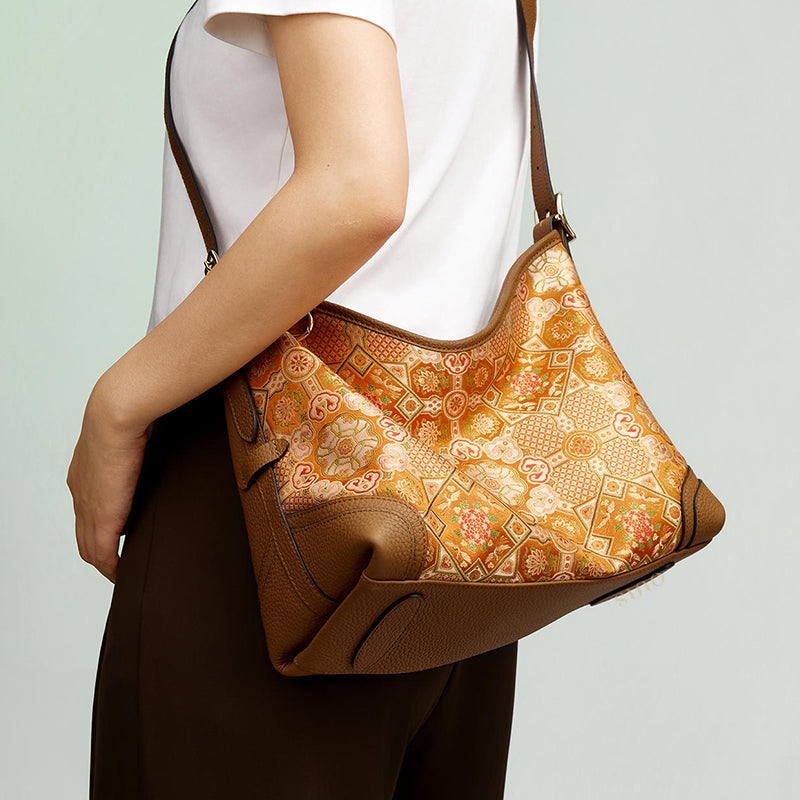
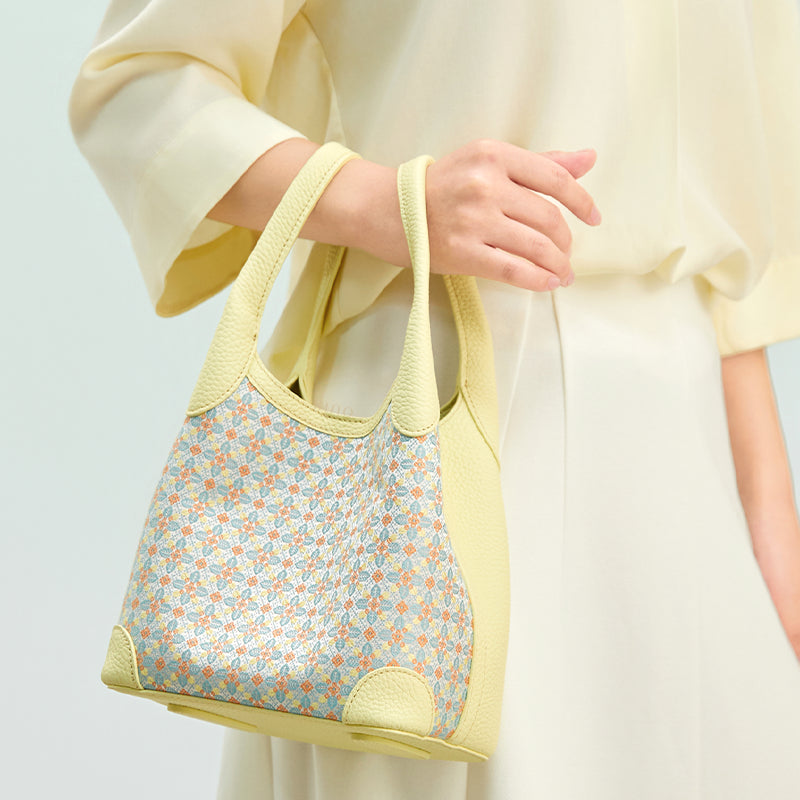
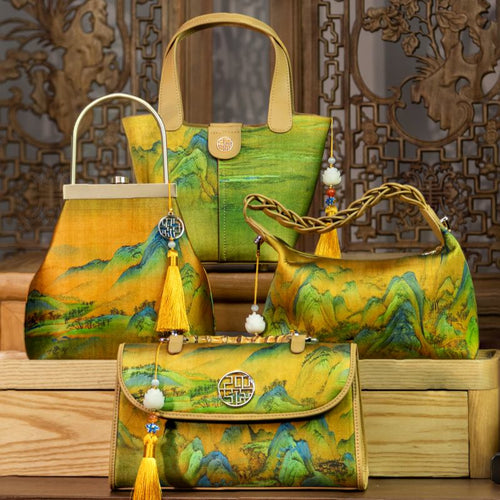
Lu Meiying’s Song Brocade often transforms traditional animals, flowers, and protective symbols into vivid woven narratives. The following three patterns show how auspicious meaning, expressive color, and contemporary handbag design come together in her work.
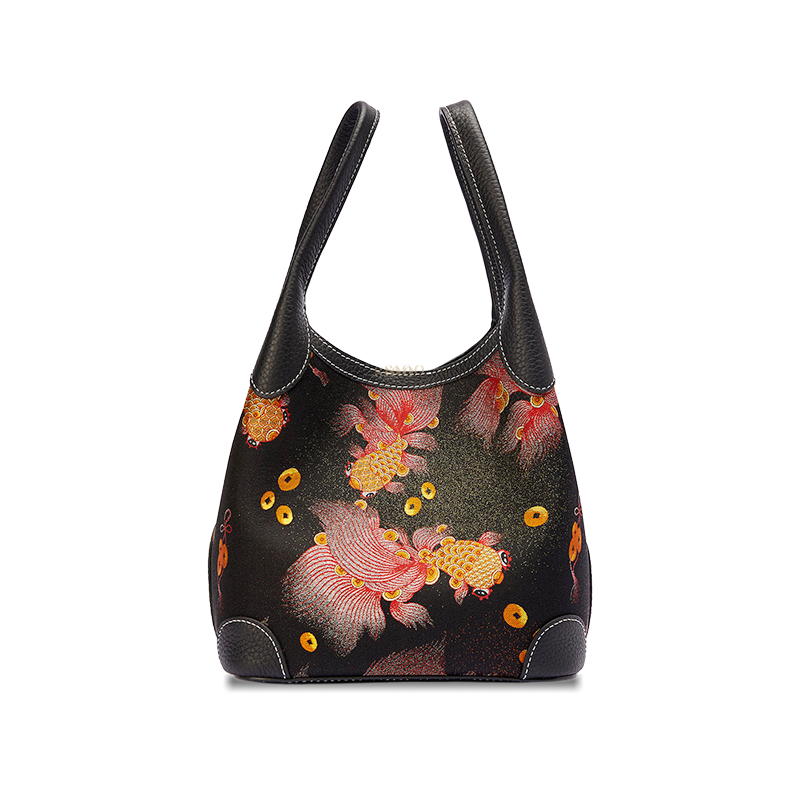
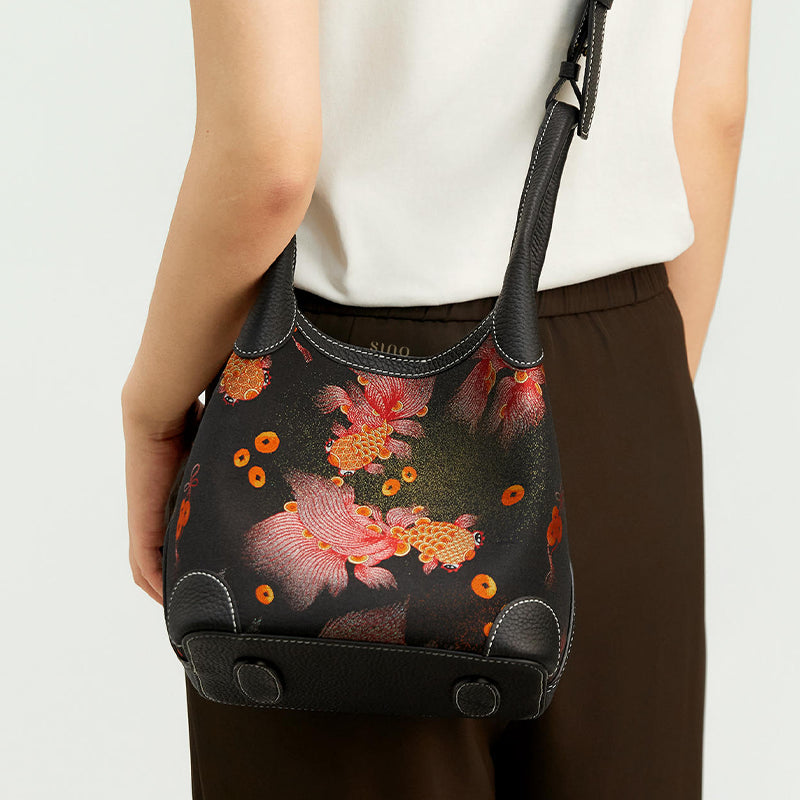
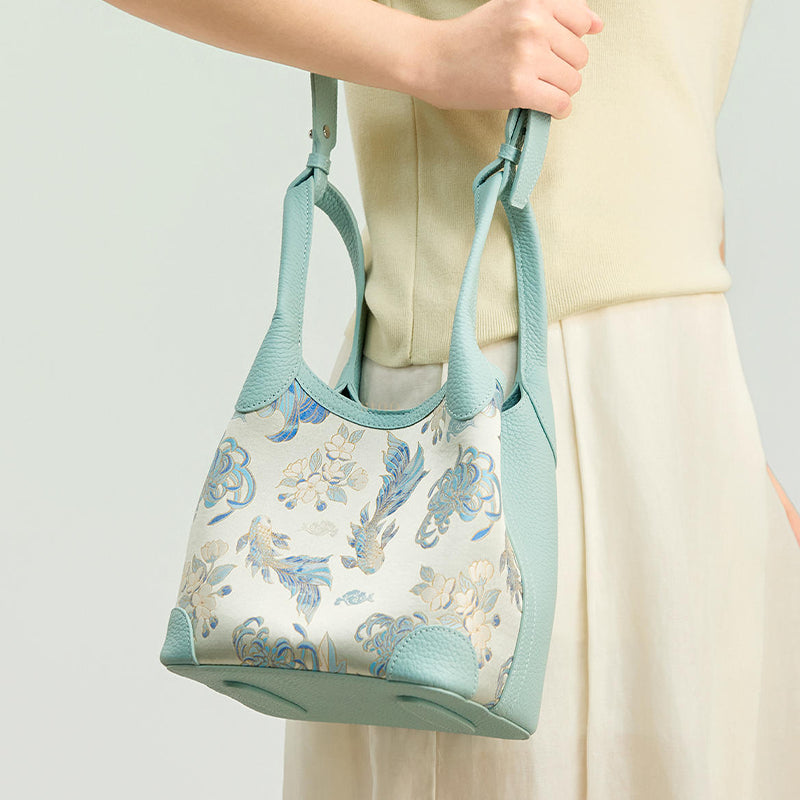
1.Golden Carp and Lotus: Abundance and Harmony
- Motif: Golden carp move among blooming lotus flowers and flowing water, creating a lively yet poetic pond scene.
- Meaning: In Chinese, “fish” sounds like “surplus,” symbolizing lasting abundance, while the lotus is associated with harmony and fulfillment. A pair of fish also suggests doubled blessings and success in life.

If you’re drawn to the auspicious symbolism of golden carp and wish to invite more good fortune into your life, explore our Chinoiserie Luxury Song Brocade Golden Carp Leather Basket Tote Bag.
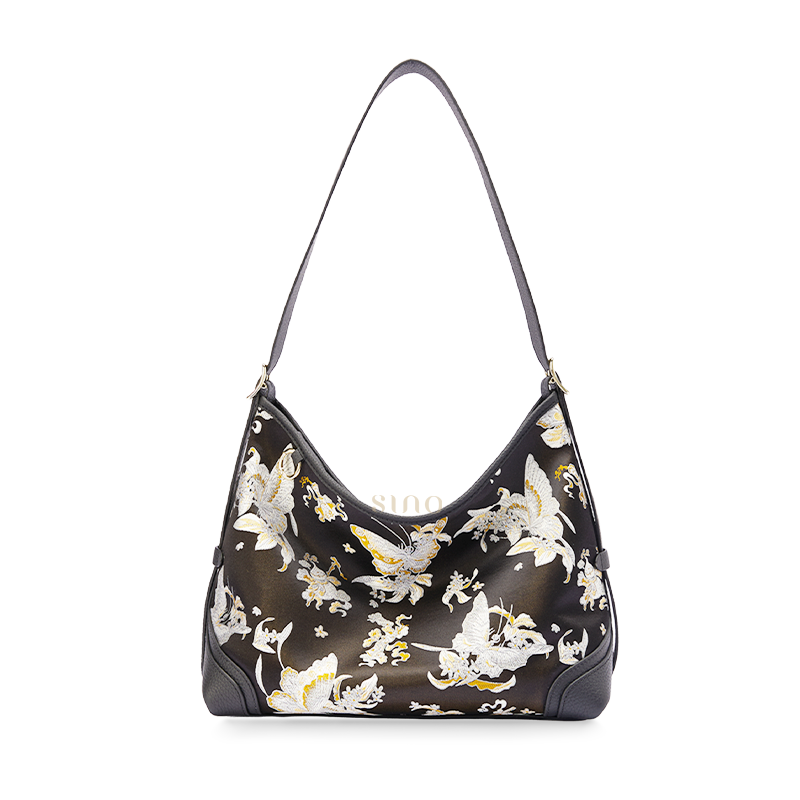
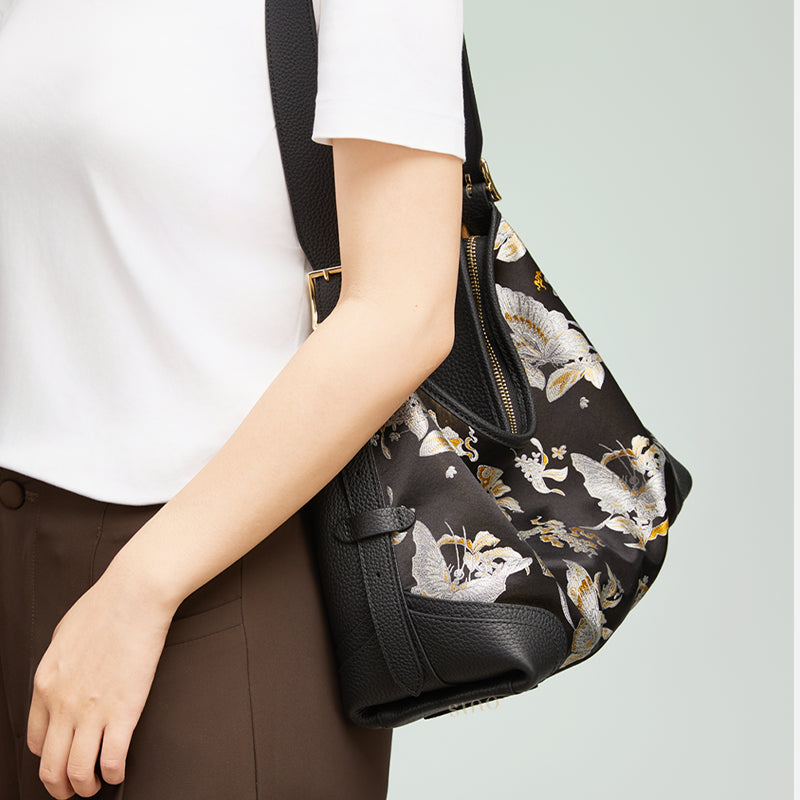
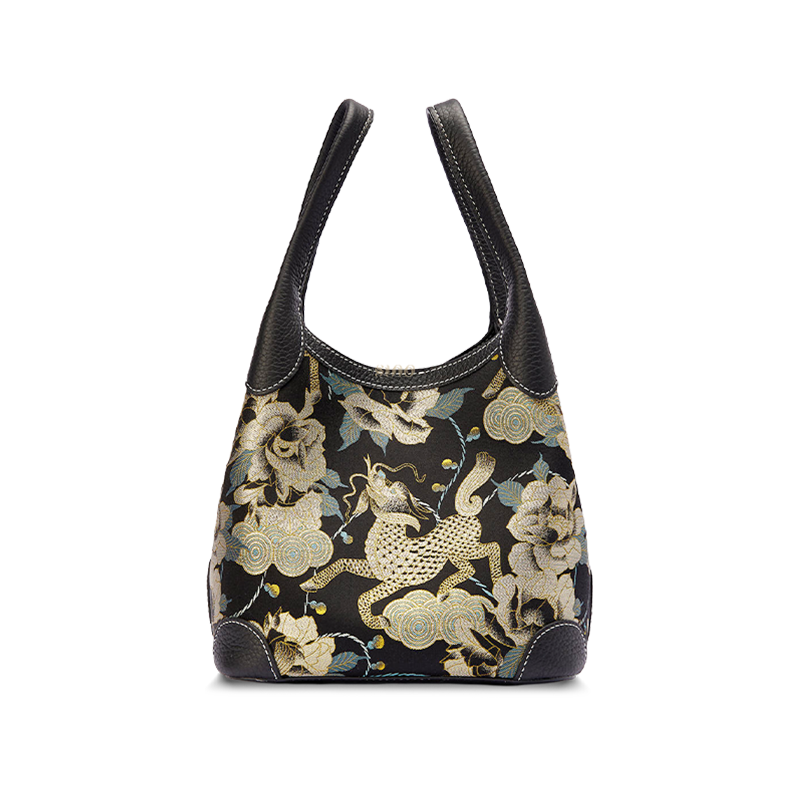
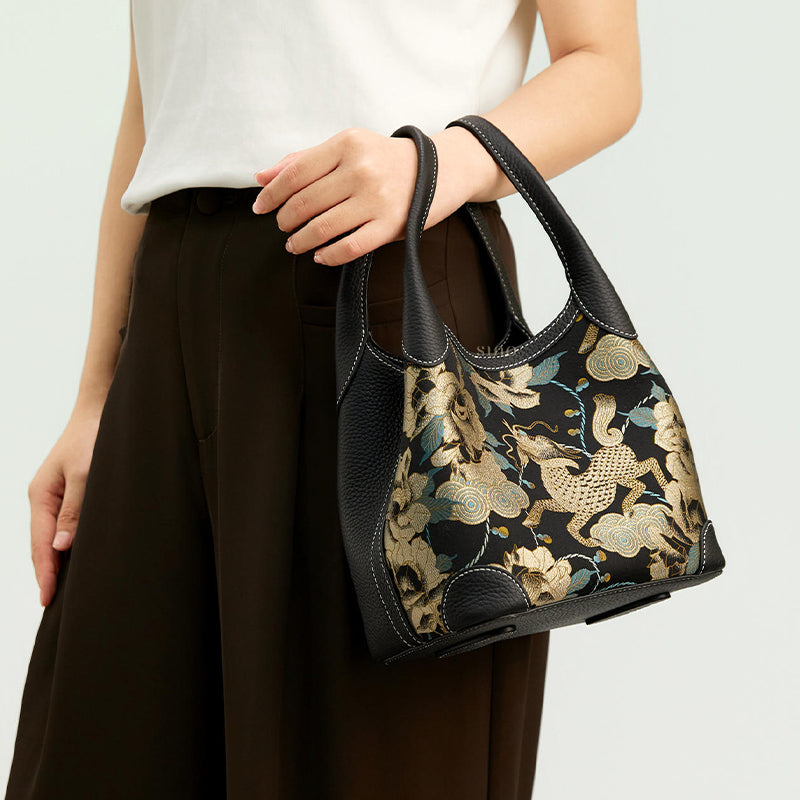
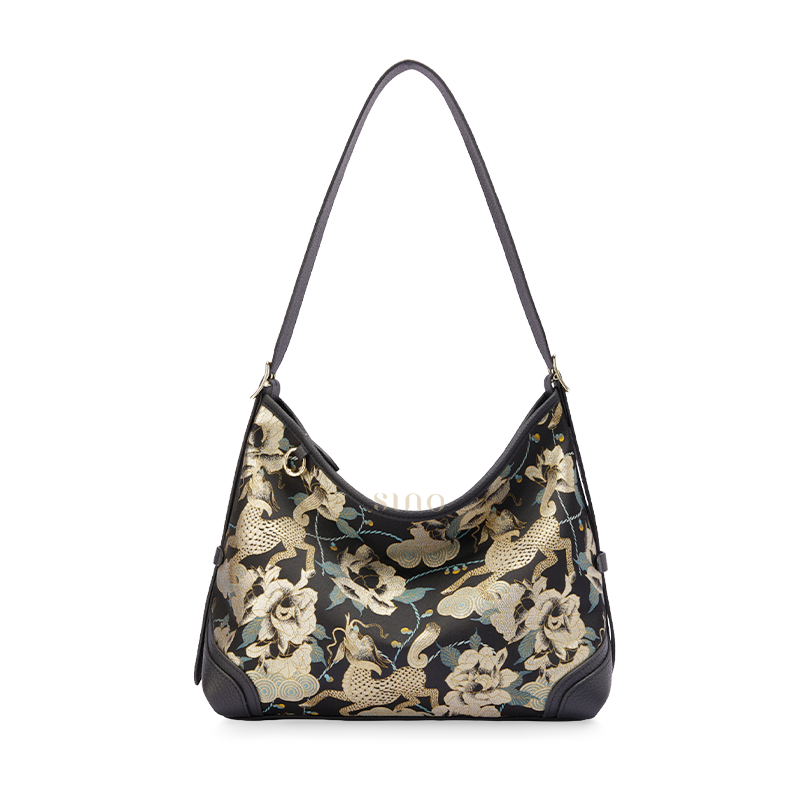
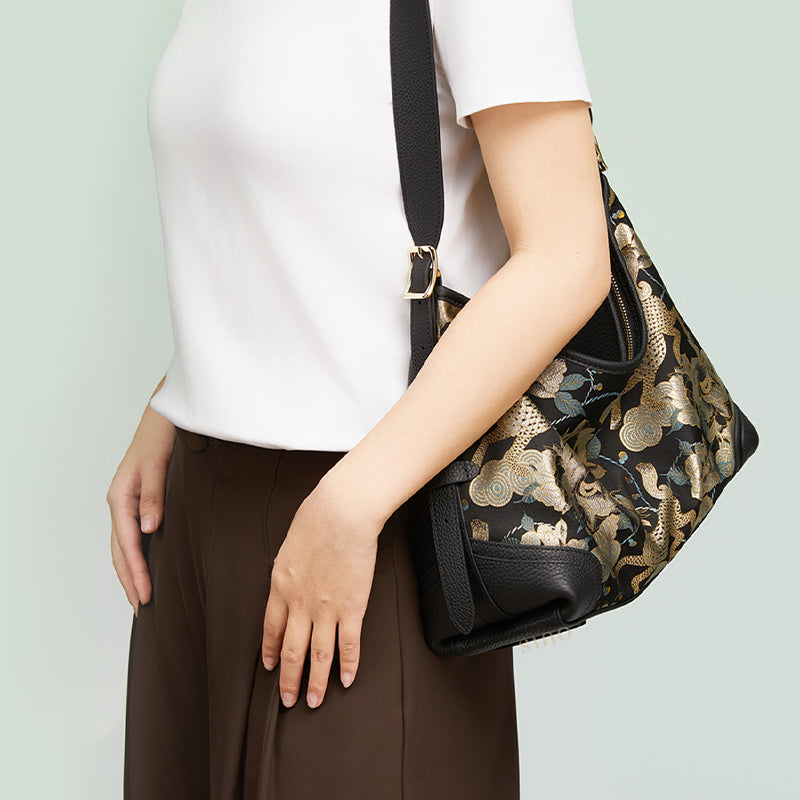
2.Gilded Qilin and Peony: Prosperity and Auspicious Protection
- Motif: The mythical qilin appears among peonies, scrolling blossoms, and auspicious clouds, rendered in a dramatic black-and-gold composition.
- Meaning: The qilin represents peace, good fortune, and promising success, while the peony symbolizes wealth, dignity, and prosperity. Together, they express the blessing of enduring fortune and a flourishing life.

If you’re seeking a symbol of strength and protection in your everyday life, explore our Luxury Song Brocade Black Gold Qilin Peony Leather Basket Tote Bag.
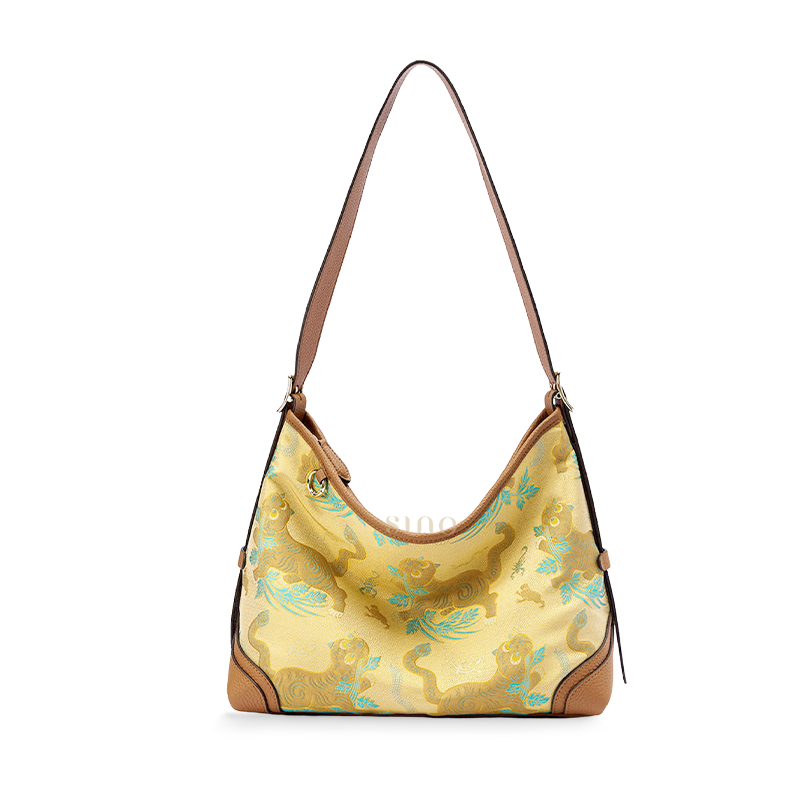
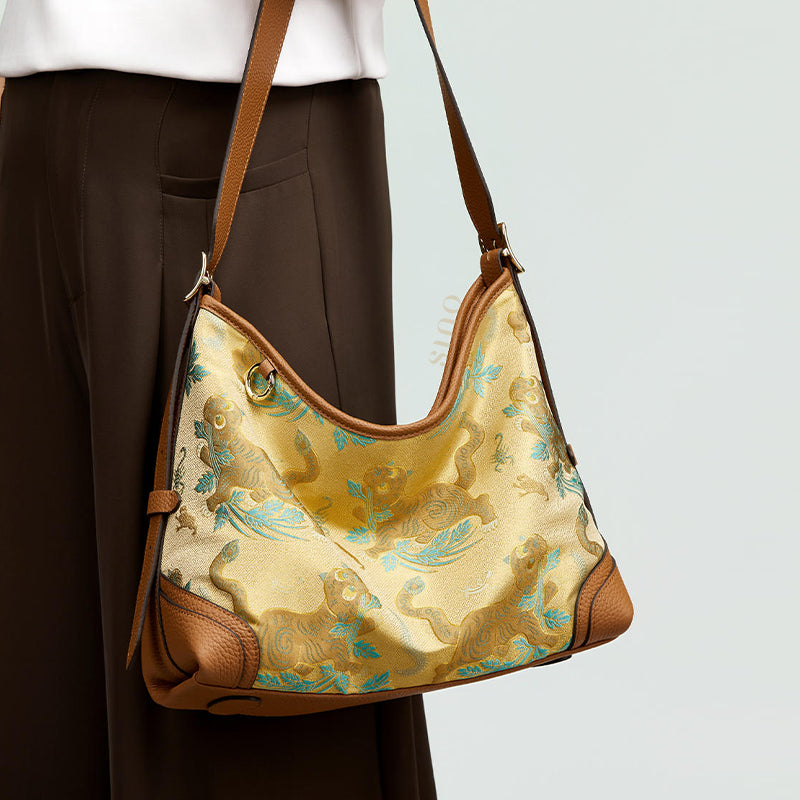
3.Tiger Subduing the Five Poisons: Strength and Protection
- Motif: A powerful tiger stands at the center, overcoming the traditional “Five Poisons”—the snake, scorpion, centipede, toad, and gecko—within a richly layered composition.
- Meaning: Rooted in traditional customs of warding off harmful forces, the tiger symbolizes courage, protective strength, and the ability to overcome adversity. The pattern transforms danger into a blessing of resilience and safety.

When life calls for courage to overcome obstacles and transform adversity into strength, explore our Chinoiserie Luxury Song Brocade Brown Tiger Leather Crossbody Bag.
Lu Meiying Song Brocade and the Rise of New Chinese Fashion
New Chinese fashion is not about recreating the past — it's about making it feel relevant. Traditional materials, symbols, and craftsmanship are being reinterpreted for modern life, and Song Brocade, once associated with formal garments and museum collections, is finding a new place within that shift.

Lu Meiying's work is part of that conversation. Her luminous color, layered compositions, and imaginative mix of animals, flowers, and auspicious symbols give traditional brocade a character that feels vivid and approachable rather than ceremonial or heavy. The handcrafted quality and distinctiveness of her pieces also speak to a growing appetite for limited, meaningful objects — things that feel personal rather than produced.
Her contribution isn't simplifying tradition to follow a trend. It's showing that the original richness of ancient silk can speak to a new generation on its own terms.Artistic renewal is only one part of bringing Song Brocade into contemporary life. SAINT JOY’s commercial and marketing system for Song Brocade has further expanded its public reach through brand positioning, celebrity collaborations, cultural events, and media communication, helping the heritage textile connect with wider and younger audiences.
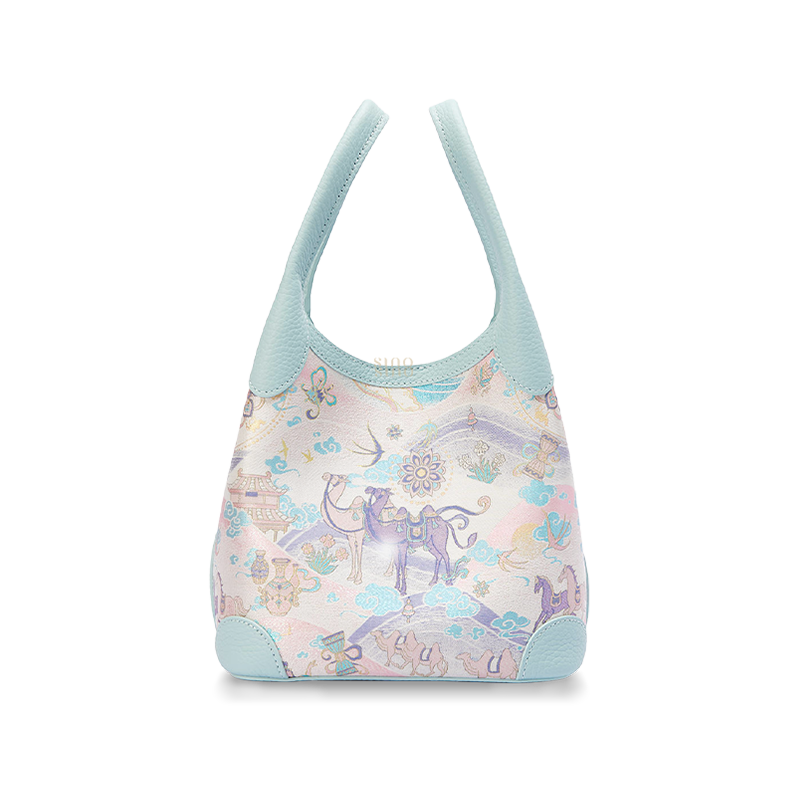
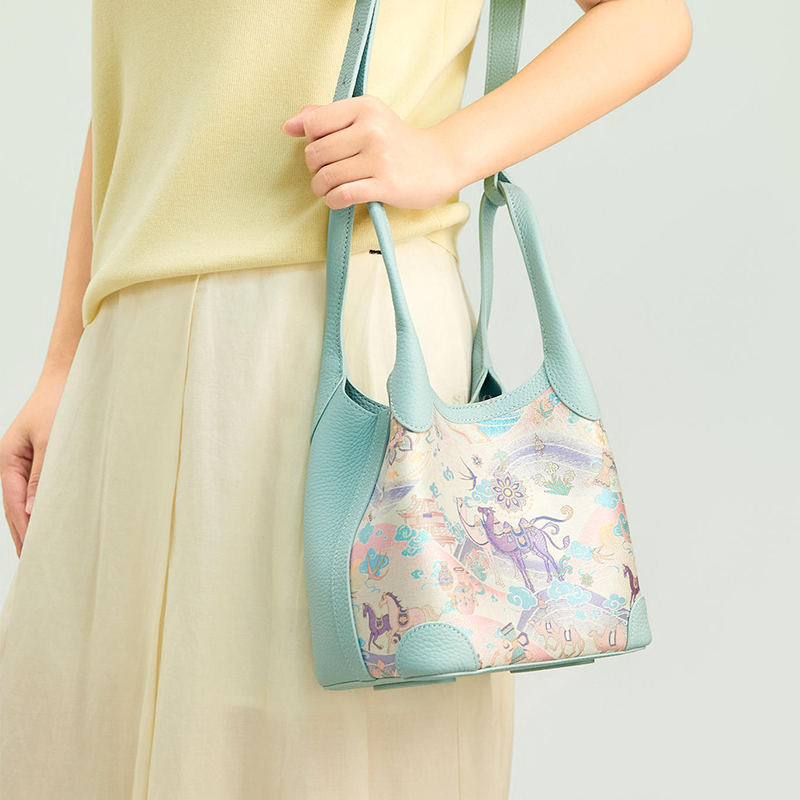
 Explore the Sinocultural Song Brocade Bag Collection and discover a contemporary way to carry the artistry, stories, and blessings of Chinese silk.
How Lu Meiying’s Innovations Are Shaping the Future of Song Brocade
The future of Song Brocade depends on more than preserving historic patterns and weaving methods. That future also rests on the preservation foundations established by Qian Xiaoping’s systematic research and revival of traditional Song Brocade craftsmanship, which helped restore essential weaving knowledge for later generations.Conservation protects the knowledge of the past, but a living craft must also remain open to new ideas, new visual languages, and new relationships with contemporary life. Lu Meiying’s work demonstrates how innovation can take place within tradition rather than outside it.
By bringing the pictorial sensitivity of kesi into Song Brocade, she has expanded the way this ancient textile can express color, light, character, and narrative. Her preference for imaginative animal imagery, layered compositions, and personally distinctive color schemes also shows that brocade need not be limited to reproducing established designs. It can carry the recognizable vision of an individual artist while still respecting traditional materials, structures, and cultural symbolism.
This approach offers Song Brocade a path beyond either museum preservation or standardized production. Historical reconstruction, Li Dexi’s technical development of loom structures and production methods, and Lu Meiying’s small-scale artistic creation all demonstrate how different approaches can contribute to the future of Song Brocade. Lu Meiying’s significance lies in showing that inheritance is not simply the repetition of what already exists. It is also the confidence to create from within tradition, allowing an ancient silk art to continue developing without losing its cultural identity.