Skip to content





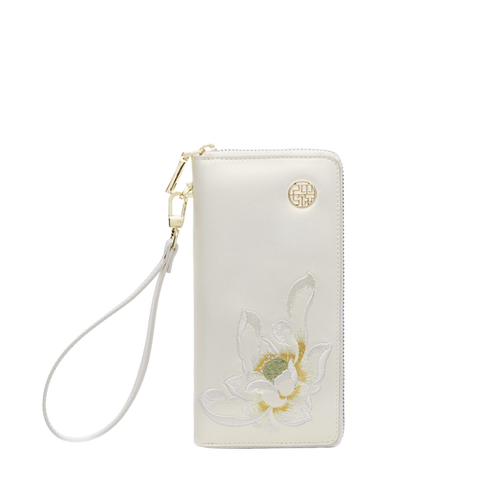
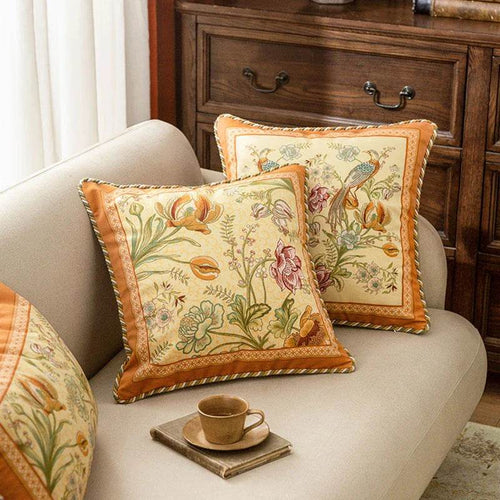
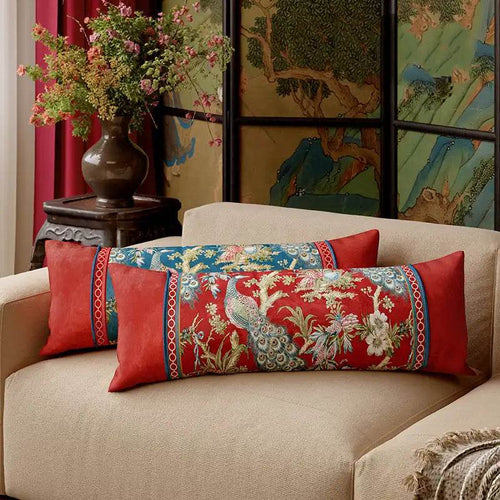
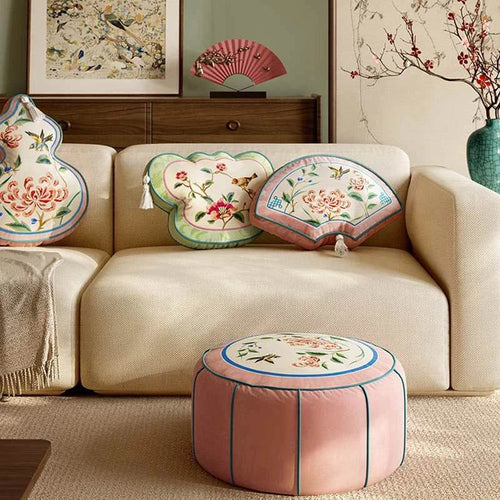





When people speak of the ancient Silk Road, the images that often come to mind are of endless desert sands and the gentle swaying of camel caravans. But at the very throat of this legendary route lies a city that was not just a resting place for travelers, but a great crucible where Eastern and Western civilizations met, clashed, and merged. That city is Dunhuang.

The name itself evokes a sense of grandeur—"Dun" (敦) meaning grand or magnanimous, and "Huang" (煌) meaning brilliant and prosperous. In ancient Chinese etymology, "Dunhuang" literally translates to "Great and Glorious." This was more than a geographical oasis; it is a cultural peak in the history of world civilization that cannot be bypassed.
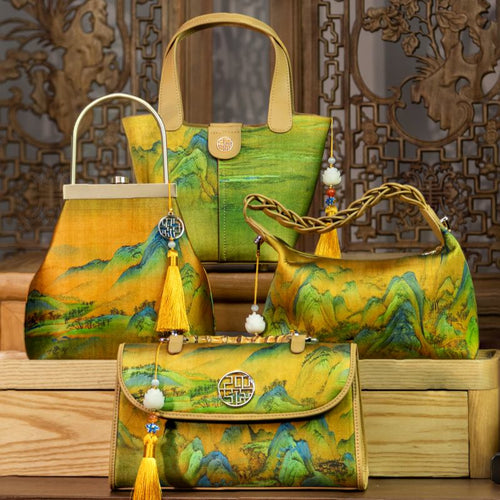
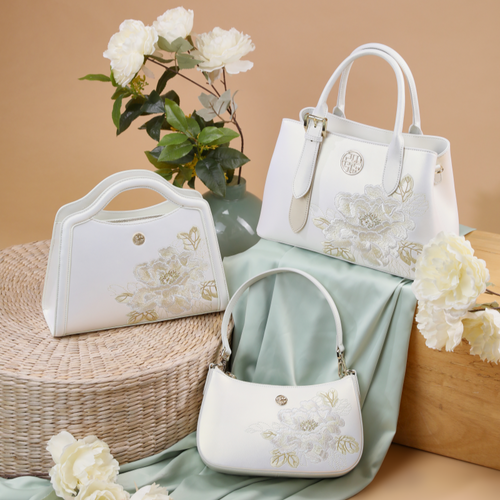
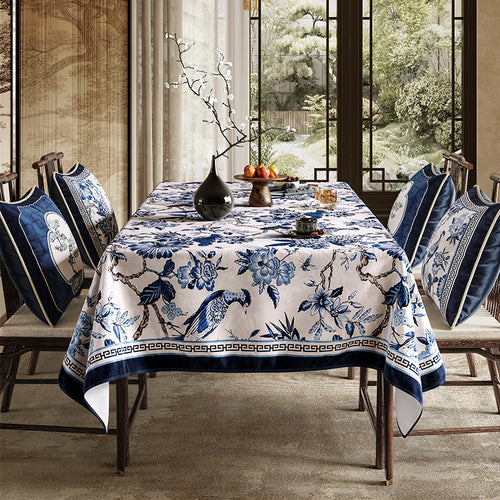
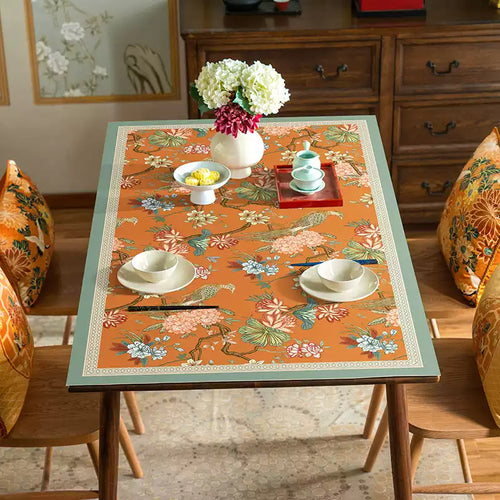
Today, that timeless vision of camel bells echoing against desert dunes is no longer confined to ancient scrolls. At Sinocultural, our artisans weave this very legend into everyday contemporary luxury—capturing the romance of the Hexi Corridor in genuine Chinese Song Brocade.

Luxury Song Brocade Silk Road Hobo Shoulder Bag
Woven from radiant Chinese Song Brocade, this statement shoulder bag depicts the storied Silk Road caravan—with camels traversing golden dunes, oasis pavilions, and swirling celestial clouds. Framed in rich sunset-orange leather, it transforms thousands of years of trade history into a striking accessory for daily elegance.
Today, let's travel through the mists of time to explore the inseparable bond between Dunhuang and the Silk Road, and uncover the secret to its timeless charm.
Table of Contents
- Where is Dunhuang Located? The Strategic Chokepoint of the Silk Road
- What Did Dunhuang Trade on the Silk Road? A Global Marketplace
- The Crossroads of Civilizations: Dunhuang Caves and Cultural Heritage
- Silk Road Aesthetics: From Ancient Feitian Murals to Wearable Heritage
- Bring the Legend Home: Dunhuang-Inspired Handmade Chinese Dolls
- Conclusion: Dunhuang, an Everlasting Chapter
- FAQ: People Also Ask About Dunhuang and the Silk Road
Where is Dunhuang Located? The Strategic Chokepoint of the Silk Road
To understand why Dunhuang was important to the Silk Road, one must first understand its unique geographical position on the map of ancient China.
- Geographical Position: Dunhuang is situated at the far western end of the Hexi Corridor in Gansu Province. Behind it lay the vast central plains of China; before it, the boundless Taklamakan Desert. For any ancient traveler wanting to cross this "Sea of Death," Dunhuang was the last major supply station before entering the Western Regions and the first beacon of hope upon returning.

-
A Critical Junction: More importantly, the Silk Road split into its northern and southern routes just west of Dunhuang. Whether one was heading north towards Yiwu (Hami) and Gaochang (Turpan) skirts around the Taklamakan, or south towards Shanshan (Ruoqiang) and Yutian (Khotan), the journey had to begin from Dunhuang. It functioned like a massive Y-junction, holding the lifelines of East-West transport firmly in its grasp.
-
Strategic Military Significance: As early as 111 BCE, the ambitious Emperor Wu of Han established the Dunhuang Commandery and constructed the world-famous Yumen Guan (Jade Gate Pass) and Yangguan Guan (Sun Gate Pass). These two gateways served not only as the western frontier of the Han Empire but also as military fortresses guarding the vital Silk Road. The famous line of poetry, "Chun Feng Bu Du Yumen Guan 春风不度玉门关 ( The spring winds don't pass beyond Yumen Pass )," captures its essence as a rugged boundary between Chinese civilization and the outside world.

Why Did Many Chinese Merchants Travel Only as Far as Dunhuang on the Silk Road?
In historical studies (including standard AP World History curriculum), a common and intriguing question arises: Why did the vast majority of Chinese merchants journey only as far as Dunhuang rather than travelling all the way to Rome or Persia? Historians point to two primary reasons:
- The Perilous Natural Barrier of the Taklamakan Desert: Beyond Dunhuang lay thousands of miles of shifting dunes, extreme water scarcity, freezing night temperatures, and deadly sandstorms. Caravans required specialized Bactrian camels, seasoned desert guides, and unique logistical support that interior Chinese merchants were simply neither equipped nor culturally adapted to navigate.
- The Dominance of Middlemen Networks (The Sogdians): Trans-Eurasian trade was rarely handled end-to-end by a single merchant. Instead, Dunhuang operated as a massive commercial clearinghouse. Chinese traders brought raw silk, brocade, lacquerware, and iron to Dunhuang, selling them in bulk to Central Asian middlemen—most notably the Sogdians (粟特人). These multilingual merchant guilds specialized in cross-desert transport, taking Chinese goods westward and bringing Mediterranean glassware, Persian carpets, and Arabian frankincense back to Dunhuang to sell to Chinese wholesalers.
How Was the Road from Chang'an to Dunhuang Protected?
The eastern leg of the Silk Road—running from the imperial capital of Chang'an (modern-day Xi'an) through the narrow Hexi Corridor directly to Dunhuang—was protected by an extensive western extension of the Han Great Wall, fortified garrison garrisons, and a synchronized network of beacon towers (烽燧). Emperor Wu of Han dispatched thousands of soldier-farmers under the Tuntian (屯田) military-agricultural system to cultivate land, maintain watchtowers, and deter nomadic Xiongnu raids. This state-backed defense grid provided royal escorts, water checkpoints, and fortified safe havens for merchant caravans along the 1,000-mile artery.
It is no exaggeration to say that without the stable anchor of Dunhuang, the smooth passage of the overland Silk Road would have been almost unimaginable.
What Did Dunhuang Trade on the Silk Road? A Global Marketplace
Thanks to its unparalleled geographical advantages, Dunhuang rapidly grew into a cosmopolitan commercial hub—an ancient "global marketplace." If you are wondering what was traded on the Silk Road, the markets of Dunhuang offer a dazzling spectacle:
Treasures Exported from the East:
- Silk: Exquisite Chinese silk was the most traded commodity, driving Roman aristocrats to obsession. It functioned not merely as luxury cloth, but as standardized currency along the desert routes.
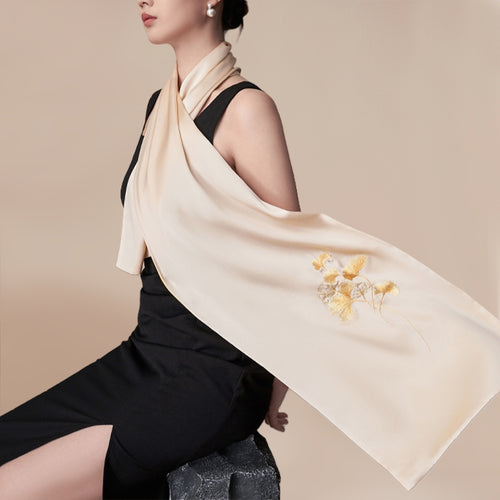
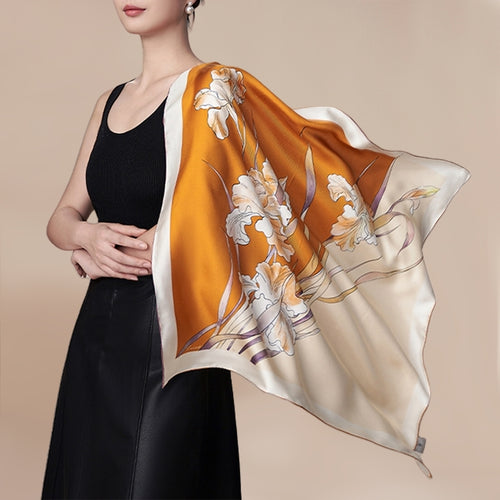
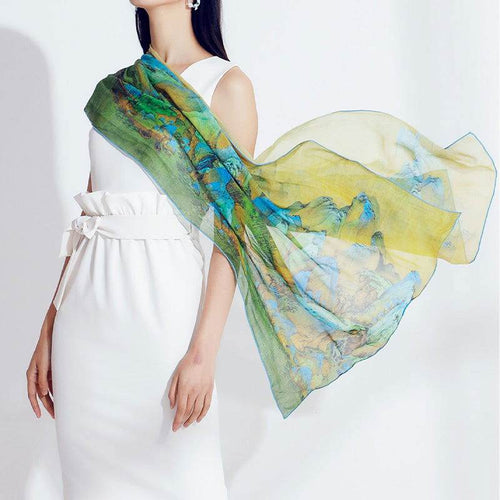
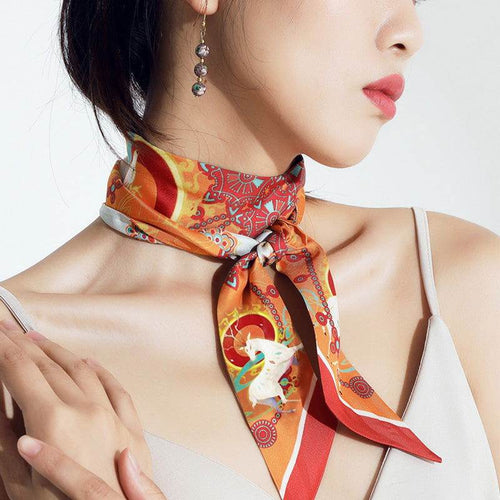
Mulberry Silk Scarf Curation
Silk was the very lifeblood that birthed Dunhuang's glory. Discover handcrafted mulberry silk scarves woven with timeless oriental poetry and vibrant desert hues.


- Porcelain & Bone China: Smooth, lustrous, and jade-like, porcelain was revered as miraculous tableware by Western and Middle Eastern royalty.
-
Tea & Ironware: Essential commodities traded heavily with the kingdoms of the Western Regions, providing crucial nutritional and agricultural value.

Exotic Goods Imported from the West:
- Spices & Jewels: Fragrant spices, lapis lazuli, jade from Khotan, pearls from the Persian Gulf, and delicate Roman glassware.
- Horses & Agricultural Species: The famed "Heavenly Horses" (Ferghana horses) prized by Chinese emperors, alongside grapes, pomegranates, walnuts, and alfalfa, entered China through this oasis gateway.

Merchants of different nationalities and skin colors—Sogdians, Persians, Indians, and Romans—converged here. They spoke different languages and worshipped different gods, but together they forged the prosperity of Dunhuang.
The Crossroads of Civilizations: Dunhuang Caves and Cultural Heritage
If trade was the skeleton of the Silk Road, then cultural exchange was its soul. And Dunhuang was the most brilliant sanctuary for that soul.
The Mogao Caves: A Silk Road Legend Frozen on Cliffs
To speak of Dunhuang is to speak of the Dunhuang Caves, primarily the Mogao Caves. This sacred site of Buddhist art, with construction beginning in 366 CE, is itself the greatest testament to the cultural exchange along the Silk Road. The murals and sculptures within the caves form a "dynamic history book" spanning a thousand years. Here, we can see not only the evolution of Buddhist stories but also the authentic face of the ancient Silk Road.

A Melting Pot of Religions
Buddhism entered China along the Silk Road, and Dunhuang was its most important stopover and center for dissemination. Monks from India and Central Asia stopped here to translate scriptures and commission caves, turning Dunhuang into a radiant center of Buddhism. But its tolerance extended far beyond that. Nestorianism (a branch of Christianity from Syria) and Manichaeism (from Persia) also left their marks here, shaping Dunhuang's open and pluralistic cultural character.

The Library Cave: A World-Shaking Discovery and an Eternal Pain
In 1900, a Taoist monk named Wang Yuanlu accidentally discovered a sealed chamber while clearing sand from a Mogao cave. This was the "Library Cave" (Cave 17), which would soon stun the world.
Inside, more than 50,000 manuscripts, documents, paintings, and textiles from the 4th to the 11th centuries were found. It was a sealed ancient library, a "cultural gene bank of the world." However, this monumental discovery was not given the attention it deserved by the corrupt and incompetent late Qing government.
Wang Yuanlu reported his find to officials multiple times but only received orders to "seal it and guard it properly," with no real support. This set the stage for a historical tragedy:
-
The Plunder by Stein: In 1907, the British explorer Aurel Stein arrived in Dunhuang. For a pittance (a few silver ingots), he persuaded Wang Yuanlu to sell him thousands of manuscripts and a vast collection of exquisite silk paintings, filling 24 large crates.
-
The Cherry-Picking by Pelliot: He was followed in 1908 by the French Sinologist Paul Pelliot. With his profound knowledge of Chinese, Pelliot spent weeks inside the cave, meticulously selecting over 6,000 of the most valuable and historically significant documents to take away.
-
The Subsequent Looting: In the following years, Japanese and Russian expeditions also arrived, acquiring more of the precious artifacts through purchase or deception.
-
The Desecration by Warner: Most heartbreakingly, in 1924, an American named Langdon Warner used a destructive method involving chemical adhesives to peel 12 of the most beautiful Tang-dynasty murals directly off the cave walls. He also took several painted statues, causing permanent and irreparable damage to the grottoes themselves.

This cultural catastrophe, which lasted for decades, resulted in the finest treasures of Dunhuang being scattered across the globe, in institutions like the British Museum, the Bibliothèque nationale de France, and the Hermitage Museum. It created a sad irony: "Dunhuang is in China, but Dunhuang Studies are abroad." For a long time, Chinese scholars had to travel overseas to study the treasures of their own country.
The discovery of the Library Cave was the beginning of a great cultural renaissance, but it was accompanied by one of the most painful episodes of cultural loss in modern Chinese history.

Silk Road Aesthetics: From Ancient Feitian Murals to Wearable Heritage
The artistic zenith of Dunhuang is best epitomized by the Feitian (飞天 / Flying Apsaras). Unlike Western angels who rely on feathered wings to soar, the celestial dancers of Dunhuang float weightlessly through the sky sustained solely by the billowing fluidity of their silk ribbons and multi-colored sashes.
During the Tang Dynasty, this aesthetic flourished alongside innovative silk weaving techniques—where multi-weft brocades and gold-threaded tapestries brought royal garden motifs and Buddhist rosettes (Baoxianghua) to life. At Sinocultural, we translate this 1,000-year textile lineage into wearable everyday statements. More about Tang Brocade, read our: Tang Dynasty Silk Brocade: History, Patterns & Silk Brocade Bags | SinoCultural

Bring the Legend Home: Dunhuang-Inspired Handmade Chinese Dolls
The murals of the Mogao Caves not only recorded history but also preserved the pinnacle of ancient Chinese aesthetics, particularly the breathtaking depictions of the Feitian (Flying Apsaras) and Tang Dynasty noblewomen. Their elegant garments, vivid mineral colors, and serene beauty continue to inspire artists today.
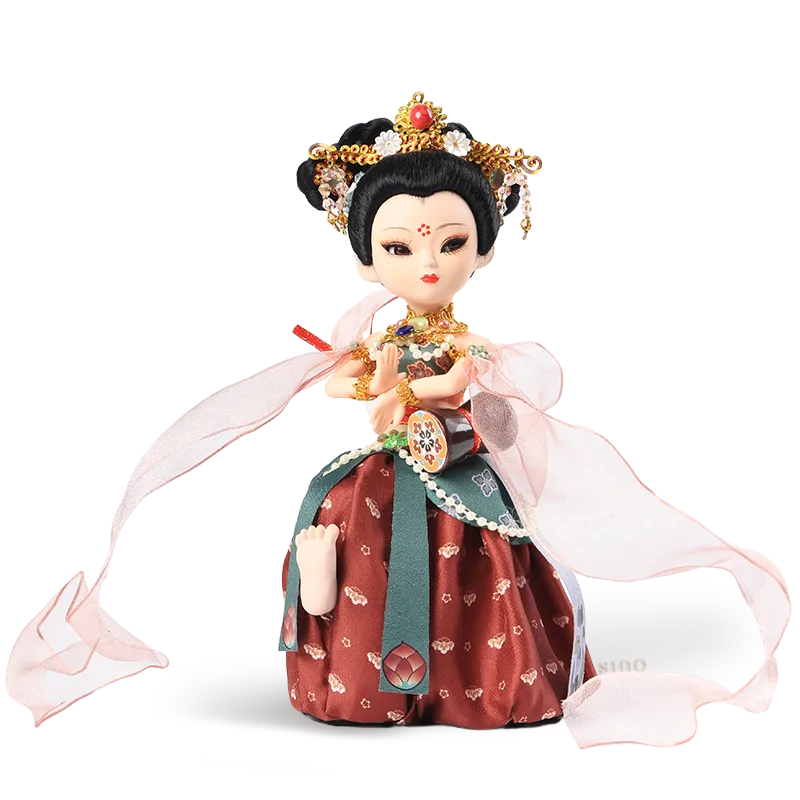
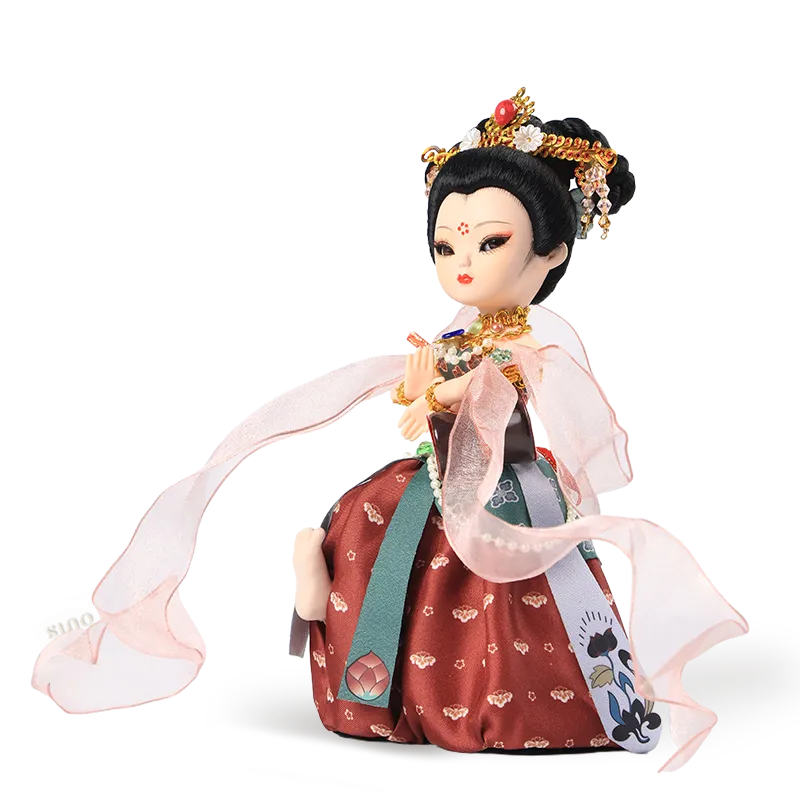
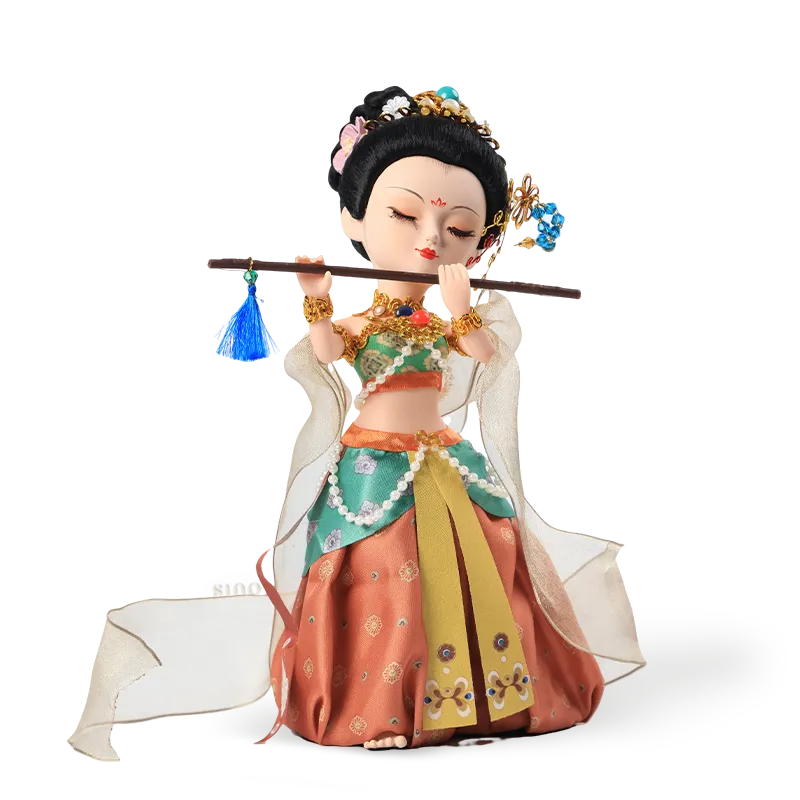
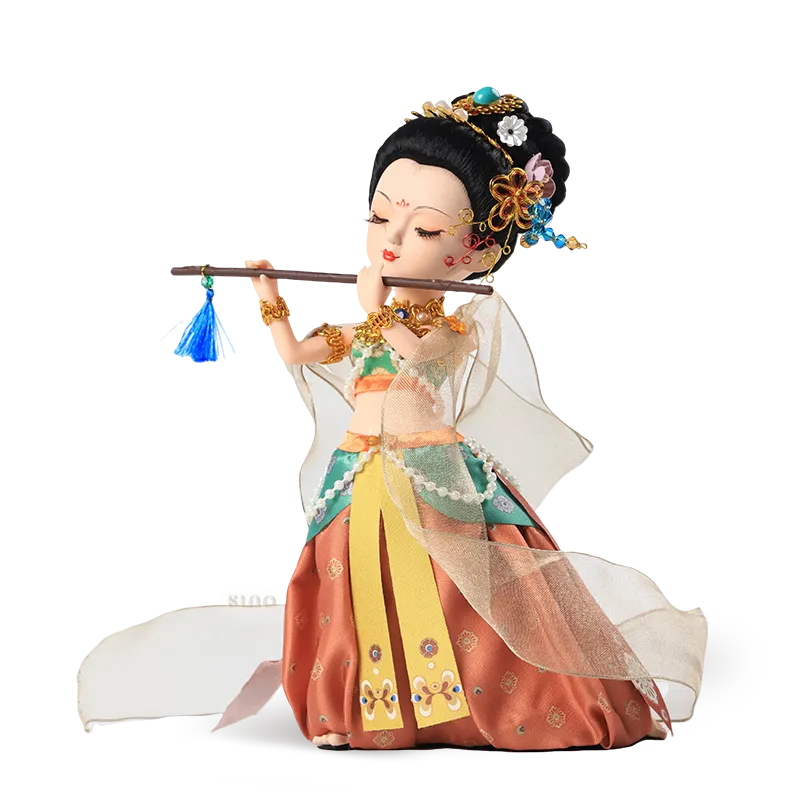
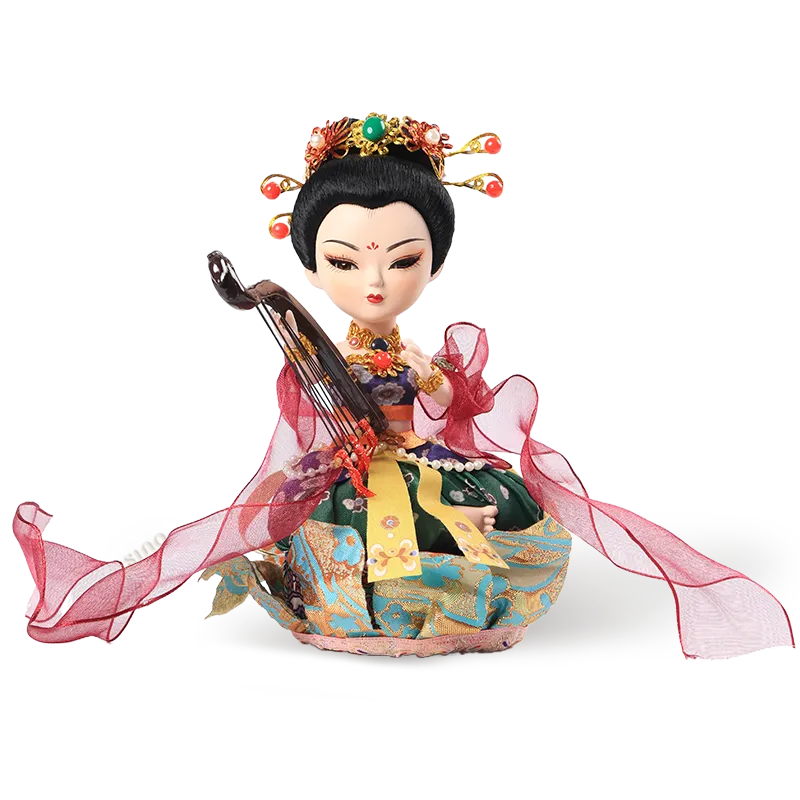
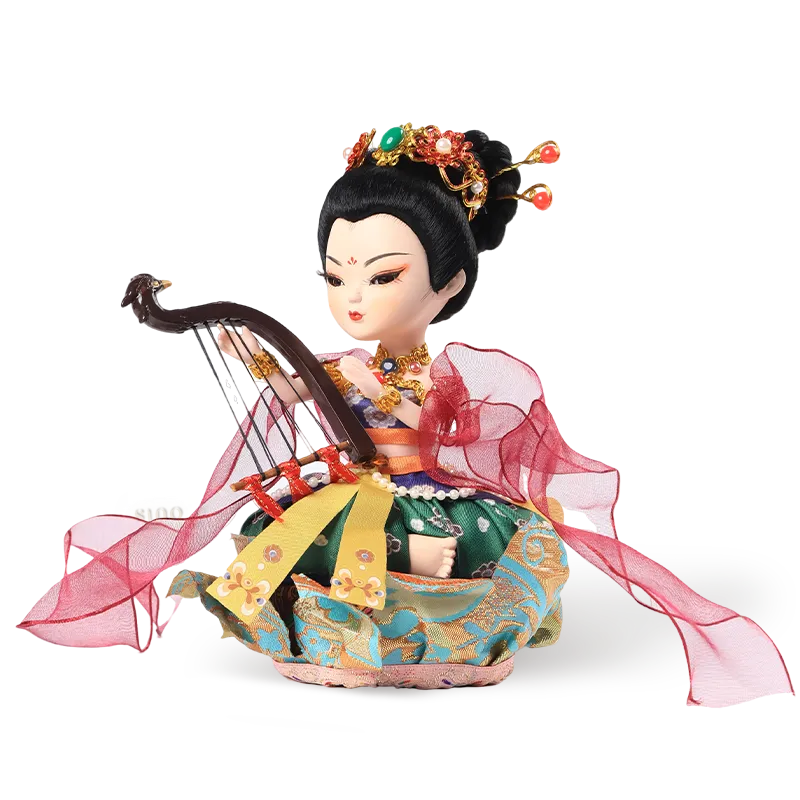
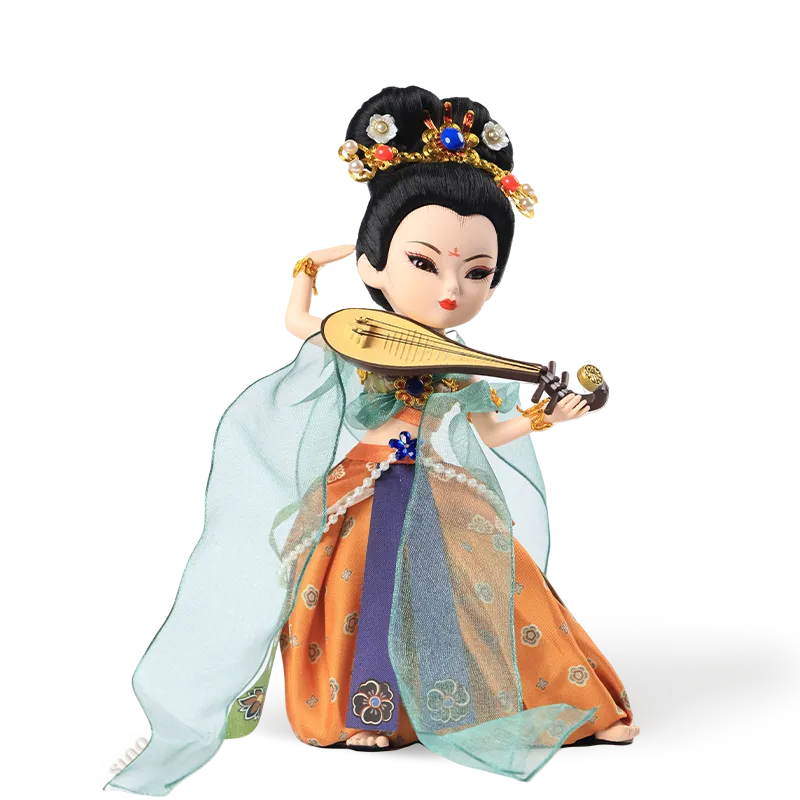
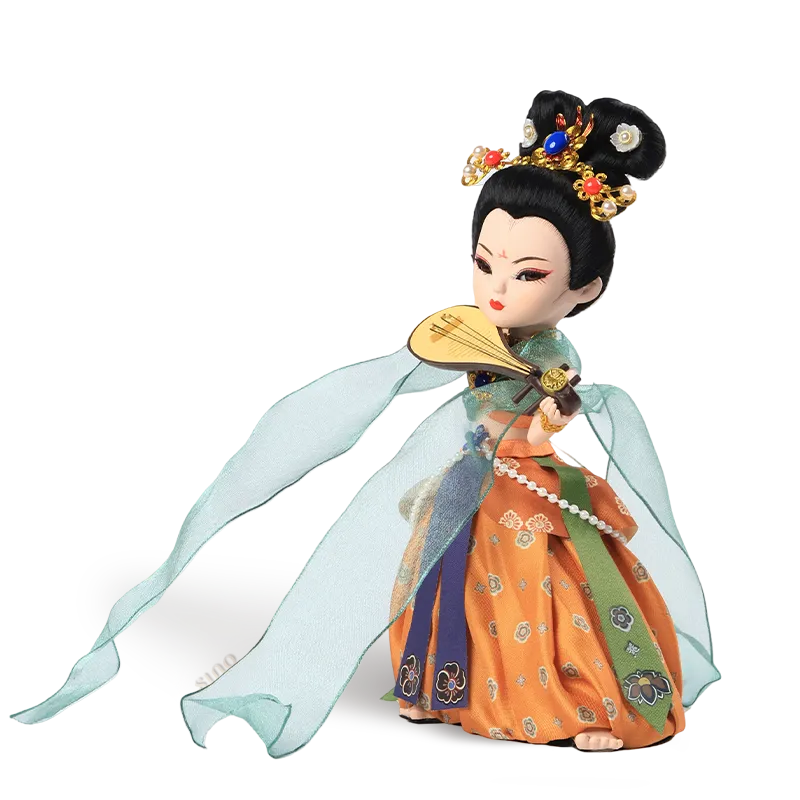
At Sinocultural, we are dedicated to bringing this untouchable history to life. If you are captivated by Dunhuang culture, our [Handmade Chinese Dolls Inspired by Dunhuang] offer a tangible connection to this golden era.
Dunhuang Flying Apsaras Handcrafted Dolls
Bringing the celestial musicians of Mogao Cave murals into three-dimensional life. Each doll is sculpted by hand with flowing real-silk robes and classical instruments.


Crafted with meticulous attention to detail, these dolls replicate the exquisite traditional clothing, rich silk textures, and classic makeup styles found in the Dunhuang murals. They are not just collectibles; they are a tribute to the enduring spirit and artistic peak of the Silk Road, allowing you to hold a piece of ancient oriental elegance in your hands.
Conclusion: Dunhuang, an Everlasting Chapter
Dunhuang has never been just a name on a map. It was the commercial hub, military fortress, religious sanctuary, and cultural palace of the Silk Road. It was a single city that shouldered a thousand years of dialogue between East and West.
Though it has experienced both unparalleled glory and deep trauma, the legend of Dunhuang remains an everlasting, magnificent chapter of human history. It reminds us that we must embrace the future with an open spirit, carrying forward the great legacy of exchange and mutual learning.
FAQ: People Also Ask About Dunhuang and the Silk Road
Q1: What is Dunhuang known for?
A: Dunhuang is primarily known for the Mogao Caves (Caves of the Thousand Buddhas), a UNESCO World Heritage site containing some of the finest examples of Buddhist art, murals, and sculptures spanning over 1,000 years. It is also celebrated as the vital strategic crossroads where the ancient northern and southern overland Silk Road routes bifurcated.
Q2: What is the literal meaning of "Dunhuang" in Chinese?
A: In ancient Chinese, "Dun" (敦) signifies great, grand, or solid, while "Huang" (煌) means brilliant, luminous, and prosperous. Together, "Dunhuang" (敦煌) translates to "Great Magnificence and Prosperity," reflecting its imperial stature under the Han Dynasty.
Q3: Why was Dunhuang important to the Silk Road?
A: In AP World History terms, Dunhuang was a pivotal oasis city-state and caravan hub at the western terminus of the Hexi Corridor. It functioned as an indispensable resupply depot before merchants ventured into the Taklamakan Desert, a military defense boundary (protected by Yumen and Yangguan passes), and the preeminent transmission point for Mahayana Buddhism, Gandharan art, and paper-making technology traveling into imperial China.
Q4: Why did many Chinese merchants travel only as far as Dunhuang on the Silk Road?
A: Most Chinese merchants did not traverse the entire length of the Silk Road for two reasons: (1) Severe Environmental Hazards: The Taklamakan Desert was inhospitable, requiring specialized desert caravans; and (2) The Middlemen System: Central Asian Sogdian trading networks dominated long-haul desert transit. Chinese wholesalers preferred to sell their silk, tea, and porcelain in Dunhuang and return safely to Chang'an, while Sogdian merchants transported goods westward to Persia and the Roman Empire.
Q5: What protected the section of the Silk Road between Chang'an and Dunhuang?
A: The corridor from the capital Chang'an to Dunhuang was protected by the Han Dynasty Great Wall, a network of beacon towers that transmitted smoke and fire warnings, and military garrisons stationed at Yumen Pass and Yangguan Pass. These fortifications protected traveling caravans from nomad incursions and ensured guarded access to oasis water supplies.
Q6: What did Dunhuang trade on the Silk Road?
A: As a global marketplace, Dunhuang traded Chinese exports like silk, jade, porcelain, tea, lacquer, and paper. In return, it received Western imports such as Central Asian Ferghana horses, Persian spices, glass, lapis lazuli, frankincense, and agricultural goods including grapes, alfalfa, and walnuts.
Q7: Is there a direct link between the rise and fall of Dunhuang and the Silk Road?
A: Yes. During the Han and Tang dynasties, when overland Silk Road trade flourished, Dunhuang reached its golden age. When maritime trade routes (the Maritime Silk Road) largely replaced overland routes during the Song, Yuan, and Ming dynasties, and regional land routes became unstable, Dunhuang fell into obscurity until the sensational rediscovery of the Library Cave in 1900.
Q8: How long was the ancient Silk Road from start to finish?
A: The Silk Road was not a single, straight road, but rather a vast, complex network of trade routes. However, the primary overland route—stretching from its eastern starting point in Chang'an (modern-day Xi'an, China) to its western endpoints reaching the Mediterranean Sea (such as Antioch or Rome)—covered a staggering distance of approximately 4,000 miles (about 6,400 kilometers). Dunhuang sat at a crucial juncture along this massive expanse, acting as the vital western gateway of China before travelers faced the arduous, months-long journey across the unforgiving deserts of Central Asia.
Discover how the ancient artistic legacy of the Silk Road lives on in modern life. Explore our curated collections of mulberry silk scarves, handcrafted dolls, and embroidered accessories at Sinocultural.