 Skip to content





















When is China's National Day? China National Day (国庆节, Guóqìng Jié) is celebrated annually on October 1st. Often referred to colloquially by international observers as "China's Independence Day," it commemorates the official founding of the People's Republic of China (PRC) on October 1, 1949. The holiday kicks off a nationwide 7-day public holiday known as Golden Week.
Table of Contents
- 1. What is China National Day? (Is it China's "Independence Day"?)
- 2. Historical Origins: October 1, 1949 and Tiananmen Square
- 3. Cultural Significance: Pride, Unity, and Heritage
- 4. How China Celebrates: From Morning Flags to Evening Skies
- 5. The "Golden Week" Phenomenon (Holiday Travel)
- 6. Honoring Heritage: Traditional Silk & Wearable Art with Sinocultural
- 7. Frequently Asked Questions (FAQ)
1. What is China National Day? (Is it China's "Independence Day"?)
China's National Day is frequently searched as "China Independence Day." While its official title is simply National Day (国庆节, Guóqìng Jié), the historical journey leading to October 1st mirrors—and arguably surpasses—the profound weight of any struggle for national independence.

October 1, 1949 was not merely the establishment of a government; it represented the hard-won culmination of more than a century of existential struggle to defend national sovereignty against foreign invasion and imperialist partition:
- The Century of Humiliation (Beginning in 1840): China’s modern struggle began with the British First Opium War in 1840. For the next century, imperial powers imposed humiliating unequal treaties, carved out foreign concessions, and reduced an ancient civilization to a fractured, semi-colonial state.
- Epic Resistance Against Fascist Aggression: During World War II, China was the first nation to enter the global struggle against fascism, enduring the brutal 14-year War of Resistance Against Japanese Aggression (1931–1945). Throughout the invasion, Japanese imperial forces waged widespread terror and perpetrated multiple large-scale massacres across the country—most notoriously the horrific Nanjing Massacre, alongside relentless bombing campaigns and devastating scorched-earth operations. In fighting relentlessly to defend its very existence as a sovereign nation, China endured unimaginable human sacrifice, suffering more than 35.8 million military and civilian casualties.

- An Indispensable Pillar of Global Victory: As the primary theater in the East, China pinned down the vast majority of Imperial Japan's army ground forces. This heroic resilience prevented the Axis powers from linking across Asia and the Indian Ocean, making an indispensable contribution to the Allied victory in World War II.

When the People's Republic of China was proclaimed on October 1, 1949, it was solemnized by the historic declaration: "The Chinese people have stood up." It signaled the decisive end to 109 years of foreign subjugation, the restoration of territorial integrity, and the rebirth of a sovereign civilization. In that deepest sense, October 1st is indeed China’s true declaration of independence.

Every year, the anniversary is calculated directly from 1949. For example, October 1, 2026 marked the 77th anniversary, while October 1, 2027 marked the 78th anniversary.
2. Historical Origins: October 1, 1949 and Tiananmen Square
The origins of National Day trace back to autumn 1949. On October 1st, at 3:00 PM, Chairman Mao Zedong stood atop the Tiananmen Rostrum in central Beijing and formally proclaimed the founding of the People's Republic of China before a crowd of over 300,000 citizens.

Two months later, on December 2, 1949, the Central People's Government officially passed a resolution declaring October 1st as China’s official National Day, making 1950 the very first official nationwide observance.
3. Cultural Significance: Pride, Unity, and Heritage
Beyond fireworks and political milestones, National Day functions as a profound cultural touchstone for Chinese communities worldwide:
- Sovereign Rebirth: It reflects the enduring resilience of the Chinese civilization after the turbulent "Century of Humiliation."
- Family Reunion & Balance: Because October 1st frequently coincides or aligns closely with the traditional Mid-Autumn Festival, the holiday has evolved into a season of returning home, family feasting, and sharing mooncakes.
- Celebration of Intangible Culture: Across cities and provinces, National Day serves as an exhibition stage for traditional Chinese performing arts, folk music, regional culinary heritage, and centuries-old crafts.
4. How China Celebrates: From Morning Flags to Evening Skies
While celebrations evolve with technology, three classic traditions anchor every October 1st:
1) The Grand Dawn Flag-Raising Ceremony (Tiananmen Square)
Every year at daybreak on October 1st, Tiananmen Square becomes the emotional epicenter of the nation. Over 100,000 spectators from across China and the world gather under the autumn night sky to witness an awe-inspiring, minute-by-minute ritual of military precision:
- Calculated with the Rising Sun: Unlike ordinary ceremonies with fixed schedules, the National Day flag-raising is calculated down to the second by the Beijing Astronomical Observatory to coincide precisely with the moment the sun breaches the horizon (typically around 6:10 a.m. on October 1st).
- The Ceremonial March: As the sky turns from violet to pale gold, the elite PLA Honor Guard marches out from the central archway of the Tiananmen Gate, crossing the historic Golden Water Bridges. Their synchronized, razor-sharp goose-steps echo across the hushed square until they reach the 32.6-meter flagpole.
- The Climax & Peace Doves: Accompanied by the military band playing the national anthem (March of the Volunteers), the five-starred red flag ascends to the top in exactly 2 minutes and 7 seconds. As it flutters against the morning light, thousands of spectators chant heartfelt blessings, and more than 10,000 peace doves are released simultaneously, soaring into the sky as the anthem gives way to the stirring melody of Ode to the Motherland.
- Advance Reservation Required: Due to strict capacity control, entry to Tiananmen Square requires real-name online booking in advance (via official mini-programs or ticket portals).
- Arrive Early: To pass security checks and secure a front-row view near the railings, visitors often begin queuing between 2:00 a.m. and 3:00 a.m. (bring a warm jacket, as autumn Beijing mornings are chilly).
- Post-Ceremony Breakfast: After the crowds disperse, take a short stroll to the Qianmen historical district for an authentic Beijing breakfast—hot freshly pressed soy milk, crispy youtiao, and steamed dumplings.

2) The Iconic Tiananmen Floral Basket (A Masterpiece of Botanical Symbolism)
No National Day celebration is complete without the grand centerpiece at Tiananmen Square—a towering, multi-story floral basket meticulously redesigned each year to reflect national blessings and artistic renewal.
Far from a simple decorative arrangement, each element is imbued with layered cultural meaning. The basket thoughtfully unites 15 emblematic flowers and 5 auspicious fruits, creating a rich tapestry of Chinese heritage:

-
15 Symbolic Flowers: Anchored by the classical "Flowers of the Twelve Months" (十二月花)—which honor the harmonious rhythm and cyclical beauty of the four seasons—the arrangement is crowned by three revered blossoms:
- Peonies (牡丹): The timeless emblem of prosperity, honor, and national flourishing.
- Chinese Roses (月季): Representing resilience, enduring vitality, and the civic pride of Beijing.
- Sunflowers (向日葵): Symbolizing bright optimism, warmth, and collective devotion to the future.
-
5 Auspicious Fruits (Harvest & Blessings): Woven alongside the floral blooms are five harvest fruits, each drawn from beloved Chinese linguistic and poetic traditions:
- Apples (苹果, Píngguǒ): A cultural homophone for Píng'ān (平安)—wishing profound peace and safety for every household.
- Pomegranates (石榴, Shíliú): Bursting with jewel-like seeds packed tightly together, symbolizing solidarity, abundance, and national unity.
- Persimmons (柿子, Shìzi): Echoing the auspicious idiom Shìshì Rúyì (事事如意)—expressing the hope that all endeavors unfold smoothly according to one's heart.
- Grapes (葡萄, Pútao): Flowing in clusters to signify a bountiful harvest, overflowing joy, and continuous wealth.
- Peaches (桃, Táo): Renowned in Chinese mythology as the sacred fruit of immortality, bestowing health, vitality, and longevity upon the nation.
Together, this magnificent fusion of blooms and fruits transforms botanical art into a prayer for national prosperity, family peace, and universal harmony.
3) Light Show Drone Performances
From Shanghai’s Bund to Chongqing’s Jiefangbei, cities across China will light up the skies with stunning drone performances that merge technology with storytelling. Visitors should expect large crowds—so plan ahead, stay safe, and take time to sample local specialties along the way. In Chongqing, nothing beats warming up with a steaming pot of spicy yu hotpot, a city favorite.

5. The "Golden Week" Phenomenon (Holiday Travel)
In 1999, the Chinese government extended National Day into a 7-day public holiday known as "Golden Week" (黄金周), running from October 1st through October 7th. Designed to boost domestic tourism and allow families to travel across provinces, it has grown into one of the largest annual human travel migrations on Earth.
✈️ Planning to visit China during the October holidays?
Navigating high-speed trains, crowd management, and scenic spots during Golden Week requires preparation. Explore our in-depth guide: China National Day Travel Guide: Best Places to Visit During Golden Week

6. Honoring Heritage: Traditional Silk & Wearable Art with Sinocultural
National Day is ultimately a tribute to the craftsmanship, artistry, and cultural spirit passed down across generations. At Sinocultural, we celebrate this enduring heritage every day through authentic Eastern craftsmanship.
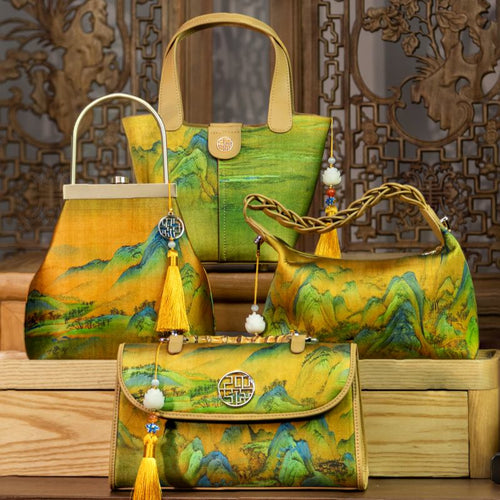
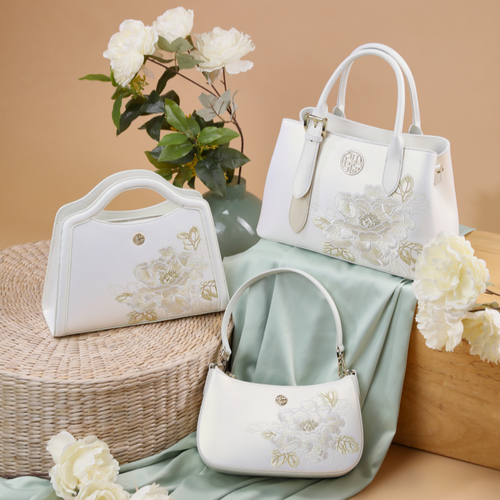
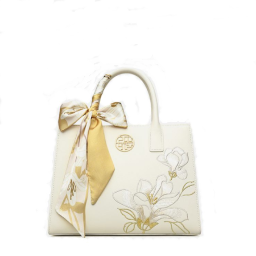
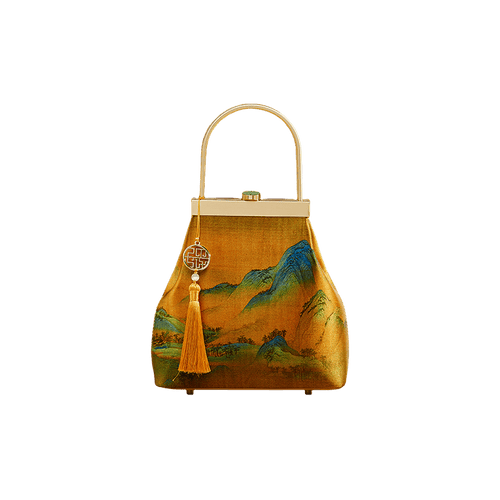
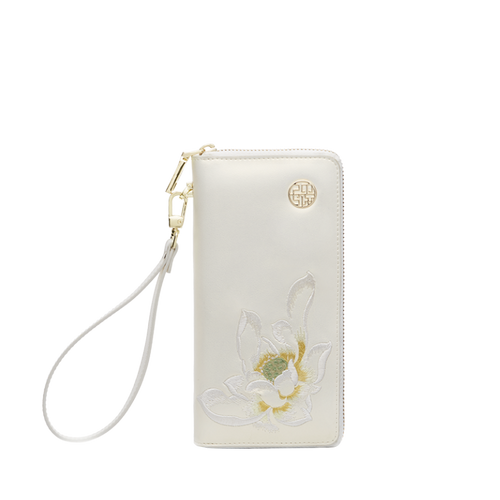
Our collection of luxury Silk Brocade Bags and Cultural Gifts transforms historical patterns—from Tang Dynasty medallions to auspicious floral lattice work—into functional, modern statement pieces. Woven with rich, multi-dimensional silk threads, each piece is an invitation to carry the warmth, dignity, and beauty of authentic Chinese artistry wherever you go.
The Silk & Heritage Signature Collection


7. Frequently Asked Questions (FAQ)
Q1: When is China's National Day celebrated?
A: China's National Day is celebrated every year on October 1st.
Q2: Does China have an Independence Day?
A: China does not technically celebrate an "Independence Day." October 1st is officially "National Day" (国庆节), marking the founding of the People's Republic of China in 1949 rather than independence from a colonial ruler.
Q3: How many years of China National Day are being celebrated?
A: The anniversary is calculated from the founding year of 1949 (Formula: Current Year - 1949). For example, 2026 was the 77th anniversary, and 2027 is the 78th anniversary.
Q4: How long is the National Day holiday in China?
A: The official statutory holiday lasts for 3 days, but it is combined with surrounding weekends through adjusted workdays to create a continuous 7-day vacation known as Golden Week (October 1–7).


